
>> Continued From the Previous Page <<
In recent developments, U.S. forces have conducted targeted strikes against Iranian missile launchers and mine-laying vessels after officials reported threats to commercial shipping and American assets operating in the region. The administration has framed these actions as defensive measures aimed at protecting international shipping lanes and deterring further escalation.
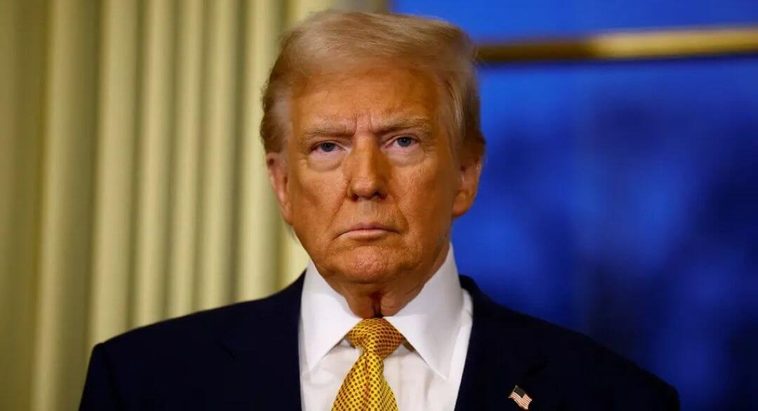
At the same time, President Donald Trump has continued to publicly signal that diplomacy remains on the table, even as he makes clear that military options have not been taken off the table. The dual-track approach reflects a broader strategy aimed at pressuring Tehran while still leaving room for a negotiated outcome.

“An Agreement has been largely negotiated,” Trump wrote in a Truth Social post after discussions with Middle Eastern allies, including leaders from Saudi Arabia, Qatar, and the United Arab Emirates.
According to officials familiar with the talks, the emerging framework under discussion reportedly includes provisions related to reopening safe passage through the Strait of Hormuz, placing limits on Iran’s nuclear capabilities, and establishing broader regional security guarantees designed to reduce the risk of future conflict. However, those same officials note that significant disagreements remain unresolved.
Inside Republican foreign policy circles, the diplomatic push has sparked a growing debate. Some GOP hawks have expressed concern that any agreement could resemble previous nuclear arrangements that critics argue failed to sufficiently restrain Iran’s long-term ambitions. Others, however, see the current approach as an opportunity to secure stronger enforcement mechanisms while avoiding a wider regional war.
Secretary of State Marco Rubio has defended the administration’s strategy, emphasizing that the goal is to prevent Iran from obtaining nuclear weapons while avoiding a prolonged military conflict that could destabilize global energy markets and draw the United States deeper into regional instability.
Behind the scenes, Trump has also been actively consulting top national security officials. Late last week, he met with Vice President JD Vance, CIA Director John Ratcliffe, and Defense Secretary Pete Hegseth to review potential military scenarios should diplomatic talks break down.
Those discussions reportedly focused on escalation pathways, regional force protection, and contingency planning tied to Iranian responses if U.S. operations expand further in the region. Iranian officials, for their part, have continued issuing public warnings, stating that any further American military action could carry serious consequences.
As the standoff continues, global markets are watching closely. Oil prices and shipping insurance rates have already shown sensitivity to developments in the region, with traders reacting to uncertainty surrounding the Strait of Hormuz and the potential for disruption in one of the world’s most critical energy corridors.
For now, the administration’s approach appears to be walking a careful line between pressure and diplomacy. With high-level talks set to unfold at Camp David, the coming days may help determine whether negotiations move toward a breakthrough—or whether the situation drifts further toward confrontation in an already volatile region.

