
>> Continued From the Previous Page <<
Among legacy automakers, Ford stands out as one of the few companies willing to publicly disclose just how ugly the numbers really are.
Ford’s EV division posted losses of $2.2 billion in 2022, followed by $4.7 billion in 2023, and another $5.1 billion in 2024. By the third quarter of 2025, Ford had already lost $3.6 billion more.

Those operating losses were only part of the disaster.
Ford was forced to write down $19.5 billion in EV related assets that proved far less valuable than advertised. In total, Ford’s EV gamble cost the company $35.1 billion.
To put that in perspective, Ford’s total net income since 2022 was just $11.1 billion. The company lost more than three times what it earned by betting on electric vehicles.
This collapse did not happen in a vacuum.
The spending frenzy accelerated after Biden signed the so called Inflation Reduction Act in 2022. The legislation showered automakers with taxpayer funded subsidies while tightening regulatory screws that all but forced companies into EV production.
Between 2015 and early 2024, automakers committed more than $188 billion to EV and battery plants in the United States alone. Ford pledged $50 billion through 2026. General Motors committed $35 billion through 2025. Volkswagen launched a $131 billion global electrification plan.
These investments were based on the assumption that consumers would rapidly abandon gasoline vehicles. That assumption proved wildly incorrect.
EV sales in the United States briefly surged in the third quarter of 2025 as buyers rushed to secure the $7,500 federal tax credit before it expired on September 30. That incentive driven rush pushed quarterly sales above 437,000 vehicles.
Once the subsidy disappeared, demand collapsed.
Fourth quarter EV sales fell to roughly 234,000 units, a 46 percent drop from the prior quarter. Full year EV sales for 2025 slipped to about 1.28 million vehicles, marking the first year over year decline since 2019.
High prices only made matters worse. The average EV transaction price hovered around $59,000, far above most gasoline powered alternatives. Range anxiety, charging infrastructure gaps, and cheaper gasoline sent buyers back to hybrids, trucks, and SUVs.
Dealers sounded the alarm months before Washington noticed.
Nearly 3,900 auto dealers sent Biden a letter in November warning that EV demand was “not keeping up with the large influx of BEVs arriving at our dealerships.”
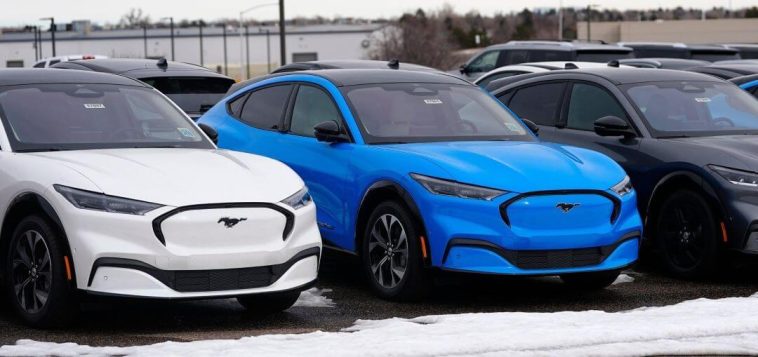
They added that EVs were “stacking up on our lots” and “not selling nearly as fast as they are arriving.”
The administration ignored them.
European automakers faced a similar reckoning. Aggressive emissions mandates imposed by European regulators collided with weak consumer demand. Volkswagen began canceling EV projects. Mercedes scrapped U.S. bound electric models that failed to gain traction.
Across the industry, automakers quietly pivoted back toward gasoline engines and hybrids while lobbying regulators for relief.
The lesson is painfully clear.
Government mandates cannot override consumer preferences. Biden era climate policies pushed automakers to chase subsidies instead of customers, leaving taxpayers and shareholders holding the bag.
The $114 billion loss is real. And as long as mandates remain in place, American drivers should not expect vehicle prices to fall anytime soon.

