
>> Continued From the Previous Page <<
David Axelrod, a veteran political strategist who played a critical role in former President Barack Obama’s successful 2008 campaign, emphasized the importance of face-to-face interaction with voters. “There’s a time at which you just have to barnstorm these battlegrounds,” Axelrod told Politico. “These races are decathlons, and there are a lot of events, and you have to do all of them because people want to test you.”
Axelrod went on to add that the campaign trail is “the most difficult oral exam on the planet for the most difficult job,” stressing that it is essential for Harris to participate in spontaneous events where voters can see her interact in a meaningful way.

In a pointed comparison, a former Biden campaign staffer likened the current Harris-Walz strategy to Hillary Clinton’s failed 2016 presidential bid. Clinton’s notorious decision to avoid swing states like Wisconsin during the critical stages of her campaign is often cited as a key reason for her loss to Trump. While the staffer acknowledged that Harris hasn’t ignored these states entirely, there are concerns that the lack of sustained presence in battleground areas could have a similar effect. “We know this isn’t actually 2016 again, and it’s not like she’s not going to Wisconsin,” the staffer said, “But we can still learn from that. Trump is everywhere again, just like he was then. Our side needs to be, too.”
This sentiment highlights a growing fear that Harris is allowing Trump to monopolize the spotlight, with the former president’s energetic and frequent campaign stops making it hard for the vice president to compete.
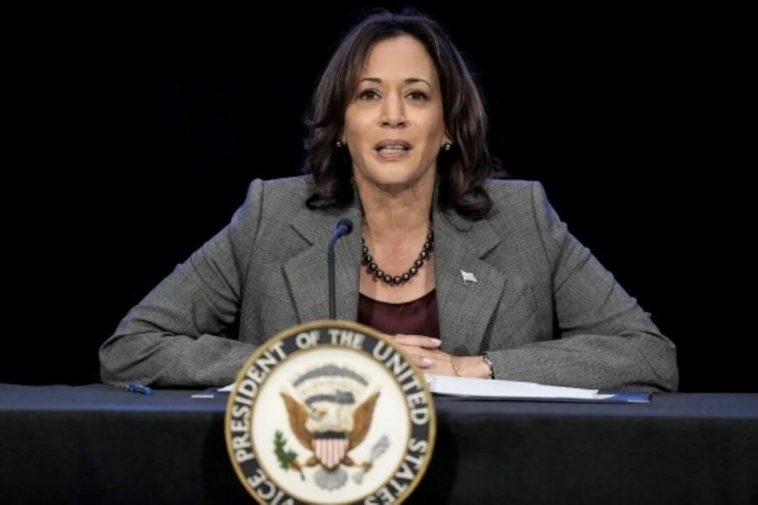
Harris’s campaign team has indicated that her travel schedule will ramp up in October, but some Democrats worry it may be too little, too late. As reported by Politico, Harris has spent more than a third of her time since the Democratic National Convention in briefings or internal meetings without any public appearances. While the campaign’s more cautious strategy may have worked in previous cycles, many believe that this year’s race requires a more aggressive approach, particularly as Trump continues to galvanize his base with near-daily rallies.

Political analysts have also pointed out that the Harris-Walz campaign schedule bears striking similarities to Clinton’s 2016 campaign. Eric Appleman’s Democracy in Action data revealed that Clinton, like Harris, had a relatively light public schedule during key periods of the campaign. By contrast, Obama’s campaign during the same stretch was jam-packed with a variety of public events, fundraisers, and meet-and-greets. This stark difference has left many Democrats anxious about Harris’s ability to secure votes in vital swing states.
TRUMP LOVES IT: Get the Presidential Blanket FREE Today! Supplies Running Out – Grab Yours NOW! 🕒👇
Democratic operatives have different ideas about how Harris should be spending her remaining time on the campaign trail. While some argue for a broader approach, others insist she should focus on the Rust Belt, which includes states like Pennsylvania and Michigan—key battlegrounds that could determine the election. One operative went as far as to say, “Do not go to Georgia one more time. You gotta get to Michigan. You need to live in Pennsylvania [because] the challenge is still Black voters in Philadelphia, Black voters in Detroit.”
In the meantime, the Harris-Walz campaign hopes that Minnesota Governor Tim Walz, Harris’s running mate, can step in to fill the gap. After a lackluster debate performance, Walz is expected to take on more campaign events in swing states, but many remain skeptical about whether this will be enough to turn the tide.
As the campaign clock ticks down, pressure is mounting for Harris to change course, step out of her comfort zone, and connect directly with voters before Trump solidifies his lead in key battleground states. Whether the Harris-Walz campaign can course-correct in time to prevent a repeat of 2016 remains to be seen.

