
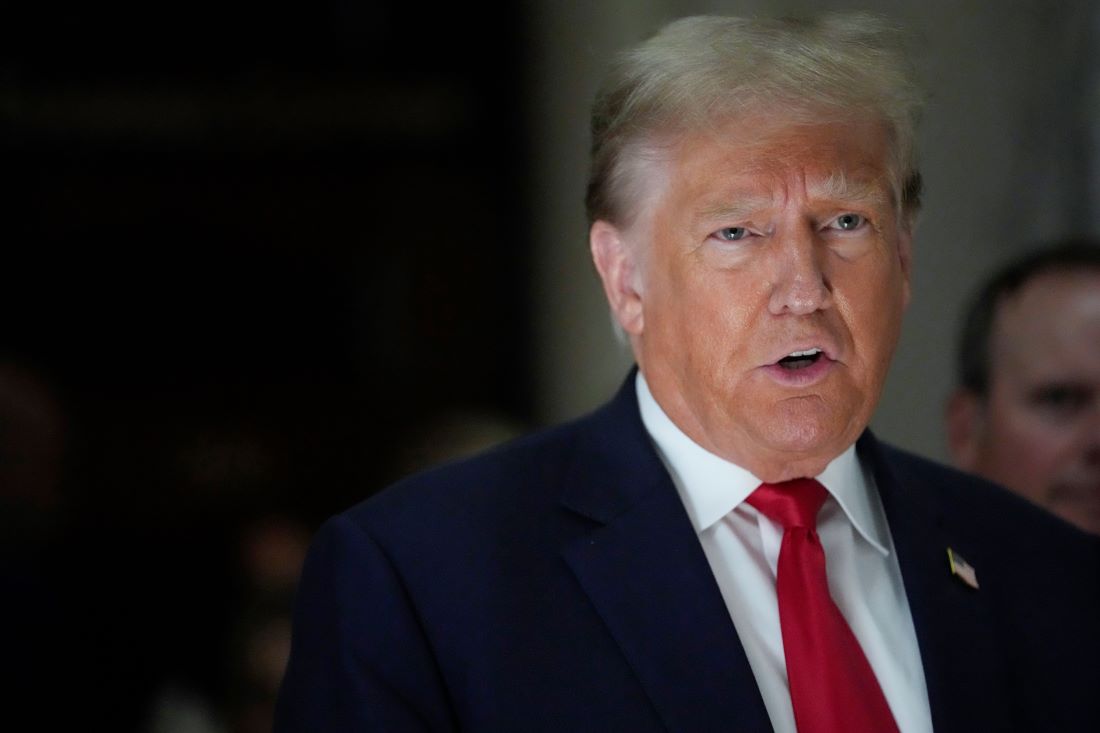
Regarding the gag order in the well-known case against former President Donald J. Trump, the United States Court of Appeals for the District of Columbia Circuit has rendered an important ruling. The decision represents a significant victory for the former President’s supporters but a setback for Special Counsel Jack Smith.
The accusations against Trump in this high-profile case, which has drawn significant national attention, are related to his alleged involvement in attempts to obstruct and undermine the certification of the results of the 2020 presidential election.
Don’t miss this! Carry faith with you everywhere with the Exclusive National Prayer Coin!

Following his indictment, Trump took to social media and made a number of public remarks that were directed at the judge, the Special Counsel’s office, and prospective witnesses in particular. Due to these actions, the district court decided to step in and issue a restraining order with the intention of limiting any more public remarks that might influence the current proceedings.
The Appeals Court found that the district court’s order was unduly broad and infringed on protected speech beyond what was necessary in a major and decisive ruling.
“We agree with the district court that some aspects of Mr. Trump’s public statements pose a significant and imminent threat to the fair and orderly adjudication of the ongoing criminal proceeding, warranting a speech constraining protective order,” the court ruled.

The protective order was warranted because the court recognized that certain remarks made by Trump constituted a significant risk to a fair trial. They did, however, also stress the necessity of striking a balance between the two and acknowledged the significance of preserving the constitutional right to free speech.
“Freedom of speech is a bedrock constitutional right. Americans are free to speak, listen to others, and make up their own minds about their government and the world around them. ‘The First Amendment reflects ‘a profound national commitment to the principle that debate on public issues should be uninhibited, robust, and wide-open.’”
Parties and their attorneys are now expressly prohibited by the amended order from discussing potential witnesses in public, whether or not they are known or anticipated to testify in court. It also restricts comments regarding the lawyers involved in the case (apart from the Special Counsel), the court, and the lawyers’ relatives. This restriction, however, only takes effect if there is a high probability that the statements will seriously disrupt the case or if they are made with that intention.
“The Supreme Court has instructed courts that when they are imposing orders restricting speech about judicial proceedings, they must in all cases consider both ‘the imminence and magnitude of the danger’ to the judicial process that flows from the speech and ‘the need for free and unfettered expression.’”
ALERT! Major Water Restrictions In Effect!
Because of how contentious the case was, the decision is very important. Critics of the Special Counsel often make accusations of overreach and bias against the former President. Conversely, supporters of the former president hail the ruling as a victory for the right to free speech and a blow to what they see as a politically motivated prosecution.
Four federal indictments against Trump were issued on August 1st as a consequence of Smith’s January 6th investigation. Arranging to disrupt an official proceeding, obstructing and attempting to obstruct an official process, conspiring to defraud the United States, and conspiring against rights are among the charges.
Put March 4, 2024, on your calendars for the much awaited trial regarding Trump’s purported meddling in the 2020 election.

