
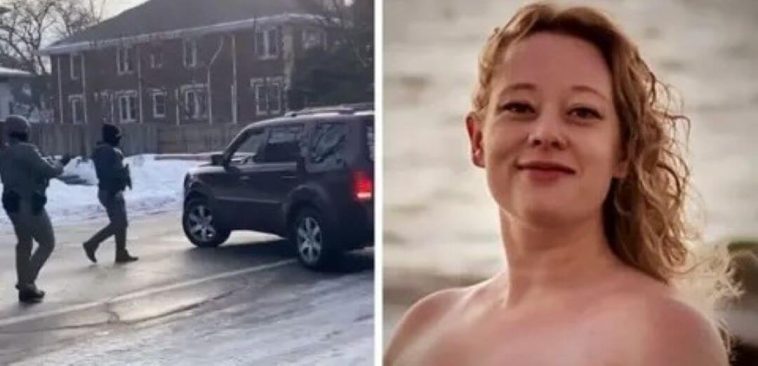
>> Continued From the Previous Page <<
Despite those details, the Timberwolves organization proceeded with a public tribute before tipoff. The arena’s public address announcer delivered a carefully worded statement expressing sympathy while urging togetherness.
“Our thoughts are with her family and everyone affected, and our hearts are with our community as we hope for healing and unity during this challenging time,” the announcer said.

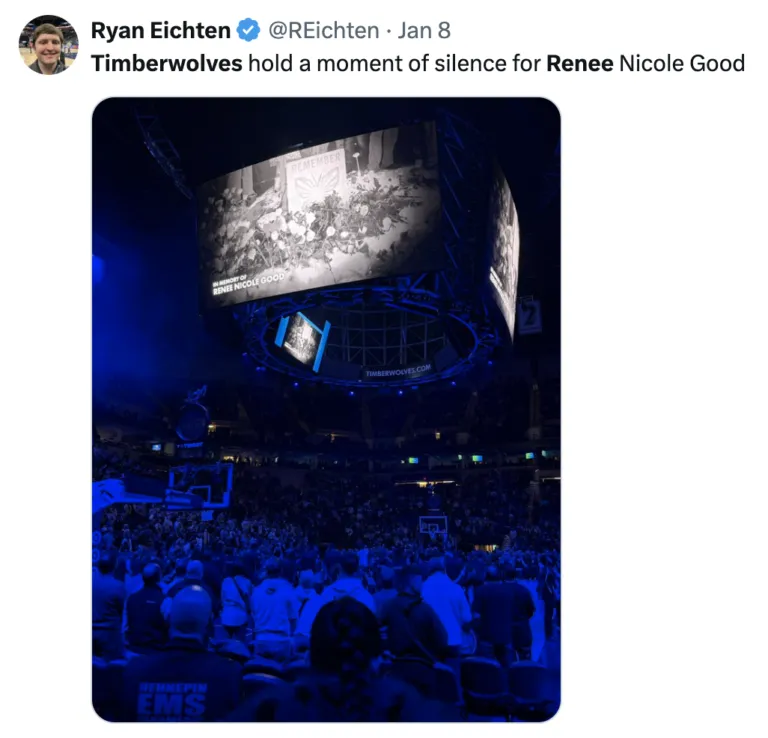
As the message played, the scoreboard displayed an image from a vigil accompanied by the words, “In memory of Renee Nicole Good.” But the solemn atmosphere quickly deteriorated. During the moment of silence, at least one fan shouted, “Go home, ICE,” followed by another yelling, “F— ICE,” drawing cheers from parts of the crowd.
The outburst underscored how immigration enforcement has become a flashpoint far beyond Washington, D.C., spilling into sports arenas and public events that traditionally avoid overt political statements.
Timberwolves head coach Chris Finch addressed the shooting earlier in the day, framing the incident as another painful moment for the Minneapolis community.
“As we all know, our community has suffered yet another unspeakable tragedy,” Finch said. “We want to just convey our condolences and heartfelt wishes and prayers and thoughts to the families and loved ones and all of those that are greatly affected by what happened.”
Outside the arena, the shooting reignited protests across the Twin Cities, particularly among activist groups already mobilized against ICE operations. Demonstrations followed a recent increase in immigration enforcement tied to the Trump administration’s renewed crackdown on illegal immigration, an effort that has drawn fierce resistance in sanctuary jurisdictions.
Noem, however, offered a far different characterization of the events leading up to Good’s death. She described the incident as a deliberate and dangerous attack on federal officers carrying out their lawful duties.
Noem said Good’s actions amounted to an “act of domestic terrorism.”
“An officer of ours acted quickly and defensively, shot to protect himself and the people around him,” she said.
Federal sources say Good was not an uninvolved bystander but an active participant in efforts to obstruct immigration enforcement. According to Department of Homeland Security officials, Good was a Minneapolis-based immigration activist and a member of a group known as “ICE Watch.”
The organization reportedly operates in multiple sanctuary cities and is dedicated to monitoring, tracking, interfering with, and opposing federal immigration operations. DHS sources told Fox that Good had been following ICE agents for hours on the day of the shooting.
Authorities say she followed agents to at least two separate locations and ultimately blocked a roadway in an attempt to disrupt enforcement activity. It was during this confrontation, officials say, that the situation turned violent.
The Timberwolves’ decision to publicly honor Good, without addressing the full scope of the allegations against her, has drawn criticism from those who argue that professional sports franchises should not elevate individuals accused of endangering law enforcement officers. Critics say the incident reflects a broader cultural trend in which opposition to border enforcement is celebrated, while the risks faced by federal agents are downplayed or ignored.
Supporters of ICE argue that moments like this send a dangerous message, especially as officers increasingly face harassment, doxxing, and physical threats while attempting to enforce federal law. They warn that normalizing hostility toward law enforcement only invites more confrontations like the one that ended Good’s life.
As protests continue and the political fallout grows, the Timberwolves’ moment of silence has become about far more than a basketball game. It now stands as another example of how deeply the immigration debate has penetrated American institutions—and how quickly gestures meant to heal can instead inflame an already divided nation.

