

>> Continued From the Previous Page <<
According to federal reports from the Federal Voting Assistance Program (FVAP), there are approximately 2.8 million U.S. citizens eligible to vote overseas, a number far below the 9 million that Democrats are allegedly targeting. This discrepancy has raised eyebrows, with critics questioning how such a large portion of these voters could realistically be registered in time for the 2024 election.
Reuters recently reported that the Democratic National Committee (DNC) has set aside $300,000 to register these UOCAVA voters. However, experts argue that even if half of these eligible voters were to vote Democrat, that only accounts for roughly 1.4 million votes—far short of the DNC’s ambitious projections.

Further investigations by The Gateway Pundit have uncovered shocking details about how easily UOCAVA ballots can be accessed and exploited. Unlike domestic U.S. voters, UOCAVA voters do not have to provide the last four digits of their Social Security number or a state-issued ID. This loophole presents a massive opportunity for malicious actors, including foreign entities, to tamper with the election process.
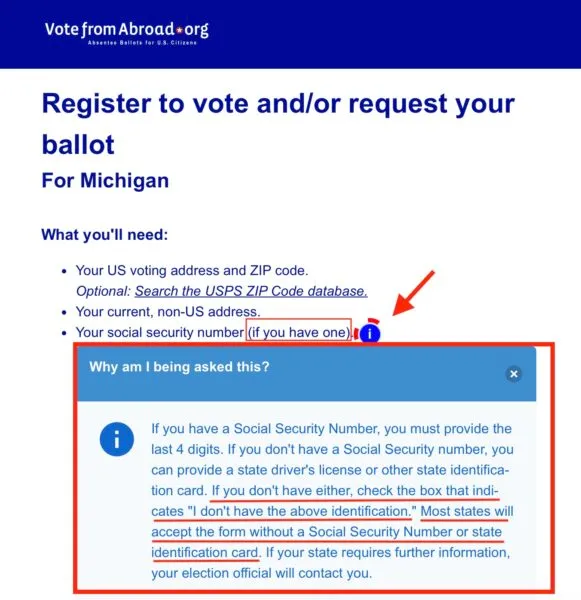
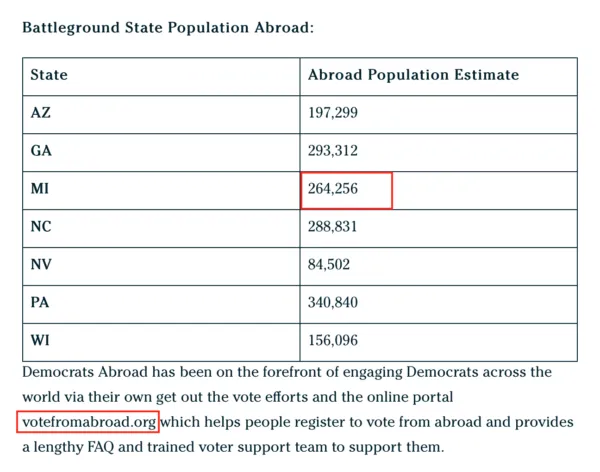
Heather Honey’s research highlighted just how open the system is to abuse. Hackers could potentially use stolen identities to register non-eligible individuals and have their votes counted without any verification. “We’ve found that anyone can select any state or address they wish to vote in, and there’s no mechanism in place to ensure that they ever lived there,” Honey explained during the interview.
Concerns about foreign interference aren’t merely hypothetical. On September 27, 2024, the U.S. Department of Justice unsealed an indictment against several Iranian nationals working with the Islamic Revolutionary Guard Corps (IRGC). These hackers are accused of attempting to interfere in U.S. elections by compromising the systems of state election websites, media outlets, and political campaigns. According to the indictment, the hackers have been active since January 2020, and their activities have continued through to 2024.

In a previous incident in 2020, two Iranian hackers, Seyyed Mohammad Hosein Musa Kazemi and Sajjad Kashian, managed to infiltrate a state election website in Alaska, accessing sensitive voter information. Their goal, according to the FBI, was to “influence and interfere” in the 2020 Presidential Election by crafting disinformation and voter intimidation campaigns.
Bold, Durable, and Patriotic: Trump Yard Signs Selling Out!
The indictment released in 2022 claims that the hackers disseminated a video showing how stolen voter data could be used to register fake voters through the UOCAVA system. Although the Department of Justice downplayed the significance of the video, calling it disinformation, experts argue that it demonstrates the vulnerabilities within the system.
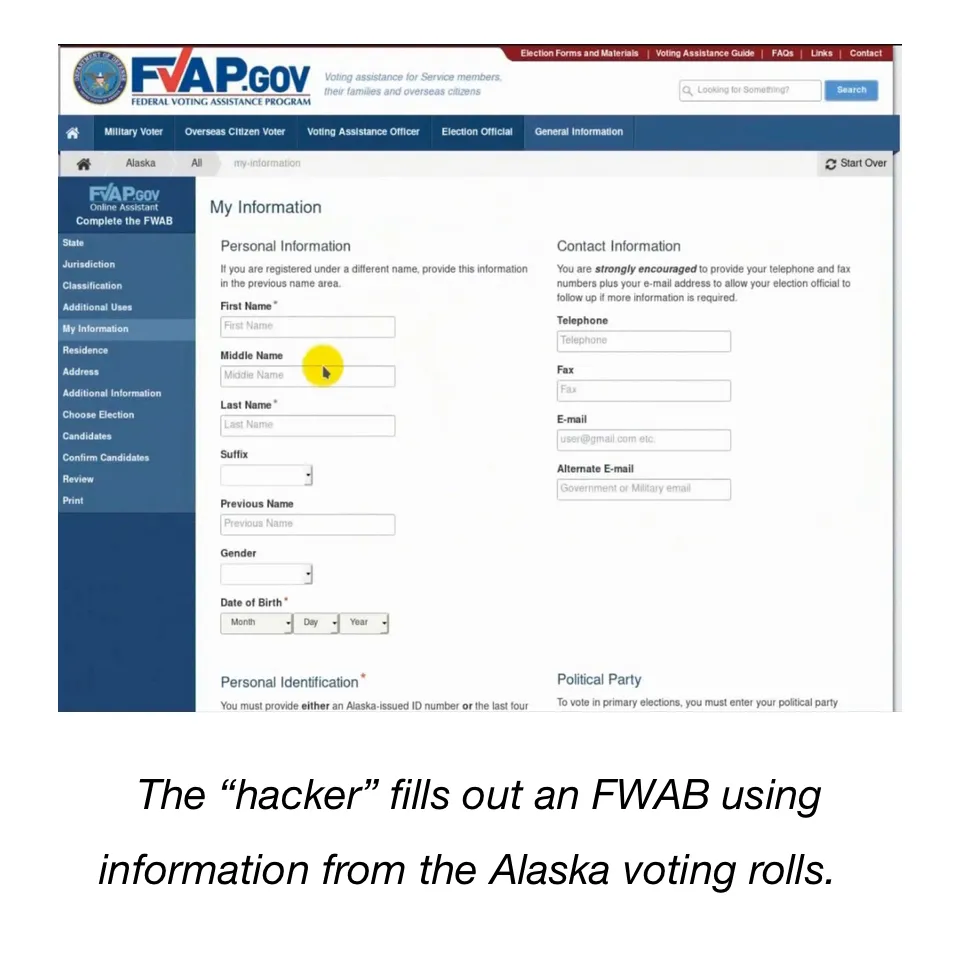
The potential for abuse of the UOCAVA system is deeply concerning, especially in light of the demonstrated capabilities of foreign actors like Iranian hackers. The system’s lack of robust identity verification opens the door for illegal manipulation. As the indictment notes, these hackers were able to use voter registration data to submit fraudulent ballots.
“The fact that UOCAVA voters can bypass ID requirements presents a critical vulnerability,” Heather Honey stated. “In battleground states where elections are decided by narrow margins, like Florida in 2000, even a small number of fraudulent ballots can change the outcome.”
As the 2024 elections approach, the question remains: will the vulnerabilities within the UOCAVA system be addressed, or will foreign interference once again threaten the integrity of U.S. elections? While the Justice Department continues to monitor threats from foreign adversaries, it is clear that much more needs to be done to safeguard the election process.
Given the close races expected in battleground states, every vote will count, and the security of overseas ballots will be under intense scrutiny. Voters and officials alike must remain vigilant, as the risk of foreign interference is higher than ever.

