

>> Continued From the Previous Page <<
The child was born under distressing conditions—premature at 35 weeks, arriving just one week after the mother’s second Pfizer injection. In a chilling detail, the baby was delivered with no vital signs and had to be resuscitated immediately.
From there, the child’s health remained on shaky ground. Multiple immune dysfunctions, frequent infections, surgeries, and developmental red flags ultimately led to a deeper investigation. Blood samples were analyzed using advanced fluorescence microscopy and Thioflavin T staining—a method that lights up amyloid structures. The result? Fibrils that looked eerily similar to the dangerous, self-replicating clots seen in degenerative diseases.

“The severe temporal correlation suggests a significant adverse maternal-fetal reaction,” McCairn reported.
Even more troubling, the scientific evidence shows that these spike protein-induced fibrils are not going away—and they don’t need constant exposure to grow. They behave like prions: once they begin misfolding, they can perpetuate themselves without further triggers. This discovery strikes at the heart of the “clearance” theory pushed by vaccine manufacturers and public health agencies.
McCairn emphasized, “It has been widely claimed that spike protein and mRNA clear rapidly from both maternal and fetal systems. However, this assertion is not supported by accumulating empirical data.”
He backed his claim with data from the Yale Post-Vaccine Syndrome study (2025), which found spike proteins circulating in people nearly two years after injection. Other studies, including those from Yonker et al. (2023), detected spike proteins in adolescents’ blood weeks and months after the jab.
But it gets even worse.
The vaccine makers assured the public that mRNA and lipid nanoparticles could not cross the placental barrier. That too, McCairn says, is false. Citing new research, he pointed to Swingle et al. (2023), who showed that mRNA-laden particles did in fact reach the placenta. Another 2024 study by Safford demonstrated how customized nanoparticles made it easier for vaccine components to travel directly to the maternal-fetal interface.
“This means the fetal environment is not protected,” McCairn added, calling for an immediate suspension of mRNA vaccine use in pregnant women.
Even the notion that these fibrils require fresh seeding to persist was shut down by McCairn, who cited Knowles et al. (2014) showing that prion-like proteins can self-perpetuate in the right conditions. Add cellular stress and chronic inflammation into the mix, and you have a recipe for ongoing biological chaos.
“The severity and immediate timing of the perinatal crisis—occurring within one week of the maternal injection—strongly implicates the vaccine-induced spike as a precipitating cause,” McCairn wrote.
Backing McCairn’s urgent calls for investigation are several heavy-hitters in the field: genomics expert Kevin McKernan, Japanese cardiologist Dr. Shojiro Kato, and Charles Rixey, a retired Marine Corps chemical and biological warfare specialist. This team used rigorous testing methods like spectroscopy, electron microscopy, and RT-QuIC—a test commonly used in mad cow disease research—to verify the presence of prion-like fibrils.
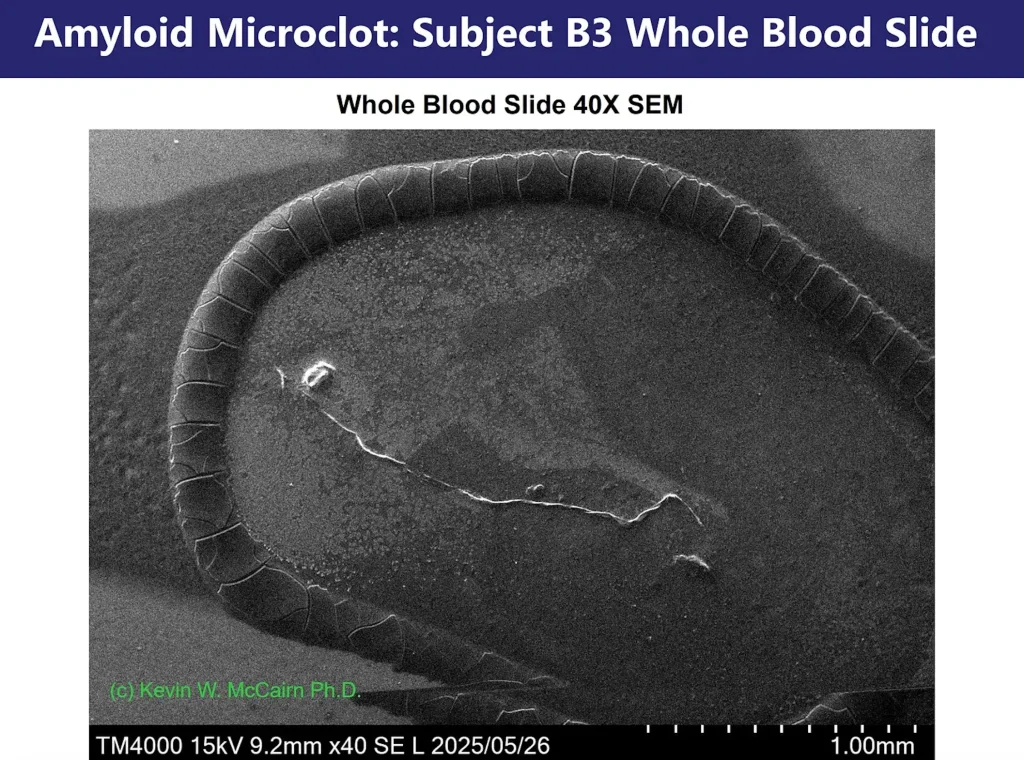
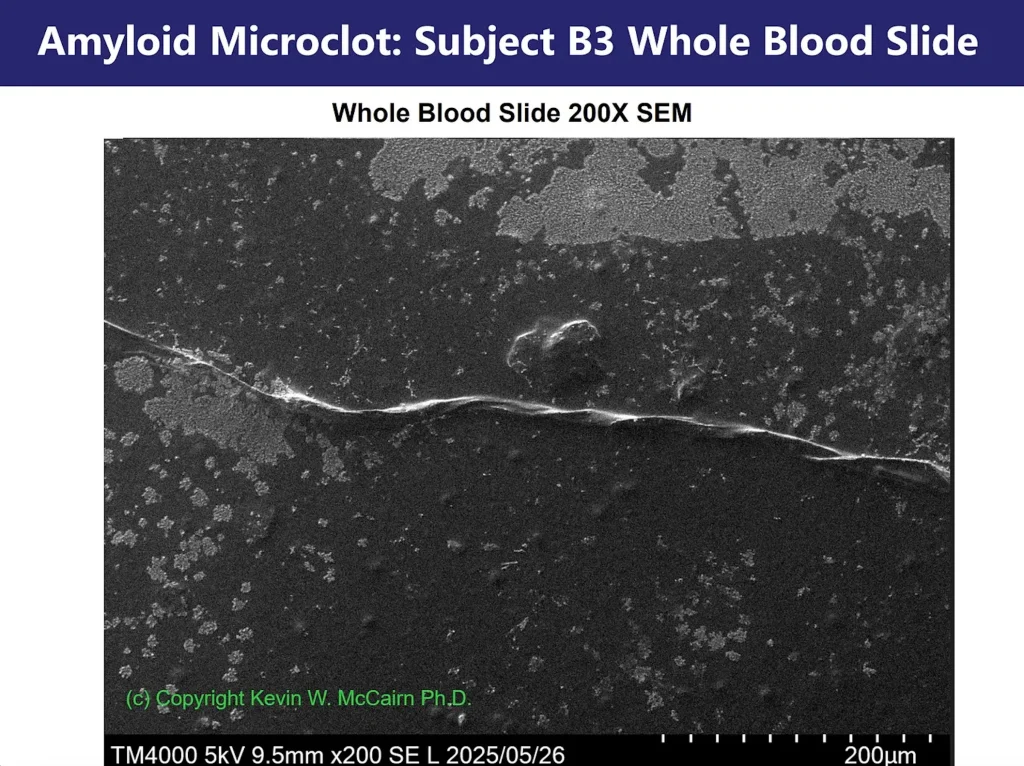
Their conclusion is stark: the spike protein, especially when delivered via mRNA platforms, can trigger long-lasting, deadly protein misfolding that continues well after birth.
For years, skeptics of mRNA technology were dismissed, de-platformed, and silenced as conspiracy theorists. Now, the science is catching up—and what it’s revealing is terrifying. The very technology hailed as a modern miracle may be leaving behind a legacy of invisible harm in our youngest and most vulnerable.
WATCH:
It’s time for answers. It’s time for accountability. And it’s long past time for a moratorium on injecting pregnant women with experimental gene-based vaccines.

