
>> Continued From the Previous Page <<
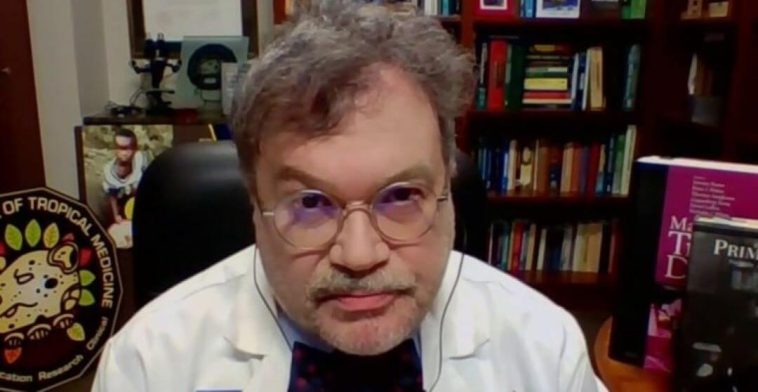
Many have questioned why the health expert did not address the role of lax border policies in the resurgence of these diseases. Instead, Hotez’s list seemed to center on broad and global threats, leaving some to accuse him of ignoring the obvious domestic implications.
Dr. Hotez is no stranger to controversy. Last year, he faced criticism for refusing to debate Robert Kennedy Jr. on the effectiveness of COVID-19 vaccines. The challenge was extended by Joe Rogan, who invited both Hotez and Kennedy to his podcast for an open discussion on vaccine efficacy.

Rather than engage in a public dialogue, Hotez dismissed the idea, stating, “Science is not something that is typically debated.” His refusal sparked backlash, with many accusing him of avoiding accountability and transparency. Instead of addressing Kennedy’s points, Hotez resorted to personal attacks, further fueling skepticism about his stance.
Dr. Hotez’s latest comments are not his first warning about future pandemics. In November, he ominously claimed that “Disease X”—a hypothetical pandemic worse than COVID-19—could be on the horizon.
“So I am very worried that we as a nation, haven’t made that commitment to really fully protect the American people,” Hotez said in an interview with FOX 26.

He went on to predict that “COVID-19 is just the warm-up act. The next pandemic may not be as severe, but it could be much more severe.”
WATCH:
Critics argue that Hotez’s statements often sow panic without providing actionable solutions. His focus on speculative pandemics has left some questioning his motives and credibility. Meanwhile, his critics note that public health experts should prioritize addressing existing health crises, including those exacerbated by the ongoing border crisis.
What are the best concealed carry holsters for ultimate security?
The timing of Hotez’s predictions, just days before Trump’s inauguration, has also drawn scrutiny. Some have labeled it as politically charged fear-mongering, pointing out that his warnings align with narratives often promoted by the mainstream media.
As the nation awaits the transition of power, Dr. Peter Hotez’s ominous predictions add fuel to an already polarized debate on public health. While his warnings may be grounded in scientific possibility, the omission of key factors and his history of dodging scrutiny raise significant questions. With concerns mounting about both future pandemics and the resurgence of preventable diseases, Americans are left wondering whether public health experts like Hotez are more focused on narratives than solutions.

