
>> Continued From the Previous Page <<
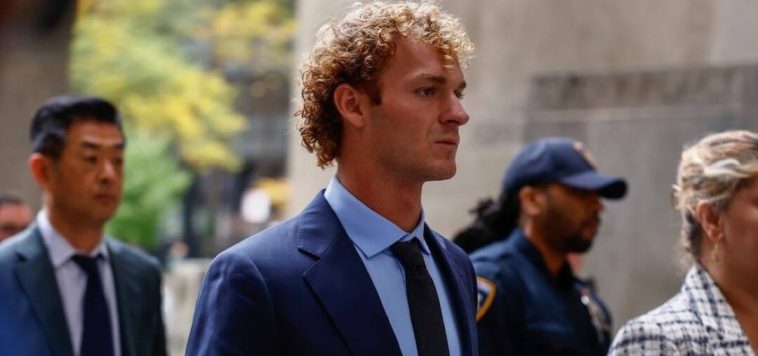
This week, the jury deadlocked during its deliberations, unable to reach a unanimous decision. On Friday, Judge Maxwell T. Wiley dismissed the manslaughter charge, which carried a maximum sentence of 15 years in prison. Penny now faces the lesser charge of criminally negligent homicide, which holds a maximum sentence of four years but has no mandatory minimum.
The jury is expected to return Monday to continue deliberating on this remaining charge.

Despite calls for Trump to pardon Penny once he takes office, there’s a fundamental obstacle: presidential pardons only apply to federal crimes. Penny’s charges are state crimes being prosecuted in a New York courtroom, meaning they fall entirely outside the jurisdiction of the U.S. president.
The U.S. Constitution, Article II, Section 2, specifically grants the president the power “to grant Reprieves and Pardons for Offenses against the United States.” This language confines the president’s authority to federal offenses. Crimes prosecuted under state law, like Penny’s, are under the purview of state governors—in this case, New York Governor Kathy Hochul.
The distinction between federal and state crimes has surfaced in other high-profile cases this year. For example, President Joe Biden recently issued a pardon for his son, Hunter Biden. That pardon applied only to federal charges related to gun and tax offenses. It would not shield Hunter from any state-level prosecutions, such as those related to state taxes.

Similarly, while Trump could potentially pardon himself for federal charges related to the investigations led by Special Counsel Jack Smith, state charges—such as those brought against him in Georgia and New York—would remain beyond his reach. This underscores the division of powers between federal and state jurisdictions in the U.S. legal system.
Although Trump cannot intervene in Penny’s case, he has repeatedly signaled his willingness to use presidential pardon powers in other contexts. One notable example is his commitment to granting clemency to many January 6 defendants, whose charges fall under federal law. Trump’s ability to pardon these individuals, should he take office, aligns with his constitutional authority to address federal crimes.
What are the best concealed carry holsters for ultimate security?
For Penny, any potential relief from legal consequences lies with New York’s state leadership, not the federal government. Governor Hochul would have the sole discretion to grant clemency or a pardon. As the jury reconvenes to deliberate his fate, the case remains a litmus test for public opinion on self-defense and accountability in volatile situations.
While Penny’s supporters may look to Trump for intervention, the constitutional framework of the United States makes it clear: state crimes remain outside the president’s reach.

