
>> Continued From the Previous Page <<
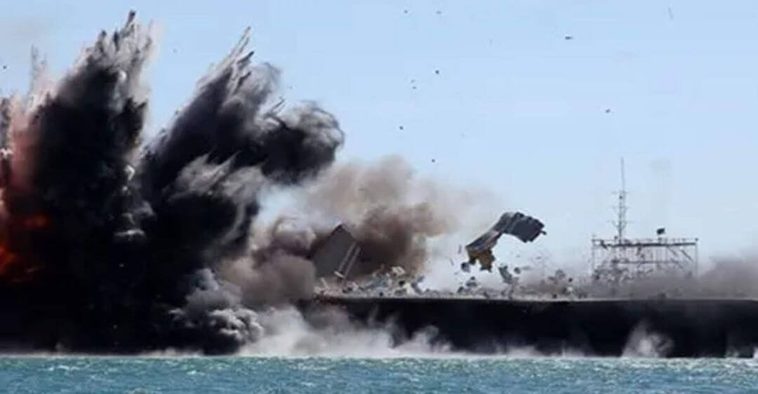
“U.S. forces conducted self-defense strikes in southern Iran today to protect our troops from threats posed by Iranian forces,” CENTCOM representative Capt. Tim Hawkins said.
Hawkins further explained that the targeted operations were directed at specific military assets believed to be involved in hostile activity against U.S. forces in the region.

“Targets included missile launch sites and Iranian boats attempting to emplace mines. U.S. Central Command continues to defend our forces while using restraint during the ongoing ceasefire,” Hawkins said.
The implication of the statement is that while military action has taken place, U.S. leadership is still attempting to avoid a broader escalation, maintaining what officials describe as a restrained posture amid continued tensions.
A senior U.S. official speaking to Fox News added more context to the maritime component of the operation, stating that American surveillance assets detected suspicious activity in one of the world’s most strategically sensitive waterways.

According to the official, two Iranian boats were observed appearing to deploy naval mines in the Strait of Hormuz, a critical passageway for global energy shipments.
Both vessels, reportedly operated by Iran’s Islamic Revolutionary Guard Corps (IRGC), were subsequently sunk following the engagement.
In addition, U.S. forces also targeted a missile installation in Bandar Abbas that was reportedly linked to threats against American aircraft operating in the region.
The official emphasized the defensive nature of the response, stating, “These were defensive strikes,” the official said, while other sources indicated that the incident should not be interpreted as a formal breakdown of the existing ceasefire arrangement.
Two additional sources also told Fox News that the latest military action does not necessarily signal the end of the ceasefire between the United States and Iran, suggesting instead that the situation remains fluid and subject to ongoing diplomatic management.
Meanwhile, CENTCOM has also highlighted what it describes as a significant achievement in its maritime security operations over the past several weeks, particularly in relation to Iranian shipping activity.
“U.S. Central Command (CENTCOM) forces reached the milestone of redirecting 100 commercial vessels, May 23, while enforcing a maritime blockade against Iran,” CENTCOM posted on X.
The command added further operational details, noting the scale and duration of the effort and the number of personnel involved in maintaining maritime stability in the region.
“Over the past six weeks, more than 15,000 Soldiers, Sailors, Marines and Airmen have redirected 100 vessels, disabled four, and allowed 26 humanitarian aid ships to pass,” CENTCOM wrote in the Saturday post.
CENTCOM also outlined the broader military footprint supporting these operations, indicating that naval and air assets from multiple carrier strike groups and expeditionary units have been deployed to the region. These include major formations such as carrier strike groups and amphibious ready groups, alongside guided-missile destroyers and other warships supporting ongoing missions.
At the same time, political signals from Washington suggest that diplomatic discussions are still being actively considered. President Donald Trump has recently offered public remarks outlining possible conditions for a potential agreement involving Iran’s nuclear materials.
“The Enriched Uranium (Nuclear Dust!) will either be immediately turned over to the United States to be brought home and destroyed,” Trump wrote Monday on Truth Social.
He further elaborated on an alternative arrangement that could involve monitored destruction of nuclear materials under international supervision.
“in conjunction and coordination with the Islamic Republic of Iran, destroyed in place or, at another acceptable location, with the Atomic Energy Commission, or its equivalent, being witness to this process and event.”
As both military operations and diplomatic messaging continue in parallel, the situation underscores the fragile balance currently shaping U.S.–Iran relations. While battlefield actions suggest continued tensions, official statements from multiple sides indicate that efforts to prevent full-scale escalation remain ongoing.

