
>> Continued From the Previous Page <<
Ohio taxpayers are now responsible for roughly $600 million toward a $2.6 billion stadium planned for Brook Park. On top of that, Brook Park itself is expected to contribute another $245 million, though that portion has not yet been finalized.
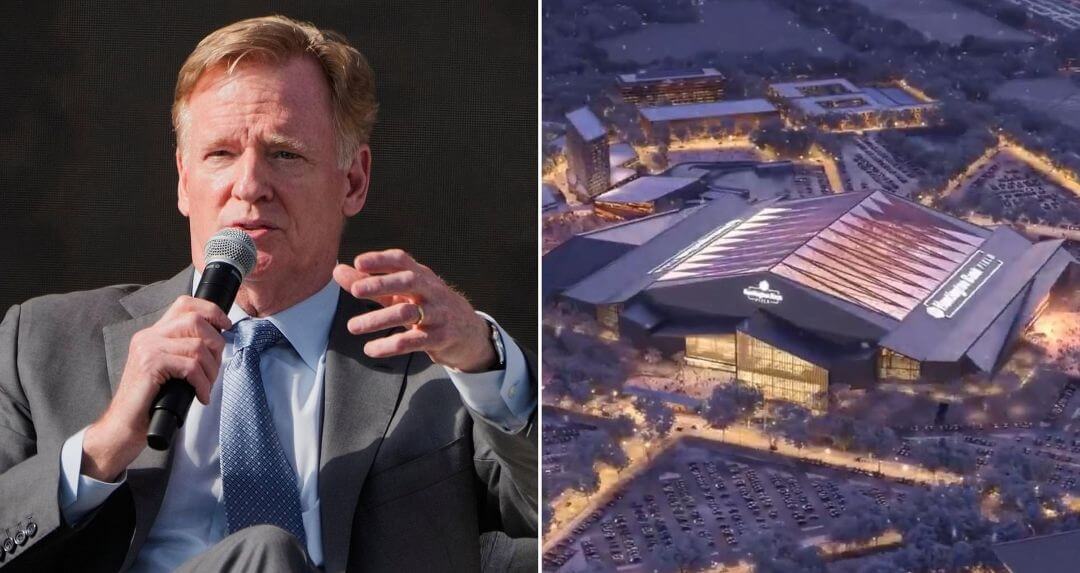
At the groundbreaking ceremony, Goodell framed the project in glowing terms, calling it “transformative” for Northeast Ohio. But the financial structure tells a more complicated story, as the Haslam Sports Group will ultimately control a 178-acre development expected to generate revenue not just from football, but also from parking, retail, dining, hotels, and entertainment events.

Critics point out that while the Haslam family is covering approximately $1.8 billion of the cost, the remaining burden still falls heavily on taxpayers—especially if future overruns occur.
Still, Goodell made one statement that stood out above the rest.
“I have no doubt that this stadium is going to be Super Bowl quality,” he said.
“Zero doubt about that.”
The new venue is designed to seat 67,500 fans and sits on the site of a former Ford Motor Company plant, directly across from Cleveland Hopkins International Airport. The stadium’s design places the first row just 16 feet from the field, while the farthest seat is only 248 feet away, making it one of the most compact viewing experiences in professional football.
Engineering constraints also played a major role in the design. Because of Federal Aviation Administration restrictions due to its proximity to the airport runway, the stadium had to be built 80 feet below ground level. A transparent folded-plate roof design pushed costs up from an estimated $2.4 billion to $2.6 billion.
Despite the praise, Goodell also made clear that hosting a Super Bowl involves far more than just a modern stadium. The NFL requires massive infrastructure support, including a minimum of roughly 50,000 to 60,000 hotel rooms to accommodate the influx of visitors during Super Bowl week.
Greater Cleveland currently has about 22,000 hotel rooms—far short of what the league typically demands. By comparison, Los Angeles offers more than 100,000 rooms, illustrating the gap Cleveland still faces.
Goodell addressed the issue directly, stating: “We have probably close to 200,000 people coming in for a Super Bowl. It’s great for economic impact, but it’s hard for cities to be able to meet some of those requirements on the facilities.”
Plans are underway to add capacity. The Haslam development includes two hotels within the stadium footprint, and Cleveland Hopkins Airport is already undergoing a $1 billion renovation. Ohio Governor Mike DeWine expressed optimism, saying, “I think you’re going to see hotel rooms because of this stadium, and I think that in the future we certainly will have a Super Bowl.”
Even so, the stadium is not scheduled to open until 2029, and closing the hotel gap will take years of additional development.
The financing model behind the project has also drawn criticism. Ohio lawmakers used money from the state’s unclaimed funds account—consisting of dormant bank accounts, uncashed checks, and forgotten deposits belonging to private citizens—to help fund the stadium. The state imposed a 10-year deadline for claims before redirecting the money.
A lawsuit challenging the move argues it amounts to an unconstitutional taking of private property, and the case remains unresolved.
Cleveland is far from alone in this approach. Across the country, public funding for NFL stadiums has surged. Kansas approved $1.8 billion in subsidies to retain the Chiefs, Tennessee committed $1.26 billion for the Titans’ new venue, and New York contributed $850 million to the Buffalo Bills stadium project.
Out of 30 NFL stadiums, only a handful were built without taxpayer assistance.
Goodell also confirmed the NFL Draft will return to Cleveland, offering the city another chance to showcase its event-hosting capabilities. The Browns are still targeting a 2029 debut for the new stadium, but for taxpayers, the real question remains whether the long-term return will ever match the public investment being made today.

