
>> Continued From the Previous Page <<
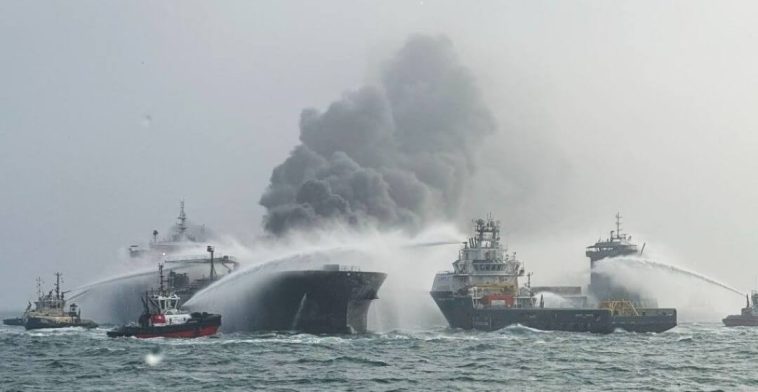
Footage captured by a nearby vessel and aired by the BBC revealed an ominous scene—thick plumes of smoke rising from both ships, a grim testament to the intensity of the collision. The scale of the blaze was so severe that even from shore, witnesses described its aftermath as catastrophic.
Boyers provided further insight into the terrifying ordeal, saying he had been informed of “a massive fireball.” He added, “It’s too far out for us to see—about 10 miles—but we have seen the vessels bringing them in.”

The incident involved the MV Stena Immaculate, a U.S.-flagged chemical and oil products tanker, which was at anchor at the time of impact after departing from Greece. The cargo ship, identified as the Portugal-flagged Solong, was en route from Grangemouth, Scotland, to Rotterdam, Netherlands, when the collision occurred.
The mayday call was reportedly made at 9:48 a.m., alerting emergency responders to the distressing situation. The collision site is located off the coast of Hull, roughly 155 miles north of London.
The cause of the collision remains under investigation, but early reports indicate the impact was severe enough to force crew members to abandon ship. The fate of both vessels and potential environmental hazards are also under scrutiny as emergency teams continue their work.
KICK OUT The Cold and Say Hello to The Handyheater! Warming Any Spot INSTANTLY!
This maritime disaster is now the focus of a high-stakes rescue mission, with authorities racing against time to ensure the safety of any remaining crew members and to assess the full scale of the damage. As more details emerge, questions will likely arise about how such a catastrophic event could unfold despite modern navigation systems and stringent maritime safety protocols.
The situation remains fluid, with authorities working tirelessly to bring the emergency under control. Updates are expected as the investigation progresses and rescue operations continue.

