
>> Continued From the Previous Page <<
The U.S. State Department confirmed the death of the embassy employee but has remained tight-lipped about the circumstances. In a brief statement provided to reporters, officials emphasized the sensitivity of the situation and the need for privacy. The department said, “Out of respect for the privacy of the family and loved ones, we have no further information to provide at this time,” the State Department said in an emailed reply to questions from The Associated Press. No additional identifying information about the victim has been publicly released.
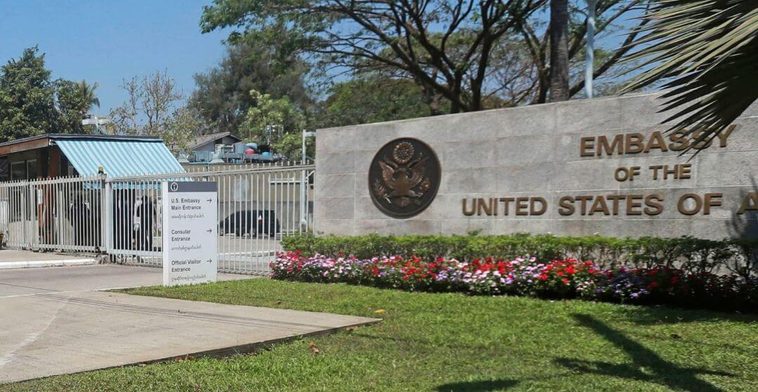
As inquiries continue, officials in Thailand and representatives at the U.S. Embassy in Myanmar have directed all questions back to the State Department, underscoring the coordinated effort to control the flow of information during an active investigation. Meanwhile, two attorneys familiar with the proceedings told The Associated Press that a Thai woman appeared in court on Thursday and was formally charged with murder, along with an additional charge under Myanmar’s immigration law.

If convicted, the accused could face a wide range of penalties under Myanmar law, including a prison sentence of at least 10 years and potentially the death penalty. However, very little is currently known about the evidence being presented or the exact circumstances that led authorities to file charges in the case. Court officials, police representatives, and prison authorities in Myanmar have all declined to provide public comment, consistent with the country’s long-standing pattern of restricting media access to sensitive legal matters.
Thailand’s Foreign Ministry acknowledged the situation and confirmed it has provided consular assistance to the woman accused in the case. Officials also stated that her family has been notified, though they declined to elaborate further, citing the ongoing nature of legal proceedings and diplomatic sensitivities between the countries involved.
The case is unfolding in Myanmar, a nation that has been in turmoil since the military coup in 2021 that removed the democratically elected government of Aung San Suu Kyi. Since then, the country has descended into a widening civil conflict involving the ruling junta, ethnic armed groups, and pro-democracy resistance forces. The instability has severely impacted governance, law enforcement transparency, and judicial consistency, particularly in high-profile or politically sensitive cases.
In this environment, foreign embassies and international organizations often operate under heightened security concerns, with limited visibility into local investigative processes. The lack of publicly available information in this case has only intensified speculation within diplomatic circles, though officials have so far avoided drawing conclusions while the legal process unfolds.
For now, both the identity of the American diplomat and the precise circumstances surrounding the death remain undisclosed. With a murder charge now formally filed and multiple governments involved, the case is expected to draw continued international attention as more details gradually emerge from one of Southeast Asia’s most opaque and volatile legal environments.

