
>> Continued From the Previous Page <<
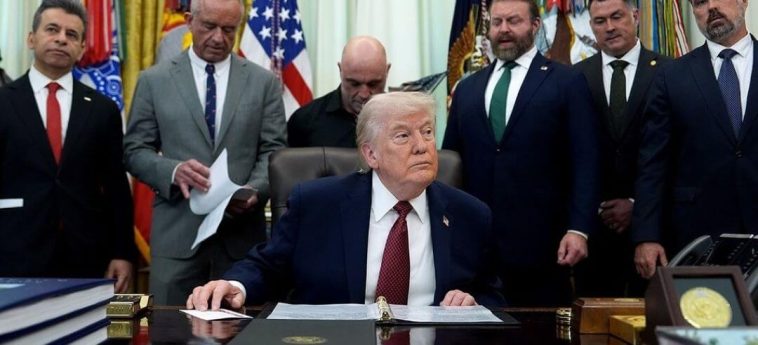
Trump emphasized that the stakes are especially high for veterans, a group that continues to face alarming rates of suicide and untreated trauma.
“In many cases, these experimental treatments have shown life-changing potential for those suffering from severe mental illness and depression, including our cherished veterans,” he said.

One treatment drawing particular attention is ibogaine, a psychoactive compound that has shown promising early results in clinical settings. Trump cited a recent study involving veterans suffering from traumatic brain injuries.
“In 2024, a study from Stanford University, 30 special operation veterans with traumatic brain injuries underwent — it’s called ibogaine treatment — ibogaine, remember the name,” Trump noted, adding that participants “experienced an 80 to 90% reduction in symptoms of depression and anxiety within one month.”
Momentum is already building at the state level. Lawmakers in Texas have reportedly committed significant funding toward ibogaine research, and now the federal government is stepping in with its own financial backing.
“In Texas, Republican leaders have already committed $50 million to the ibogaine research. And today, the federal government is making a $50 million research investment in its own. And so that was just approved just last night,” Trump announced.
In addition to funding, the order also expands access under existing federal law. Trump confirmed that pathways are being opened for critically ill patients to receive these treatments under the Right to Try Act.
“We’re also opening a pathway for ibogaine to be administered to desperately ill patients under the right to try law,” he said.
“Today’s order will ensure that people suffering from debilitating symptoms might finally have a chance to reclaim their lives and lead a happier life, just lead a happier life,” Trump added.
Election Integrity Push Continues
The mental health initiative comes just weeks after Trump signed another major executive order focused on election security, reinforcing his administration’s broader agenda of tightening federal oversight.
That directive, titled “Ensuring Citizenship Verification and Integrity in Federal Elections,” introduces new mechanisms designed to strengthen voter eligibility checks and standardize how ballots are handled nationwide.
At the center of the plan is a coordinated effort between the Department of Homeland Security and the Social Security Administration. Together, they will compile updated lists of confirmed U.S. citizens using federal databases. These lists will then be shared with state election officials to assist in verifying voter rolls.
Importantly, inclusion on these lists will not automatically register anyone to vote. Instead, states will retain control over their own registration systems while gaining access to more reliable data.
The order also directs the Department of Justice to ramp up enforcement of election laws, prioritizing investigations into improper ballot distribution and potential voter fraud.
Meanwhile, the United States Postal Service has been tasked with creating a nationwide framework for handling mail-in ballots. Within 60 days, the agency must begin developing standardized procedures aimed at improving ballot tracking and security.
Under the proposal, all mail-in ballots would be required to use specially marked envelopes with unique tracking barcodes. These changes are intended to reduce errors, prevent misuse, and ensure ballots move through the system with greater transparency.
A Dual Track Agenda
Taken together, the two executive orders highlight a dual-track strategy from Trump: accelerating cutting-edge medical treatments for Americans in need while simultaneously reinforcing confidence in the nation’s electoral system.
Supporters argue the approach tackles two major concerns head-on—public health and election integrity—while critics are likely to raise questions about federal overreach and the pace of regulatory change.
Still, for veterans seeking relief and voters demanding accountability, the administration is betting that decisive action will resonate.
And if early data on treatments like ibogaine holds up, the impact could extend far beyond politics—potentially transforming how America treats some of its most difficult mental health conditions.

