

>> Continued From the Previous Page <<
This is a significant shift for Cook, who has been steering Apple since taking over after the death of Steve Jobs in 2011. While the company has long relied on overseas production, Cook now finds himself navigating the toughest U.S. crackdown on Apple’s foreign-based operations in years. The stakes are high: Trump’s proposed 25% tariff on iPhones could drive consumer prices through the roof if Apple fails to expand U.S. production.
Apple had already pledged earlier this year to spend $500 billion and hire 20,000 new American workers over the next four years. That expansion is focused on emerging tech like artificial intelligence and machine learning. While Cook made similar, smaller commitments during the Biden years, the scale and timing of this new investment clearly signal an urgent effort to avoid Trump’s tariff hammer.

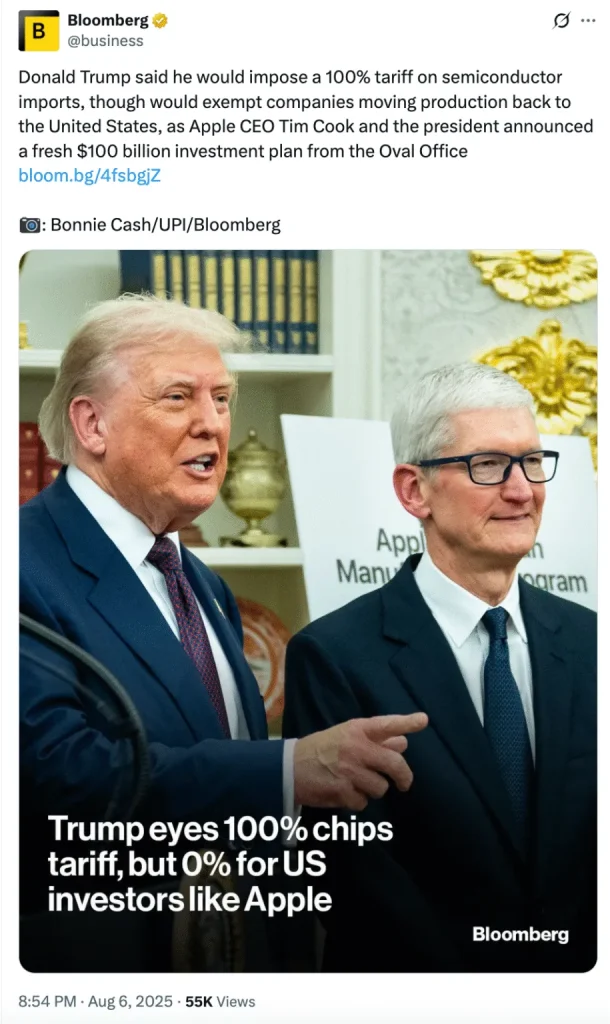
Standing before reporters, Cook detailed Apple’s ambitious plan to create an “end-to-end semiconductor supply chain” in the U.S. through partnerships with companies like Broadcom and Amko. “We’ve already signed new agreements with 10 companies across America,” he said, highlighting Apple’s deal to become Taiwan Semiconductor Manufacturing Company’s “first and largest customer” at its new Arizona facility.
According to Cook, Apple’s U.S.-based suppliers are now on track to produce 19 million silicon chips. Trump, taking the microphone next, made it clear that Apple’s compliance with its pledge would pay off. “If you’re building, there will be no charge,” the president promised, signaling that U.S.-made chips will be exempt from the steep tariffs.
In another notable shift, Cook announced that every future iPhone will feature glass screens made in Kentucky. “For the first time ever, every single new iPhone and every single new Apple Watch sold anywhere in the world will contain cover glass made in Kentucky,” he said.
For Trump, this is yet another example of his economic strategy forcing multinational corporations to reinvest in America. For Apple, it’s a calculated move to keep its flagship products affordable while strengthening ties with a president known for rewarding companies that “build in the USA.”
If Cook’s $100 billion gamble pays off, Apple may not just dodge tariffs—it could also help lead a broader revival of U.S. manufacturing, one that has been missing for decades.

