
>> Continued From the Previous Page <<
Trump didn’t hold back on the blame: “Energy was what caused our problem initially [with inflation]. Energy is going to bring us back.” He highlighted the Biden-Harris administration’s restrictions on oil drilling and exploration as one of the primary drivers of inflation. To reverse this, Trump vowed to roll out a new energy policy that would focus on energy abundance and independence, potentially reducing energy costs by half within a year.
A key feature of Trump’s plan involves a complete overhaul of the Biden-era Green New Deal initiatives. These initiatives, introduced through the Inflation Reduction Act (IRA), are running massively over budget. Economists from the Wharton School of Business and Goldman Sachs recently raised the projected cost of the IRA’s green programs from $385 billion to over $1 trillion. By scrapping these costly programs, Trump believes the economy can return to a path of sustainable growth.

The former president also promised to launch a “historic campaign” to cut regulatory red tape, stating that burdensome regulations have added thousands of dollars to the annual cost of living for American families. “Over the past four years, Kamala has added $6,300 a year in regulatory costs onto the backs of the typical American family,” he explained. Trump pledged to eliminate ten regulations for every new one introduced, aiming to lighten the financial load on Americans.
In a surprising move, Trump announced that billionaire entrepreneur Elon Musk would chair his proposed Government Efficiency Commission, which would audit the federal government’s finances and performance. The commission, according to Trump, will make “drastic reforms” necessary to prevent economic collapse. Musk has been vocal about the role of government overspending in fueling inflation, once writing, “The rise in prices (inflation) is caused by government overspending, which increases the amount of money faster than the increase in goods & services output.”
Carry 46 rounds concealed? (comfortably)
To further boost the economy, Trump plans to make the Tax Cuts and Jobs Act (TCJA) of 2017 permanent. He also plans to lower the corporate tax rate for companies manufacturing in the U.S. from 21% to 15%, offering more incentives for businesses to keep jobs and production on American soil. In contrast, Harris has suggested raising the corporate tax rate to 28%, a move Trump argues would drive businesses overseas, leaving American workers behind.
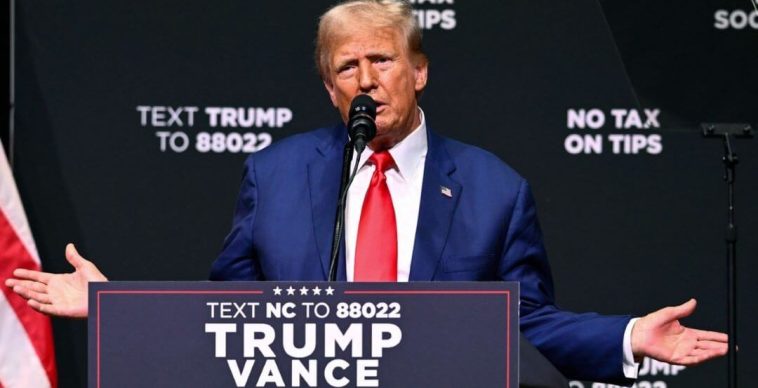
As the nation faces economic uncertainty, Trump’s five-step plan offers a sharp divergence from the current administration’s approach. His speech in New York aimed to show that his policies, particularly in energy and taxation, could restore the nation’s economic health.
While critics of the former president argue that his proposals may benefit large corporations, Trump’s supporters view his policies as the only way to lift the nation out of its current fiscal troubles. With energy prices high, regulatory burdens growing, and inflation hitting American wallets hard, the path forward, according to Trump, is clear: “Put Trump back in for a second term.”

