
>> Continued From the Previous Page <<
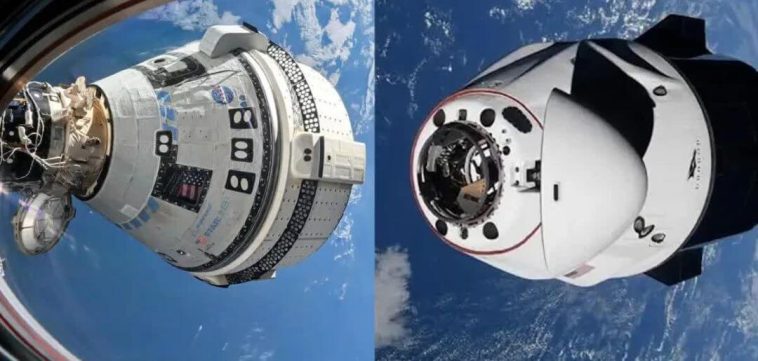
The Boeing Starliner has faced numerous challenges, with its most recent test flight encountering critical issues, including helium leaks and malfunctioning thrusters. These problems arose during the mission that took Williams and Wilmore to the ISS in early June, casting doubt on the spacecraft’s reliability.
NASA Administrator Bill Nelson highlighted the agency’s consideration of its extensive experience with both successful and failed missions in making this decision. “We have had mistakes done in the past: We lost two space shuttles as a result of there not being a culture in which information could come forward,” Nelson said. “Spaceflight is risky, even at its safest and even at its most routine. And a test flight, by nature, is neither safe nor routine.”

As a result of the switch to SpaceX, the astronauts’ return has been significantly delayed. They will now occupy two empty seats on the upcoming Crew-9 mission, extending their stay on the ISS by an additional six months. This means they won’t return to Earth until February 2025 at the earliest.
The delay is far from ideal, but NASA officials believe it’s the safest option. NASA’s Steve Stitch explained, “The bottom line relative to bringing Starliner back is — there was just too much uncertainty in the prediction of the thrusters. It was just too much risk with the crew, and so we decided to pursue the uncrewed path forward.”
NASA designed its Commercial Crew Program with redundancy in mind, allowing one spacecraft to serve as a backup for another. This flexibility has proven critical in the current situation, as SpaceX steps in to cover for Boeing’s shortcomings.
Brutal “Pocket Weapon” Stops Hearts (discounted for next 78)
Ken Bowersox, associate administrator for NASA’s Space Operations Mission Directorate, commented on the significance of having multiple options available. “We’re in a kind of a new situation here and that we’ve got multiple options,” he said. “That’s something that we’re going to have to deal with in the future — we could find ourselves in a situation where we need to bring a (SpaceX) Dragon crew or a (Russian) Soyuz crew back on a Starliner.”
Boeing’s continued struggles with the Starliner have only served to highlight the success and reliability of SpaceX’s Crew Dragon. While Boeing was once seen as a dominant force in aerospace, its recent failures have left the door wide open for SpaceX to further establish itself as the go-to provider for NASA’s manned space missions.
As NASA prepares for the delayed return of Williams and Wilmore, the situation underscores the inherent risks and challenges of spaceflight. For Boeing, the pressure is mounting to resolve the issues with Starliner and prove that it can still be a reliable partner for NASA. Until then, SpaceX’s Crew Dragon remains the agency’s best hope for safely returning astronauts to Earth.

