
>> Continued From the Previous Page <<
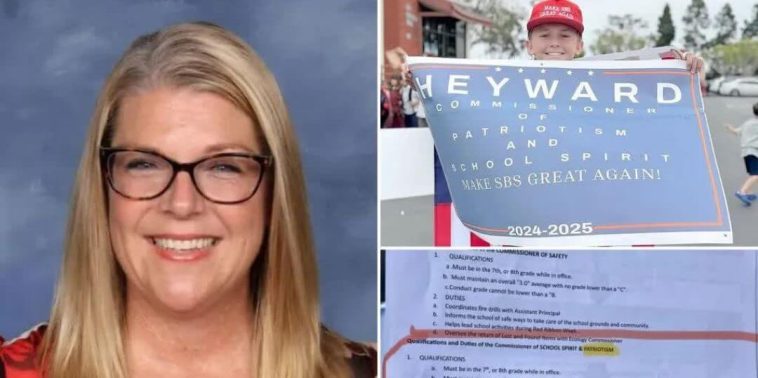
The school’s stance was outlined in a communication to parents, indicating that all speeches had to be pre-approved to ensure they were relevant and appropriate. However, Jimmy’s refusal to dilute his patriotic sentiments led to him being sidelined during the speech delivery, where he was visibly excluded from participating—an act that his mother, Hattie Ruggles, described as humiliating.
The incident escalated when Jimmy’s father protested at the event, resulting in the school calling the police. However, the police interaction ended without incident, further highlighting the perceived overreach by the school administration.

This backlash prompted Jimmy’s mother to start a petition for the removal of Principal Mary Flock, citing her handling of the situation as contrary to the values expected of school leadership. Subsequently, an email circulated within the school community indicated that Flock would not be returning next year.
Yet, in a shocking development, the school informed Jimmy’s family that he and his siblings would not be permitted to return to Saint Bonaventure next year. The school cited “serious violations of the Christian Code of Conduct and the Parent Electronic Communications Policy” as the reason for this drastic measure. This decision has been met with criticism and viewed by some as a retaliatory action against the Heyward family for challenging the school’s authority.
This series of events raises significant questions about the balance between school policies and the expression of patriotic sentiments in educational settings. It also highlights the ongoing debate about freedom of speech and the extent of administrative control in schools. As the community reacts to these developments, the discussion is likely to continue, reflecting broader national conversations about patriotism and education.

Get Your FREE Trump 2024 Election Shirt – We’re Shipping It Right to You!
The Heyward family’s experience has resonated with many, turning a school election speech into a broader dialogue on civic values and the role of education in shaping young citizens. As this story continues to unfold, it serves as a poignant reminder of the tensions that can arise when educational policies and personal convictions collide.

