
>> Continued From the Previous Page <<
The broader argument was summed up forcefully by Senator Lindsey Graham, who framed the issue as one of accountability for cities that resist federal law. Graham stated: “I think there should be consequences to cities and states that undercut federal law,” Graham told Fox News Digital Monday. “I think they should pay a price for what they do.” His remarks reflect a growing sentiment among Republican lawmakers that sanctuary policies are not just symbolic political positions, but active interference with federal immigration enforcement efforts.
Senator Deb Fischer echoed that position, emphasizing that federal agencies are already reassessing their relationships with non-cooperative jurisdictions. Fischer said: “If they want to be a sanctuary city, they’ve made that choice and they’re getting a response now from Homeland Security.” Her comments point to a broader shift in enforcement posture, suggesting that sanctuary jurisdictions may face consequences not only in immigration enforcement but across multiple federal partnerships.

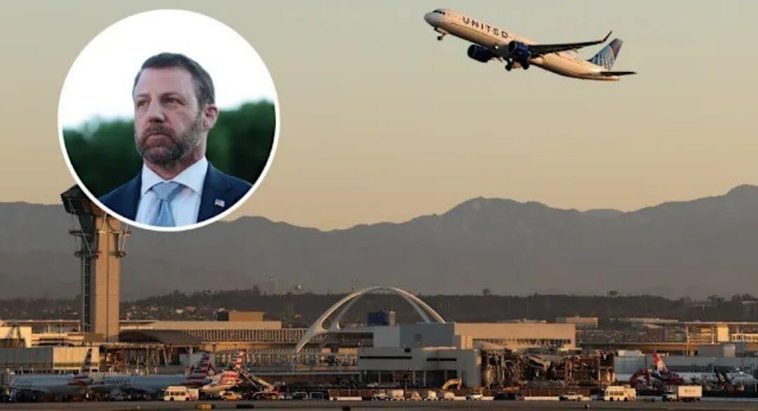
Democratic leaders, however, have condemned the airport-related proposals as extreme and impractical. During recent Senate discussions, several Democrats labeled Mullin’s idea “outrageous” and “insane,” arguing that restricting CBP staffing at major international airports would create unnecessary chaos for travelers and harm local economies. Republicans counter that the current system already places federal resources in cities that openly refuse to assist federal immigration authorities, creating what they describe as a policy contradiction.
The timing of the debate is particularly significant as the United States prepares to host the 2026 FIFA World Cup, one of the largest international sporting events in history. Cities such as New York, Los Angeles, Chicago, and Philadelphia are expected to serve as major hubs for incoming international travelers. Organizers project approximately 6.5 million visitors, with roughly 40 percent arriving from overseas. The tournament is expected to generate an estimated $7.5 billion in tourism revenue, with each international visitor spending an average of $5,000 during their stay.
Transportation experts note that nearly all of that economic activity depends on efficient international airport operations. If federal CBP staffing were reduced or removed from key airports such as JFK, LAX, and O’Hare, flights could be diverted to other U.S. entry points, potentially shifting billions in tourism revenue away from sanctuary jurisdictions and toward cities that fully cooperate with federal enforcement, including Houston, Dallas, and Miami.
Critics of sanctuary policies argue that this shift is a direct consequence of local political decisions made over many years. Cities like Chicago, New York, and Los Angeles have long positioned themselves as resistant to federal immigration enforcement while still receiving significant federal funding and infrastructure support. Legal challenges have already been launched, including lawsuits led by Attorney General Pam Bondi against New York and Chicago, alleging obstruction of federal immigration enforcement duties. Meanwhile, the Center for Immigration Studies has estimated that sanctuary jurisdictions have received more than $1.5 billion in Department of Justice grants.
As the political standoff intensifies, Republican lawmakers argue that the federal government is simply aligning resources with compliance. Democratic officials, on the other hand, warn of economic disruption and strained public services. With the World Cup approaching and immigration enforcement remaining a central national issue, the debate over sanctuary city policy is likely to become even more contentious in the months ahead.

