
>> Continued From the Previous Page <<
According to Rubio, the first phase is already underway and it hits where it hurts most.
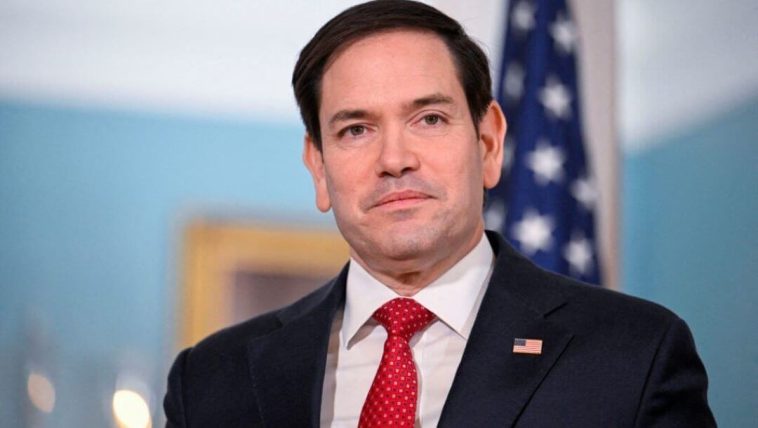
“We don’t want it descending into chaos,” Rubio told reporters after the briefing.

That stabilization phase centers on a full scale oil quarantine that effectively shuts down Venezuela’s ability to profit from its only remaining economic lifeline.
“The quarantine is Trump’s ace in the hole.”
Rubio explained that Venezuela can no longer move sanctioned oil without the United States stepping in.
“We are going to take between 30 and 50 million barrels of oil,” Rubio said.
“We’re going to sell it in the marketplace, at market rates, not at the discounts Venezuela was getting.”
The administration will oversee every dollar generated from those sales.
“That money will then be handled in such a way that we will control how it is dispersed in a way that benefits the Venezuelan people, not corruption, not the regime,” Rubio explained.
As Rubio spoke, the Coast Guard seized additional tankers, reinforcing the message that Washington now controls Venezuela’s oil arteries.
An interim government with no leverage
Venezuela’s interim president Delcy Rodríguez finds herself boxed in. Without access to oil revenue, her government cannot fund basic operations or import essential goods without American approval.
Phase two of the plan, described as recovery, aims to bring Western energy firms back into Venezuela’s devastated oil fields. Despite sitting atop roughly 300 billion barrels of proven reserves, decades of socialist mismanagement have left the infrastructure in ruins.
“The second phase will be a phase that we call recovery, and that is ensuring that American, Western and other companies have access to the Venezuelan market in a way that’s fair,” Rubio stated.
This stage also includes releasing political prisoners and allowing exiled opposition figures to return.
Rubio said opposition forces “can be amnestied and released from prisons or brought back to the country and begin to rebuild civil society.”
Among those figures is María Corina Machado, the 2025 Nobel Peace Prize recipient who has long positioned herself as a democratic alternative to socialism.
The transition phase and quiet negotiations
Rubio offered fewer public details on phase three, known as transition, but hinted that significant negotiations are already taking place.
“The third phase, of course, will be one of transition,” Rubio told reporters.
“We feel like we’ll be moving forward here in a very positive way.”
Behind the scenes, Trump’s team is reportedly engaging Venezuelan military leaders and political factions. Rodriguez’s role may prove temporary, as Trump himself has made clear that Washington will ultimately determine the timing and structure of future elections.
Senator John Thune praised the operation as decisive, signaling growing support among establishment Republicans.
Learning from past failures
Rubio acknowledged that the administration learned hard lessons from Trump’s first term. In 2019, the United States recognized Juan Guaido as interim president, only to watch Maduro cling to power.
This time, the approach is radically different.
Instead of symbolic recognition, Trump deployed naval assets, seized oil infrastructure, and used elite military force to remove the regime’s leader outright.
The oil quarantine now gives Washington unprecedented leverage. Without U.S. approval, Venezuela cannot pay workers, stabilize its currency, or feed its population.
Broader consequences for the region
Interior Secretary Doug Burgum and Energy Secretary Chris Wright are already in talks with American energy firms about large scale investments to rehabilitate Venezuela’s oil sector.
Rubio emphasized that Gulf Coast refineries are uniquely suited to process Venezuela’s heavy crude and predicted “tremendous interest” from U.S. companies.
The fallout extends beyond Venezuela. For years, communist Cuba relied on subsidized Venezuelan oil to survive. That pipeline has now been severed.
“If I lived in Havana and I was in the government, I’d be concerned,” Rubio said Saturday.
Maduro, meanwhile, still faces federal charges from 2020 related to drug trafficking and weapons violations.
Whether Venezuela’s suffering will be blamed on the interim leadership, the former dictator, or American intervention remains an open question. But one thing is clear.
Trump is no longer asking permission in Latin America. He is rewriting the rules.

