
>> Continued From the Previous Page <<
While changing a street name may seem simple on the surface, supporters say the impact would be significant.
Every official document, diplomatic communication, visa application, embassy letter, and government correspondence originating from the Chinese Embassy would be forced to display the name.

In effect, the Chinese government would have to repeatedly acknowledge the very event it has spent decades attempting to erase.
The legislation also calls for permanent street signs to be installed around the embassy area, ensuring the memorial designation remains visible to diplomats, journalists, tourists, and foreign officials visiting the compound.
Scott said the CCP has shown “no remorse for this horrific event, has never taken accountability, and continues to commit severe human rights violations to this day.”
He added that the legislation serves as a tribute to the victims while shining a spotlight on the regime’s ongoing abuses.
A Proven Strategy Against Authoritarian Regimes
This isn’t the first time Congress has used symbolic street names to challenge hostile foreign governments.
American lawmakers have a long history of placing uncomfortable reminders directly outside the diplomatic compounds of authoritarian powers.
During the Cold War, a section of road outside the Soviet Embassy was renamed in honor of Soviet dissident Andrei Sakharov, a move that irritated Moscow for years.
Later, lawmakers pushed similar efforts recognizing Chinese democracy advocate Liu Xiaobo and Russian opposition figure Boris Nemtsov.
The objective has always been the same.
Force oppressive governments to conduct their daily business while being constantly reminded of the individuals and events they would prefer the world forget.
Ogles argued that China remains “ruled by the immoral, genocidal Communist regime.”
“The CCP may try to erase history,” he said. “But we will not forget.”
Supporters of the legislation believe Tiananmen Square represents perhaps the most powerful reminder of all.
The Massacre Beijing Still Refuses to Acknowledge
The events of June 4, 1989 remain among the most controversial and heavily censored topics in modern China.
What began as a student-led movement demanding greater political openness, government accountability, and basic freedoms eventually grew into massive demonstrations involving hundreds of thousands of people.
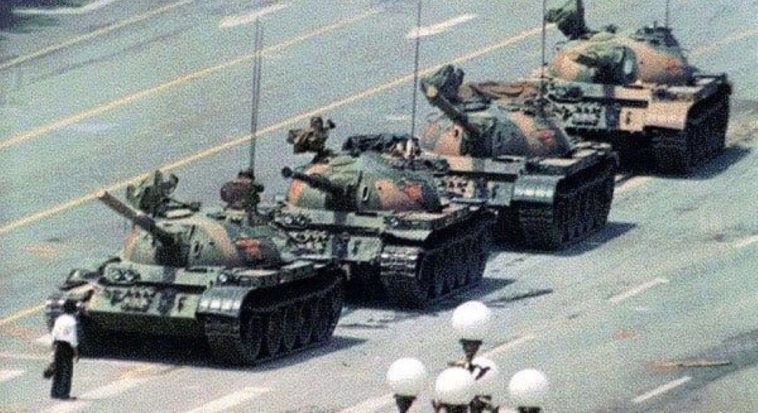
Then the tanks arrived.
Chinese military forces moved into Beijing and violently cleared Tiananmen Square and surrounding areas.
To this day, no official death toll has ever been released by the Chinese government.
Estimates vary dramatically.
Western observers reported hundreds, and potentially thousands, of deaths. Some human rights organizations have suggested the number may have reached several thousand more.
What remains undisputed is that peaceful demonstrators were met with overwhelming military force.
Despite international outrage, Beijing continues to characterize the event as a “counter-revolutionary riot.”
Inside China, discussion of June 4 remains heavily restricted, and citizens attempting to commemorate the anniversary often face surveillance, detention, or censorship.
A Permanent Reminder in the Nation’s Capital
Supporters say the proposed street designation would serve as a lasting memorial to those who lost their lives seeking freedom.
Every foreign delegation arriving at the embassy would see it.
Every news report referencing the embassy would include it.
Every official document mailed from the compound would carry it.
Unlike local streets that can be renamed through city politics, the road in question falls under federal authority, meaning Congress has the power to act without relying on local officials.
For critics of the Chinese Communist Party, that’s precisely the point.
The CCP has spent decades attempting to control the narrative surrounding Tiananmen Square.
This legislation would ensure that one of the regime’s most uncomfortable historical realities remains permanently visible in the heart of the American capital.
Whether the bill ultimately becomes law remains to be seen.
But if it does, every letter leaving the Chinese Embassy could become a reminder of a tragedy Beijing has never fully acknowledged and a chapter of history many Americans refuse to let disappear.

