

>> Continued From the Previous Page <<
Cushman says he is forwarding this “damning evidence” to federal authorities.
A Fraud Network Hidden in Plain Sight
For years, conservative watchdogs have warned that ActBlue, the Democrats’ primary fundraising machine, has acted as a gateway for anonymous and foreign money. Now, the numbers coming to light are forcing even some seasoned campaign insiders to acknowledge what they long suspected.


Interviews conducted by James O’Keefe, Charlie LeDuff, and Bob Cushman show that the individuals whose names appear on the donation records often had no idea any such contributions were made in their name. Many are elderly Americans who appear to have had their identities hijacked by digital operatives.
During a recent episode of the “No BS Newshour,” Pulitzer Prize winner Charlie LeDuff and longtime GOP strategist Jason Roe broke down what they say is the core of the scheme. Roe noted that ActBlue has reportedly processed more than $16 billion since 2004 and that several of the organization’s senior leaders abruptly resigned in 2025 as fraud investigations intensified.

According to Roe:
“This activity is fraud. This activity is money laundering. This activity is funneling money from outside the US.”
He added that Republicans are now outraising Democrats for the first time in a decade — a shift he suggests is happening because donors are finally paying attention to the murky financial ecosystem propping up Democrat campaigns.

The Data That Raises Red Flags
Cushman’s breakdown focuses heavily on donation histories linked to Sen. Mark Kelly, revealing what he describes as “statistically impossible behavior.”
One example involves “David Hutton,” a 71-year-old from California who allegedly made 14,047 donations totaling $344,339 — averaging 5.5 donations every single day for seven years. Hutton is listed as donating to all six members of the Seditious Six.
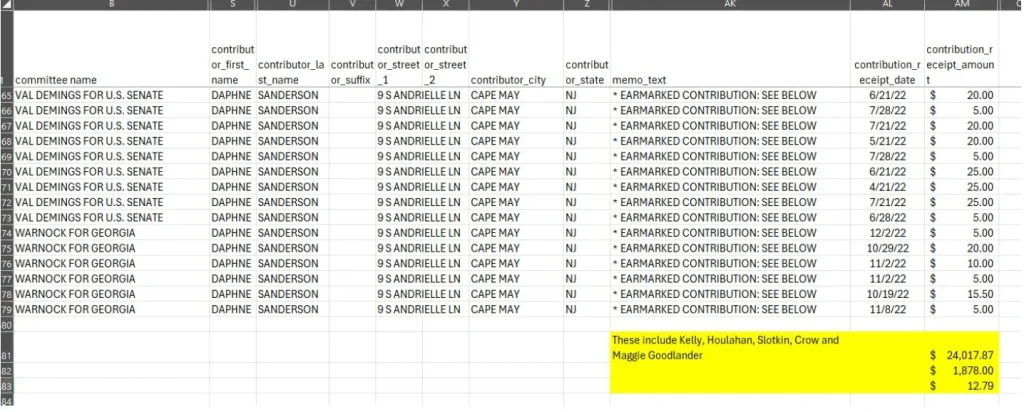
Other “donors” supposedly made thousands of tiny contributions, often 50 cents, $1, or $2, sprinkled across bizarre timestamps. Cushman says this pattern mirrors how data consultants test automated systems before uploading bulk transactions to the FEC.
Another donor, “Michael Berger,” allegedly made 24,680 donations totaling $1,324,205, despite being only 65 years old and having no known political megadonor profile.
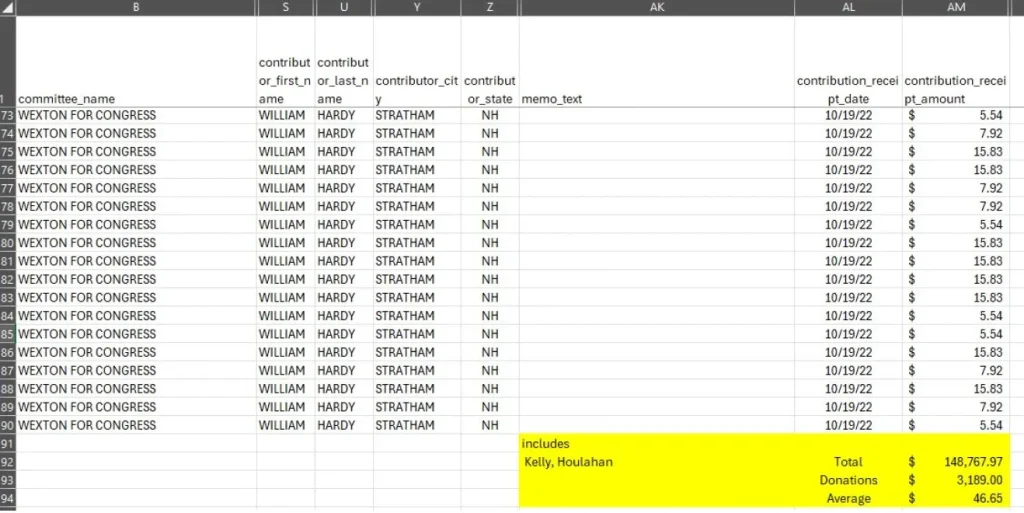
Still another, “Elizabeth Waffle,” supposedly contributed 13,604 times, averaging just $9.32 per donation — an impossible cadence that would require compulsive, round-the-clock giving.
Cushman argues that these absurd donation patterns aren’t real human behavior — they are the fingerprints of algorithmic money laundering.
FEC Complicity?
The most explosive accusation in Cushman’s analysis is that the FEC itself has done little to stop this activity. As he notes, the Commission’s official mission is to:
“The mission of the Federal Election Commission (FEC) is to protect the integrity of the federal campaign finance process by ensuring transparency, enforcing campaign finance laws, and providing public information.”

Yet Cushman points out that the agency has allowed these patterns to continue unchecked for nearly two decades, raising serious questions about whether bureaucratic failure — or something worse — is at play.

Where This Goes Next
With Cushman preparing to hand over his findings to investigators and multiple high-ranking ActBlue officials already stepping down, pressure is building for Congress and federal regulators to act. If the allegations hold up, the scheme could represent one of the largest campaign finance scandals in American history.
And if the Seditious Six knowingly benefited from laundered money, their political futures may be the least of their worries.
For now, the country waits — and watches — as the evidence continues to pile up.

