
>> Continued From the Previous Page <<
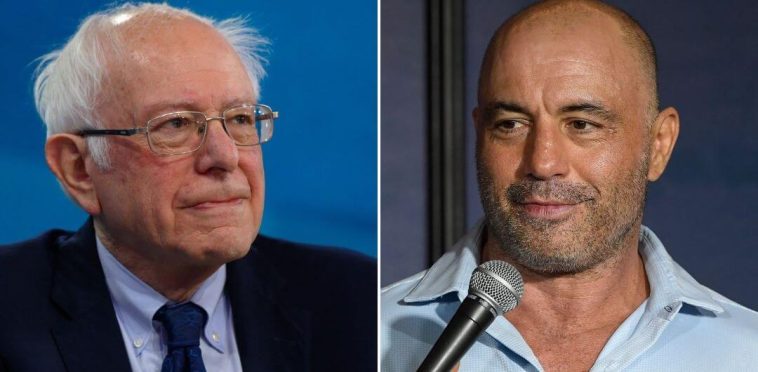
“Why? Because Bernie’s a millionaire now,” he said. “It’s adorable. It’s adorable in its transparency.”
The exchange quickly circulated among political commentators who have spent years noting how Sanders’ rhetoric evolved after his personal finances improved.

From Anti-Millionaire Crusader to Millionaire Politician
The criticism centers on a straightforward timeline.
During the early years of his political career, Sanders routinely criticized wealthy millionaires alongside billionaires. In speeches dating back decades, he portrayed both groups as symbols of economic inequality and political favoritism.
One frequently cited example came in the early 1970s when Sanders condemned millionaire lawmakers and argued they were disconnected from the struggles facing working Americans.
At the time, Sanders himself was far from wealthy.
His financial situation looked dramatically different from what it would become decades later.
Everything changed after his first presidential campaign captured national attention.
The Vermont senator’s newfound popularity generated lucrative book deals and speaking opportunities. His books became bestsellers, and financial disclosures showed a significant increase in income.
Reports indicated Sanders earned roughly $1 million in 2016 and more than $1 million again the following year through book-related income.
By then, he had officially become a millionaire.
Critics argue that his language changed almost immediately afterward.
Where Sanders once regularly attacked “millionaires and billionaires,” references to millionaires became noticeably less common. Observers tracking his public statements and campaign messaging noted that billionaires increasingly became the primary focus of his criticism.
The shift did not go unnoticed by political opponents.
During the 2020 Democratic presidential race, rival campaigns openly accused Sanders of redefining who counted as part of the wealthy elite after joining their ranks himself.
The criticism gained traction because Sanders’ personal assets had expanded considerably. Along with his longtime Vermont residence and a home in Washington, D.C., Sanders also purchased a lakefront vacation property in Vermont in 2016—the same year his financial status changed significantly.
For opponents, the optics were difficult to ignore.
A Larger Debate About Wealth Taxes
Rogan’s remarks were not limited to Sanders personally.
The broader conversation focused on proposals that target the wealthiest Americans with new taxes on accumulated assets.
Supporters argue such measures are necessary to address inequality and generate government revenue. Critics, however, contend that history shows tax policies often expand far beyond their original targets.
Rogan expressed concern that once a new tax structure is created, lawmakers can gradually lower the threshold over time.
“It’s a slippery slope,” Rogan told Hammer. “It might start with billionaires. It’ll work its way down to thousands. They have the ability to change the goalpost once the bill gets passed.”
Hammer echoed those concerns, pointing to economic studies that suggest wealth taxes can produce mixed long-term results. Critics argue that wealthy individuals often restructure assets, relocate investments, or find legal methods to minimize exposure, reducing projected revenue over time.
Supporters of wealth taxes strongly disagree with that assessment, arguing that stronger enforcement mechanisms can make such policies effective.
Nevertheless, Rogan’s comments have reignited a debate that has followed Sanders for years.
For critics, the issue is not merely whether Sanders became wealthy. Rather, they argue that his evolution reflects a broader pattern in politics: politicians who campaign against a particular class of people often redefine the target once they become part of that class themselves.
Whether voters agree with that assessment remains a matter of political opinion.
But thanks to Rogan’s massive audience, the question is once again receiving national attention.
And for Sanders’ critics, the timing could not be more significant.

