
>> Continued From the Previous Page <<
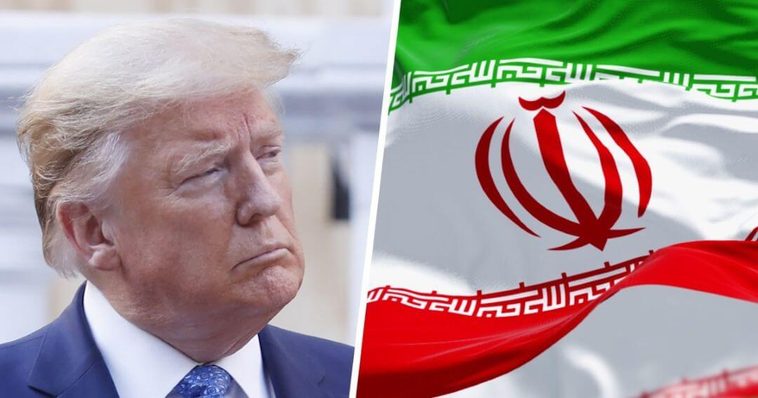
The timing of the breakdown in talks comes as U.S. President Donald Trump continues to press for tougher negotiating terms with Tehran. U.S. officials have reportedly sent revised proposals back to Iranian counterparts, demanding stronger commitments on nuclear restrictions as well as clearer guarantees regarding maritime access through the Strait of Hormuz. The Trump administration has framed these demands as necessary to prevent further escalation and ensure regional stability.
Before Iran formally announced the suspension, senior Iranian negotiator Mohammad Bagher Ghalibaf sharply criticized Washington, accusing it of undermining the ceasefire process. In a pointed statement, he said:

“The US blockade of Iran’s ports and Israel’s war in Lebanon are clear evidence” of the United States’ “noncompliance with the ceasefire,” Ghalibaf said.
That statement was quickly amplified by Iranian state media, which framed recent developments in Lebanon as a direct breach of existing understandings. Officials in Tehran argued that the continued military activity left them with no viable option but to halt negotiations with the Trump administration.
The diplomatic setback follows a series of fast-moving military developments across the region. Earlier in the week, Netanyahu confirmed that Israeli forces had been ordered to intensify strikes in Beirut’s Dahieh district as part of an expanded campaign targeting Hezbollah infrastructure and leadership. Israeli officials have also suggested that operations in southern Lebanon could increase in both scale and intensity in the coming days.
In a separate development, the Israeli military announced that it had seized a strategically important Crusader-era fortress in southern Lebanon after several days of intense fighting. The location, situated roughly nine miles from Israel’s northern border, overlooks key terrain and is considered militarily significant due to its elevated position and visibility across surrounding areas.
Meanwhile, tensions between Washington and Tehran have continued to escalate beyond diplomatic channels. U.S. Central Command, or US Central Command, confirmed that American forces carried out what it described as “self-defense strikes” against Iranian military infrastructure over the weekend. However, officials did not immediately release detailed information regarding the specific targets or the extent of the damage.
Iran’s Islamic Revolutionary Guard Corps, or Islamic Revolutionary Guard Corps, responded by claiming responsibility for an attack on a U.S. air base allegedly linked to operations targeting an Iranian telecommunications facility. The claim was circulated through Iranian state media channels, though independent verification has not yet been confirmed.
Taken together, the developments represent another serious setback for diplomatic efforts that had been attempting to stabilize a region already strained by months of overlapping conflicts involving Iran, Israel, and U.S. military forces. Each new escalation appears to narrow the space for compromise, raising the risk of broader regional instability.
Despite the suspension of talks, officials within the Trump administration have continued to signal that they remain open to a comprehensive agreement. Such a deal would reportedly address Iran’s nuclear program, reinforce the ceasefire framework, and restore full maritime access through the Strait of Hormuz. The administration has also emphasized the importance of maintaining open communication channels, even amid rising tensions.
For now, however, negotiations are effectively on ice. With fighting continuing in Lebanon and military activity intensifying across multiple fronts, the prospects for a near-term diplomatic breakthrough appear increasingly remote. The situation remains fluid, and observers warn that any further escalation could quickly draw the region into an even wider confrontation.


The U.S. has delayed long enough! It’s time to go in and take out the Iranian leadership, the IRGC and specific targets allowing them to prolong this conflict. Iran only responds to power! Don’t worry about the mid-terms. A victory over Iran will bring our country’s unity back together.