
>> Continued From the Previous Page <<
The mission marked the first-ever operational use of the 14 Massive Ordnance Penetrators dropped by the B-2s. Each aircraft flew a grueling 37-hour round trip from Missouri’s Whiteman Air Force Base to Iran and back—an unprecedented show of force.
Rubio Puts Beijing in a Bind
But the military fireworks were just the beginning.

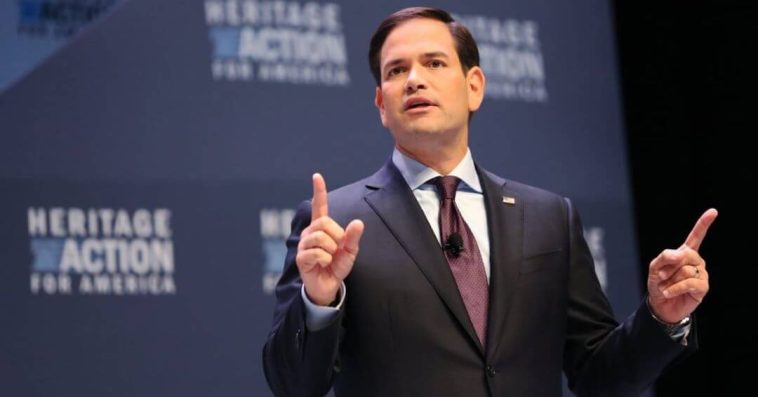
Appearing on Fox News’ Sunday Morning Futures, Secretary Rubio took the diplomatic front by storm. When asked what Iran might do next—specifically about shutting down the vital Strait of Hormuz—Rubio pointed straight at China.
“I encourage the Chinese government in Beijing to call them about that, because they heavily depend on the Straits of Hormuz for their oil,” said Rubio.
That one sentence sent a chill through the Chinese Communist Party’s foreign ministry.
Rubio’s message was simple: if Iran dares block the strait, Beijing is the one with everything to lose.

China Caught Between Loyalty and Oil
This is where things get tricky for Xi Jinping.
China has cozied up to Iran over the past several years, forging economic ties and strategic alliances as part of its effort to challenge American dominance in global affairs. But about half of China’s seaborne oil imports flow through the Strait of Hormuz, a narrow waterway now threatened by Iranian retaliation.
If that channel closes, Beijing’s energy supply—and economic stability—could crumble.
“That would be a suicidal move on their part, because I think the whole world would come against them if they did that,” Rubio said during a separate interview with CBS’s Face the Nation.
Iran Votes to Close Strait—But Can They?
Tehran isn’t bluffing. According to Iran’s state-run Press TV, the nation’s parliament has voted to close the Strait of Hormuz, although the final call still rests with its Supreme National Security Council.
Esmail Kosari, a key figure on the regime’s national security commission, told state media:
“For now, [parliament has] come to the conclusion we should close the Strait of Hormuz, but the final decision in this regard is the responsibility of the Supreme National Security Council.”
But the Strait, only 30 miles wide at its narrowest point, sits between Iran and Oman. Shutting it down would not only invite military retaliation—it would also sever Iran’s own oil exports, essentially cutting off the regime’s financial oxygen.
Rubio Warns of Global Consequences
Rubio made it clear: if Iran dares follow through, the global backlash would be severe.
“It would hurt other countries’ economies a lot worse than ours. It would be, I think, a massive escalation that would merit a response, not just by us, but from others.”
The Trump administration, while not seeking a broader war, has made it clear they’re prepared for whatever Tehran throws next. Rubio said no additional strikes are planned—but warned, that could change fast “unless they mess around.”
And if they do? All bets are off.
Markets on Edge as Oil Threatens to Spike
Economists are watching nervously. According to both Goldman Sachs and Rapidan Energy, a prolonged shutdown of the strait could send oil prices soaring past $100 per barrel, roiling global markets.
“It would be a self-inflicted wound: cutting off the Strait would stop the flow of its crude exports to China, halting a key revenue stream,” said Matt Smith, lead oil analyst at Kpler.
And that’s the real pressure point.
China, now caught between loyalty to Tehran and dependence on Middle Eastern oil, may be forced to finally pick a side. With Rubio’s message echoing loud and clear, Beijing knows that failing to act could leave them stranded—both diplomatically and economically.
Trump’s strike may have turned Iran’s nuclear program to rubble. But it’s Rubio’s diplomatic firebomb that could force China into the most uncomfortable choice of all.

