
>> Continued From the Previous Page <<
At first, the federal government defended the restriction. During the administration of Joe Biden, the Justice Department prosecuted Benson and backed the city’s gun control policy in court.
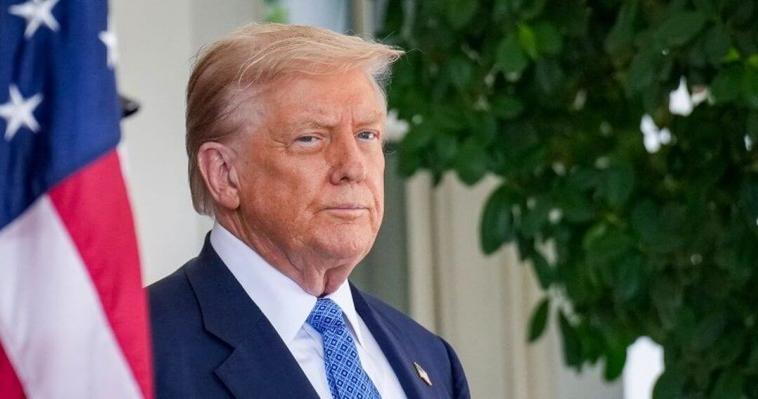
But that position shifted dramatically when Donald Trump returned to power.

Trump Administration Takes a Different Approach
Under the new administration, the Justice Department reversed course and declined to support the D.C. government’s ban.
That decision left the city largely on its own in defending the controversial law.
Observers note that while Attorney General Pam Bondi has previously supported some gun restrictions during her time as Florida’s attorney general, key figures inside the administration have strong pro-Second Amendment credentials.
White House Counsel David Warrington has long been involved in gun rights advocacy. According to a report from The New York Times, Warrington “helped found the National Association for Gun Rights for firearm enthusiasts who thought the National Rifle Association was too moderate.”
Another major figure in the administration’s legal strategy is Harmeet Dhillon, who previously partnered with Warrington in private practice before joining the Justice Department.
Last December, Dhillon announced a new initiative inside the Civil Rights Division aimed at defending gun rights nationwide.
“For the first time, the DOJ Civil Rights Division and the DOJ at large will be protecting and advancing our citizens’ right to bear arms as part of our civil rights work,” Dhillon boasted over the news.
With the federal government stepping aside, D.C. officials were forced to defend their law without the backing of the Justice Department—and the outcome was decisive.
Judge Delivers Major Second Amendment Opinion
In a sweeping opinion written by Judge Joshua Deahl, the court concluded that the city’s magazine ban conflicts with established Supreme Court precedent.
The ruling emphasized that magazines capable of holding more than ten rounds are extremely common in the United States.
“Magazines capable of holding more than 10 rounds of ammunition are ubiquitous in our country, numbering in the hundreds of millions, accounting for about half of the magazines in the hands of our citizenry, and they come standard with the most popular firearms sold in America today,” Deahl wrote.
The court relied heavily on two landmark Supreme Court rulings: District of Columbia v. Heller and New York State Rifle & Pistol Association v. Bruen.
Those decisions established that firearms and related equipment commonly owned by law-abiding Americans cannot simply be banned by government officials.
Judges also rejected the argument from the D.C. government that magazines should not be considered protected “arms,” describing that position as dangerous.
If that logic were accepted, the court said, the government could theoretically ban critical firearm components such as triggers or firing pins—effectively rendering guns useless while claiming the weapons themselves were still technically legal.
Dissent and Broader Implications
Not everyone on the court agreed with the majority opinion.
Chief Judge Anna Blackburne‑Rigsby, an appointee of Bill Clinton, dissented from the ruling.
She argued that 30-round magazines are “particularly lethal” and claimed they are not commonly used for self-defense.
However, the majority rejected that reasoning and ultimately overturned Benson’s convictions. Because the magazine ban had prevented him from legally registering his firearm, related gun charges tied to the case were also thrown out.
Could California Be Next?
Legal analysts believe the ruling could have major consequences beyond Washington, D.C.
For years, Democratic-controlled states and cities have pursued a similar strategy: banning standard magazines that come with widely sold firearms and labeling them “high-capacity.”
Now that strategy may face serious constitutional challenges.
The next major legal battle is unfolding in California. The state’s magazine ban is currently being contested in Duncan v. Bonta, a case that has been pending before the Supreme Court for months.
The nation’s highest court has repeatedly relisted the case for conference, suggesting the justices are closely watching how lower courts handle similar issues before deciding whether to intervene.
Judge Deahl’s ruling directly challenges legal reasoning used by the Ninth Circuit Court of Appeals in the California case—a development that could influence future decisions.
Other states with similar laws, including New Jersey, Colorado, and Virginia, may also face renewed legal scrutiny.
According to Second Amendment Foundation attorney Kostas Moros, the Justice Department’s decision not to defend the D.C. law played a critical role in the outcome.
The same department, he noted, is now actively challenging gun restrictions in multiple jurisdictions.
For supporters of gun rights, the ruling is being seen as more than just a single legal victory—it’s evidence of how a pro-Second Amendment administration can reshape the legal battlefield.
Instead of speeches or campaign promises, advocates say the fight is now unfolding where it matters most: in courtrooms across America.

