
>> Continued From the Previous Page <<
But the battle isn’t just political — it’s legal. The Biden Justice Department has already issued a warning letter targeting four of Texas’ current districts: TX-09, TX-18, TX-29, and TX-33. The DOJ’s civil rights division claimed those districts were unconstitutionally drawn as so-called “coalition districts,” heavily relying on racial demographics to shape outcomes.
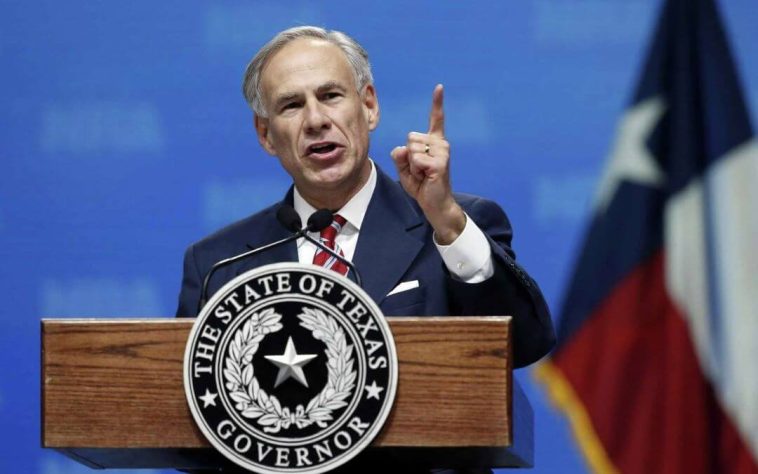
“As stated below, Congressional Districts TX-09, TX-18, TX-29 and TX-33 currently constitute unconstitutional ‘coalition districts’ and we urge the State of Texas to rectify these race-based considerations from these specific districts,” the DOJ wrote in a letter addressed to Gov. Abbott and Attorney General Ken Paxton.

The legal pressure hinges on a recent U.S. Supreme Court case from Alabama — Allen v. Milligan — in which the high court determined that racial gerrymandering violated Section 2 of the Voting Rights Act. The ruling, a 5-3 decision with Chief Justice John Roberts and Justice Brett Kavanaugh joining the liberal wing, put states on notice.
Justice Kavanaugh’s concurring opinion was especially telling: “Even if Congress in 1982 could constitutionally authorize race-based redistricting under § 2 for some period of time, the authority to conduct race-based redistricting cannot extend indefinitely into the future.”
The DOJ also referenced SFFA v. Harvard, the landmark 2023 case that dismantled affirmative action in higher education. “Deviation from the norm of equal treatment on account of race ‘must be a temporary matter.’ 600 U.S. 181, 228 (2023),” the DOJ’s letter stated, adding that any map prioritizing race above core redistricting principles like compactness or geographic cohesion must pass strict scrutiny.
In other words, Texas must now justify its redistricting with a compelling state interest — or face legal blowback. But the momentum appears to be on the side of Republican lawmakers, who argue that drawing race-blind districts is not only constitutional — it’s long overdue.
The DOJ’s letter also cited Perry v. Galveston County, which decisively ruled that “coalition districts” are not protected under the Voting Rights Act unless a minority group comprises more than 50% of a district’s population and is geographically compact.
Naturally, Democrats aren’t taking the news lightly. California Governor Gavin Newsom and other left-wing leaders have vowed “retaliation,” though their options are limited. California, for instance, is locked into an “independent” redistricting commission that many conservatives say is a thinly veiled partisan weapon. Meanwhile, states like Illinois and Maryland are already among the most aggressively gerrymandered in the country — with little room left to maneuver.
As Democrats scramble, Republicans across the country are gearing up. States like Missouri, Florida, and Ohio are eyeing similar redistricting pushes — especially as the Supreme Court prepares to revisit its own precedent from Allen v. Milligan and SFFA v. Harvard. A decision could come down that bans racial redistricting altogether.
If that happens, race-based districts in places like Alabama, Georgia, and Louisiana could disappear almost overnight — shifting the congressional balance for years to come.
With Texas now officially moving ahead, the redistricting war is heating up — and the 2026 midterms are already taking shape as a defining battle over how America chooses its leaders.

