
>> Continued From the Previous Page <<
Andriy Yermak, head of the President’s Office, recently remarked, “Ukraine is prepared to hold elections immediately after the war with Russia ends.” This statement further aligns with speculation about Ukraine’s transition to peacetime governance, including potential shifts in leadership.
Part of the broader Western strategy reportedly includes the deployment of peacekeeping forces from the United Kingdom and France, alongside fast-tracking Ukraine’s membership in the European Union. If confirmed, these measures would signify a significant step toward integrating Ukraine into Western institutions while addressing post-war security concerns.


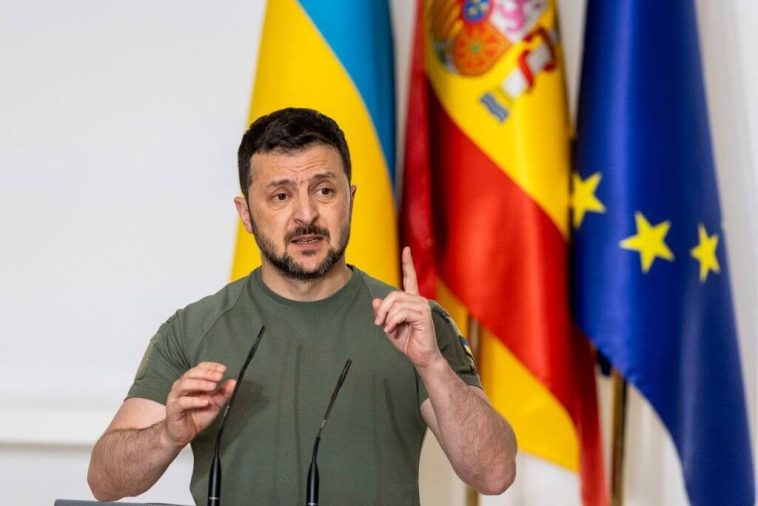
However, the details of this plan remain uncertain, with no official confirmation from Ukrainian or Western officials. The notion of a “golden exile” highlights the complexity of managing Ukraine’s leadership transition during this pivotal moment.
Former U.S. President Donald Trump’s potential return to the White House in 2025 looms large over these developments. Trump has consistently called for negotiations to end the war in Ukraine, with his ally, General Keith Kellogg, reportedly playing a key role in crafting peace proposals.
According to El Mundo, “General Keith Kellogg, appointed by Donald Trump as the special representative for Ukraine, had previously disclosed some plans for organizing negotiations.” These plans hinge on leveraging future U.S. military aid to incentivize Ukraine’s participation in peace talks.

Surprisingly, sources suggest that should Russia refuse to engage in peace talks, the Trump administration could ramp up military aid to Ukraine to unprecedented levels. While this claim may seem contradictory, it reflects Trump’s unpredictable approach to foreign policy.
One of Kellogg’s proposals includes easing sanctions on Russia as part of a peace agreement. This would involve freezing the front lines, creating a demilitarized zone, and using customs revenues from Russian energy exports to fund Ukraine’s reconstruction. The proposal reflects a pragmatic approach aimed at incentivizing Russian cooperation while addressing Ukraine’s economic needs.
“Kellogg also proposes partially easing sanctions against Russia in exchange for agreeing to a ceasefire, freezing the front line, and creating a demilitarized zone in Ukraine. If Russia signs a peace agreement, the sanctions would be fully lifted, and customs duties on the export of Russian energy resources would be used to finance Ukraine’s reconstruction.”
Gold at $2,600… But This Stock Gives You More for Under $20
While speculation swirls around Zelensky’s potential exile and the mechanics of a peace deal, one thing is clear: Ukraine stands on the brink of a major transition. As elections loom, and Western powers shape the post-war landscape, the international community watches closely.
The reported plans reflect a delicate balancing act, aiming to end the conflict while ensuring Ukraine’s stability. Whether these rumors materialize or not, they underscore the high stakes at play for Ukraine, its leaders, and its allies in this critical moment.

