
>> Continued From the Previous Page <<
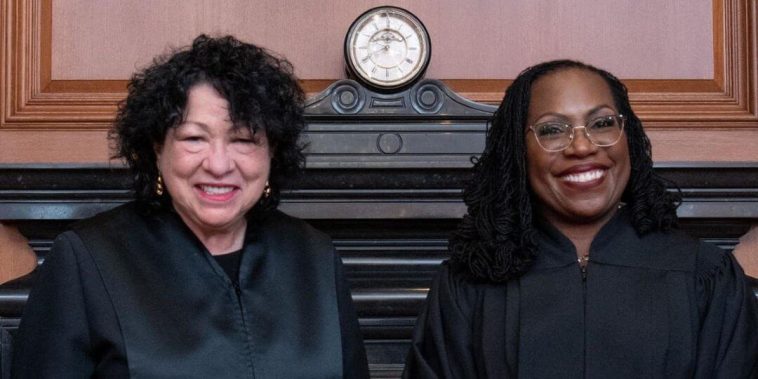
During the hearing, Justice Sotomayor attempted to downplay the risks of life-altering treatments for minors by equating their potential harm to that of common over-the-counter medications. “There is always going to be a percentage of the population under any medical treatment that’s going to suffer a harm,” she said, comparing the risks of chemical castration and hormone blockers to “taking aspirin.”
Her analogy was met with immediate pushback from Tennessee Solicitor General Matt Rice, who argued that the stakes are vastly different. “How many minors have to have their bodies irreparably harmed for unproven benefits is one that is best left to the legislature,” Rice said.

Justice Sotomayor further complicated the debate with a hypothetical that critics called “absurd.” She suggested that denying hormone blockers to minors seeking gender transitions could be considered discriminatory against girls. She questioned whether a girl with “unwanted hair” could be treated with estrogen while a boy in a similar situation could not, implying a sex-based double standard.
Rice firmly rejected the analogy, emphasizing that treating precocious puberty is a legitimate medical condition, whereas using the same drugs for gender transitions lacks comparable justification. “We do not think that giving puberty blockers to a six-year-old that has started precocious puberty is the same medical treatment as giving it to a minor who wants to transition,” he said.
Watch below:

Justice Ketanji Brown Jackson, appointed by President Biden, joined the discussion with her own set of contentious remarks. Following Sotomayor’s assertions, Jackson interrupted Rice repeatedly, demanding explanations and pushing back against his arguments. “Why not?” she interjected when Rice attempted to clarify the differences between legitimate medical uses of puberty blockers and their use for gender transitions.
Jackson’s tone and demeanor during the exchange drew criticism, with some observers accusing her of being overly confrontational and dismissive of Rice’s logical arguments. Her suggestion that the Tennessee law perpetuates sex-based discrimination echoed Sotomayor’s contentious stance.
The case has reignited a heated debate over parental rights, children’s health, and the role of government in regulating controversial medical practices. Conservatives argue that protecting minors from irreversible treatments should take precedence, while advocates for transgender rights claim that these laws deny necessary care to vulnerable youth.
Gold at $2,600… But This Stock Gives You More for Under $20
As the nation awaits the Supreme Court’s decision, the ideological divide over gender-affirming care continues to widen. Sotomayor’s remarks have added fuel to an already incendiary debate, raising questions about the role of personal bias and political ideology in the nation’s highest court.
With the final ruling still months away, this case could set a precedent with far-reaching implications for how states approach the regulation of medical treatments for minors. Whether the justices will prioritize biological science or ideological arguments remains to be seen.

