
>> Continued From the Previous Page <<
This development, however, has fueled further debate. Many Republicans argue that the humanitarian parole program is being exploited, with concerns that an overwhelming 95% of those scheduling appointments via the CBP One app are being approved for entry. Critics accuse the administration of not enforcing stricter vetting measures, leading to what they describe as a porous border.
The Mexican government formally announced the creation of this new safe mobility corridor in a recent press release. “The Mexican government, through the National Institute of Migration (INM), announces the launch of an emerging safe mobility corridor to assist in the land transportation of foreign persons who have a CBP One appointment,” the release stated.

To prioritize family unity, the corridor gives preference to families traveling together, ensuring that they can attend their CBP One appointments together at the U.S. border. The Mexican government has established two key exit points for migrants using this corridor: one in Villahermosa, Tabasco, and the other at the Migration Regulation Office in Tapachula, Chiapas.
Each migrant who participates in this program is granted a Multiple Migration Form (FMM), valid for 20 days, allowing them legal status as they travel to the U.S. for their scheduled appointments. The effort is also supported by a joint security initiative that involves federal, state, and municipal security agencies, all working together to ensure safe passage. Additionally, food is provided for migrants during these long bus journeys.
While the Mexican government is touting the program as a way to ensure “safe, regular, orderly, and humane migration,” a report by the U.S. Department of Homeland Security’s Inspector General has shed light on potential vulnerabilities in the system. The report notes that although the CBP One app collects biographic and biometric data for background checks, it “does not leverage the information to identify suspicious trends as part of its pre-arrival vetting procedures.”
This has led to concerns that the system could be exploited by individuals with questionable backgrounds, undermining the security of U.S. borders. Republican leaders have seized on this vulnerability, accusing the administration of prioritizing ease of entry over security.
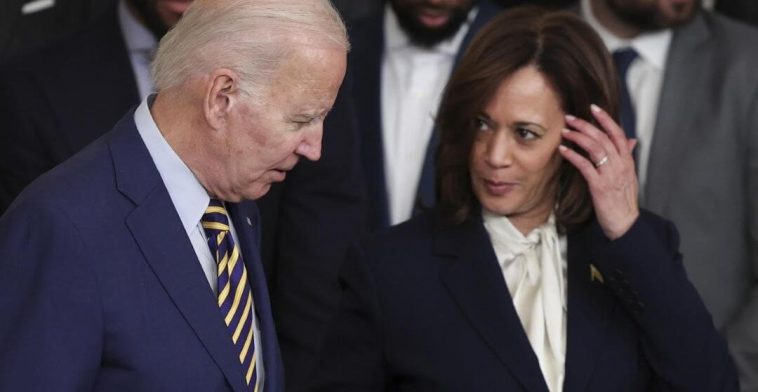
Vice President Kamala Harris, who was tasked by President Joe Biden in 2021 with addressing the root causes of illegal immigration, has come under heavy fire from immigration hawks. Many argue that she has not implemented effective solutions to curb the flow of migrants into the U.S.
“It’s very disappointing,” said Brandon Judd, the recently retired president of the Border Patrol Union, in a statement to Fox News. “We gave her the policies that she needed to implement. She refused to implement those.”
TRUMP LOVES IT: Get the Presidential Blanket FREE Today! Supplies Running Out – Grab Yours NOW! 🕒👇
Judd’s remarks highlight growing frustration among border security advocates, who believe that the administration’s approach to immigration has been too lenient. As President Biden has already signaled that he will not seek reelection in 2024, Harris’s handling of the immigration crisis could become a critical issue in the upcoming election.
As the new Mexican safe mobility corridor continues to transport migrants to the U.S. border, and as the CBP One app facilitates their entry, the political battle over immigration policies is set to intensify. The Biden-Harris administration will likely face increased scrutiny, especially as border crossings rise and critics question whether enough is being done to safeguard the nation’s security.
While proponents of the app argue that it provides a humane and organized method for processing migrants, detractors maintain that the administration’s lax policies are encouraging an influx of migrants without proper vetting, further straining U.S. immigration infrastructure.
In the months ahead, the debate will undoubtedly continue as both sides of the political aisle wrestle with the growing challenges at the U.S.-Mexico border.

