
>> Continued From the Previous Page <<
Then, something unexpected happened.
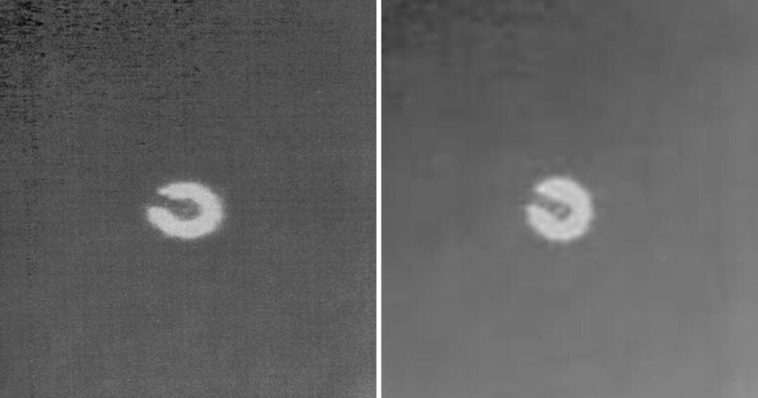
The object reportedly accelerated in a way that stunned operators reviewing the feed. Instead of gradually increasing speed like a conventional aircraft engaging thrust or afterburners, the object appeared to transition from a locked target to disappearance in what officials described as a near-instant shift.

Military documentation associated with the recording categorized the event as “instantaneous acceleration,” a term reserved for movements that do not align with any known propulsion systems or aerodynamic behavior.
No exhaust plume was visible. No heat signature consistent with an engine appeared on infrared sensors. And no traditional flight surfaces—such as wings or control fins—could be identified performing a turn or maneuver.
According to official descriptions accompanying the footage, the object demonstrated “abrupt directional changes, instantaneous acceleration, and intelligent control,” and further stated that “origin, intent, and capabilities remain unknown.”

That final assessment is particularly notable because it represents a formal acknowledgment from military analysts that the phenomenon could not be explained using existing intelligence frameworks.
The footage itself has been catalogued under the designation DOW-UAP-PR051 and labeled “Syrian UAP Instant Acceleration.” It was released on May 22, 2026, as part of the second wave of disclosures under the PURSUE initiative—short for the Presidential Unsealing and Reporting System for UAP Encounters.
The PURSUE program, launched under President Donald Trump’s directive, represents the most expansive public release effort of UAP-related government material to date. The initiative instructs the Department of War and partner agencies to declassify and publish historical records involving unidentified aerial encounters.
Defense Secretary Pete Hegseth underscored the intent behind the program during its initial rollout, stating: “These files, hidden behind classifications, have long fueled justified speculation – and it’s time the American people see it for themselves.”
Since its launch, the official disclosure site has drawn massive public attention, reportedly logging more than a billion visits as Americans and researchers alike sift through newly accessible materials.
The second tranche, released just days ago, included not only additional Department of War footage but also NASA audio recordings and archived intelligence materials sourced from agencies including the CIA, Department of Energy, and Office of the Director of National Intelligence.
On Capitol Hill, Rep. Tim Burchett of Tennessee has been one of the most vocal advocates for transparency on the issue. He played a central role in forming a bipartisan House UAP caucus and has repeatedly pushed for hearings featuring military whistleblowers and intelligence personnel.
Burchett has often faced skepticism from colleagues but remained consistent in his calls for disclosure. When asked about the broader push for declassification, he responded simply: “It’s time.”
He has also characterized earlier releases as only a small portion of what he believes is still withheld from public view, suggesting that more significant disclosures were inevitable once political pressure mounted.
According to the timeline provided with the Syria footage, the video was first uploaded to a classified government network in mid-2024 before remaining inaccessible to the public until the PURSUE program forced its release.
Supporters of the initiative argue that the timing raises serious questions about why such material remained sealed for years, while critics caution against drawing conclusions without full technical context.
Still, the central mystery remains unchanged: a highly advanced military tracking system locked onto an unidentified object, and that object appeared to perform maneuvers that defy conventional explanation.
With additional tranches scheduled for release in the coming weeks, officials involved in the PURSUE effort suggest this may be only the beginning of a much larger disclosure campaign—one that could continue reshaping public understanding of what is known, and what remains unexplained, in the skies above conflict zones like Syria.

