
>> Continued From the Previous Page <<
Internal GOP Resistance Emerges
Among the most vocal critics is Senator Lindsey Graham (R-SC), who has repeatedly pushed for a tougher stance on Iran. Graham blasted the developing agreement as “a nightmare for Israel” and urged the President not to move forward with ending hostilities too quickly.
Senator Ted Cruz (R-TX) also expressed alarm, claiming he was “deeply concerned” about the direction of the talks. Cruz warned that the agreement could result in Iran “receiving billions of dollars, being able to enrich uranium & develop nuclear weapons, and having effective control over the Strait of Hormuz.”

Both senators’ comments were further amplified by Fox News host Mark Levin, who described diplomatic efforts as “a problem” and suggested that military pressure should continue rather than moving toward a negotiated settlement.
Trump Responds Forcefully
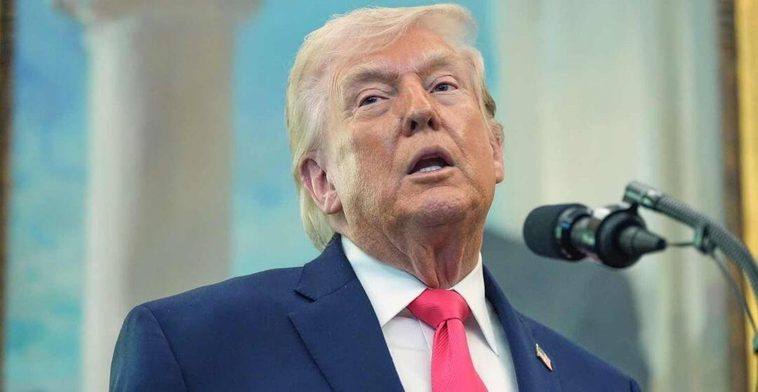
President Trump addressed the criticism directly on Truth Social, defending the integrity of his negotiations and contrasting them with previous diplomatic efforts.
“If I make a deal with Iran, it will be a good and proper one, not like the one made by Obama, which gave Iran massive amounts of CASH, and a clear and open path to a Nuclear Weapon.”
He continued by emphasizing that the current negotiations are still incomplete and being mischaracterized by political opponents.
“Our deal is the exact opposite, but nobody has seen it, or knows what it is. It isn’t even fully negotiated yet. So don’t listen to the losers, who are critical about something they know nothing about,” he continued.
Trump concluded with a broader critique of past administrations, adding, “Unlike those before me who should have solved this problem many years ago, I don’t make bad deals!”
Administration Officials Push Back on Claims
As speculation intensified, senior Trump administration officials moved to clarify the status of the negotiations, pushing back against claims circulating among critics.
According to reporting attributed to CNN’s Scott Jennings, officials emphasized that the agreement is roughly 95% complete but not yet finalized, with several key details still being negotiated.
They also stressed that no direct financial transfers or unconditional sanctions relief would be granted to Iran. Instead, any economic adjustments would be strictly tied to compliance with the agreement’s terms.
Officials further insisted that Iran must first meet its obligations regarding nuclear material before receiving any benefits under the deal.
The long-term objective, according to the briefing, is preventing Iran from acquiring nuclear weapons capability while stabilizing global energy markets through reopening key shipping routes.
A phased structure is reportedly being discussed. The first step would involve reopening the Strait of Hormuz to restore global commerce, while Iran would agree to surrender enriched uranium stockpiles. Only after verifiable compliance would any sanctions relief be considered.
“If we get what we are demanding, this is going to be a historic deal,” one senior official reportedly stated.
Enforcement and Strategic Pressure
The same official reportedly made clear that the United States remains prepared to walk away if Iran fails to meet expectations, stressing that enforcement mechanisms are built into the framework.
“If they don’t deliver on their commitments, then they don’t get anything.”
The official also suggested Iran’s military and industrial capabilities have been significantly weakened in recent months, reducing its leverage in negotiations.
Broader Administration and Allied Commentary
Turning Point USA spokesman Andrew Kolvet also confirmed details of a background briefing, reiterating that no U.S. funds would be transferred to Iran under any circumstances. He summarized the approach as “No dust, no dollars,” meaning sanctions relief would only follow verified Iranian compliance.
Kolvet also emphasized that this framework differs sharply from previous agreements such as the JCPOA, arguing that earlier deals lacked enforcement and enabled long-term instability.
Officials further suggested that internal shifts within Iran may be influencing the negotiations, with moderate factions reportedly gaining more influence over hardline elements. While the situation remains fluid, U.S. officials believe there is now a clearer willingness from Iranian representatives to discuss dismantling enrichment stockpiles.
Still, the administration has made clear that military and economic pressure remain on the table if talks collapse.
As negotiations continue, the White House maintains that the objective remains unchanged: prevent Iran from obtaining nuclear weapons while securing a stable, enforceable agreement that reduces global tensions rather than escalating them.

