
>> Continued From the Previous Page <<
For decades, that system quietly reinforced the dollar’s status as the world’s reserve currency.
Why the UAE’s Exit Matters
Now, that structure may be facing a serious test.

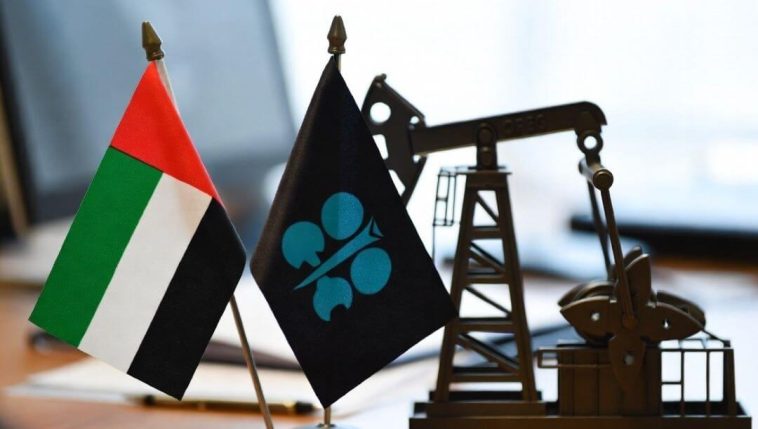
The UAE’s departure from OPEC is not being framed by its leadership as a rebellion. Instead, it appears to be a calculated economic decision shaped by shifting geopolitical realities — particularly the fallout from escalating tensions involving Iran.
With Iranian oil production disrupted, other Gulf producers are confronting a stark choice: adhere to coordinated output limits or seize newly available market share.
Abu Dhabi has chosen the latter.
On the surface, that looks like a straightforward business move. But stepping outside OPEC’s coordinated pricing structure could have far-reaching implications. Without a unified pricing framework, oil transactions are no longer automatically tied to the dollar.
That opens the door to alternative currencies.
Cracks in the Petrodollar
This shift did not begin overnight.
Saudi Arabia has already explored non-dollar oil deals, including transactions denominated in Chinese yuan. The UAE’s decision could accelerate that trend, turning what was once a cautious experiment into a broader strategic shift.
If more producers follow suit, the long-standing practice of recycling oil revenues into U.S. financial markets could weaken.
That would mark a fundamental change.
A Historical Parallel With High Stakes
History offers a warning.
The oil shocks of the 1970s, often remembered as economic disasters for the West, also produced outcomes that ultimately strengthened U.S. financial power. Inflation eroded wartime debt, energy companies posted massive profits, and aggressive interest rate hikes restored confidence in the dollar.
But that outcome depended on a tightly coordinated system — one where oil pricing and dollar demand were deeply intertwined.
That system may now be unraveling.
Washington’s Growing Concern
Officials in Washington appear to be taking notice.
Recent efforts by Treasury leaders, including outreach tied to maintaining financial cooperation with Gulf states, suggest a recognition that energy policy and monetary stability are closely linked.
Still, short-term financial tools may not address a deeper structural shift.
If global energy markets begin operating outside the traditional dollar-based framework, the United States could face new challenges in financing its growing debt — now measured in the tens of trillions.
The Bigger Question Ahead
The debate is no longer just about oil production or cartel politics.
It is about whether the United States can maintain a global financial system built over half a century while the geopolitical landscape rapidly changes.
Supporters of the UAE’s move argue it reflects economic independence and evolving market realities. Critics counter that it could weaken a system that has quietly underpinned American prosperity for generations.
For now, markets may celebrate.
But beneath that optimism, a more serious question is emerging: what happens if the financial architecture that supported the dollar for decades begins to fracture?
That answer could define the next era of global economics.

