
>> Continued From the Previous Page <<
The Supreme Court’s response was swift. In a brief order, Chief Justice Roberts delivered a stay, pausing the ruling indefinitely.
“IT IS ORDERED that the February 25, 2025 orders of the United States District Court for the District of Columbia, case Nos. 1:25-cv-00400 and 1:25-cv-00402, are hereby stayed pending further order of the undersigned or of the Court. It is further ordered that any response to the application be filed on or before Friday, February 28, 2025, by 12 p.m. (EST),” Roberts wrote.

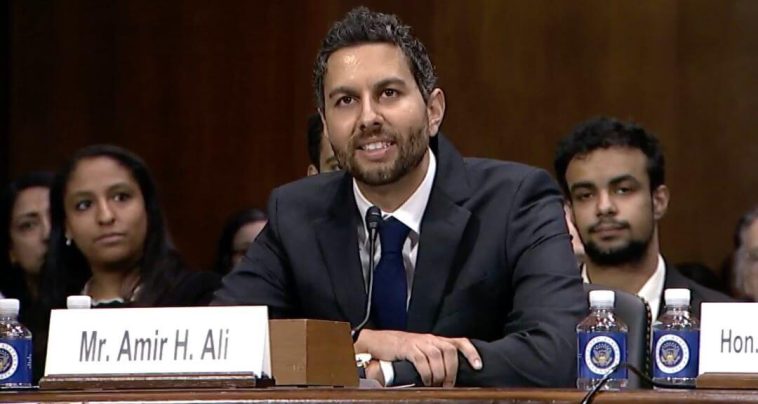
The battle erupted after Judge Ali ordered the Trump Administration to immediately pay billions for foreign contracts, despite ongoing legal disputes over their legitimacy. Legal experts warned that such an order, issued with less than 48 hours to comply, was unprecedented in its scope and timing.
In their emergency filing, Trump’s legal team slammed the lower court’s move as reckless and arbitrary.
“Neither the original TRO nor the district court’s subsequent clarifications in any way suggested that the government must pay particular invoices on particular dates,” Acting Solicitor General argued in the government’s application to vacate the judge’s order.
“The court’s 11:59 p.m. 30-some-hour deadline thus moved all the goalposts. It is not tailored to any actual payment deadlines associated with respondents’ invoices or drawn-down requests, or anyone else’s. And it has thrown what should be an orderly review by the government into chaos,” the DOJ’s argument continued.
The Justice Department further stressed that Judge Ali had no jurisdiction to issue such an order, calling it an unconstitutional interference in executive authority.
Trump’s DOJ filed an urgent request for an immediate administrative stay of the lower court’s ruling, seeking to ensure that no funds were disbursed before a proper legal review could take place.
KICK OUT The Cold and Say Hello to The Handyheater! Warming Any Spot INSTANTLY!
“The district court lacked any jurisdiction even to issue this order dictating contractual payments by a date certain to remedy purported contractual breaches,” the DOJ argued.
Despite the Trump Administration’s efforts, the appeals court shockingly denied their motion to dismiss Ali’s ruling, setting up a high-stakes Supreme Court battle.
The case underscores yet another instance of activist judges attempting to strong-arm the Trump Administration into complying with radical policies—this time, by forcing billions of taxpayer dollars out the door on a rushed timeline with no legal precedent.
For now, thanks to Chief Justice Roberts, the Biden-appointed judge’s heavy-handed order has been stopped in its tracks. But the legal fight isn’t over yet.

