
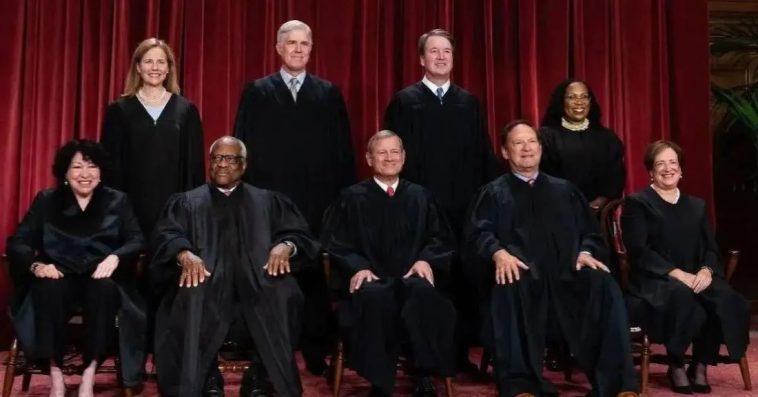
In a landmark decision that could have significant implications for former President Donald Trump, the U.S. Supreme Court ruled on Friday in favor of a former police officer seeking to dismiss an obstruction charge related to his involvement in the January 6, 2021 Capitol riot.
Joseph Fischer, among the many defendants charged with obstructing an official proceeding to prevent Congress from certifying President Joe Biden’s 2020 election victory, emerged victorious in a 6-3 decision by the court. This ruling challenges the Department of Justice’s broad application of the obstruction statute.
Conquer the Wild with More Power, Less Hassle – Survival Made Easy!

The statute in question, part of the Sarbanes-Oxley Act of 2002, was initially enacted in response to the Enron scandal and was intended to address the destruction or alteration of physical evidence. The Supreme Court’s majority opinion clarified that the law was not meant to apply to actions such as those taken by the January 6 defendants, who unlawfully entered the Capitol.
Chief Justice John Roberts, writing for the majority, emphasized the importance of adhering to the statute’s original text rather than expanding its scope. He noted that while the breach of the Capitol disrupted Congress’s certification process, the law’s primary focus was on physical evidence tampering.
Notably, conservative Justice Amy Coney Barrett joined liberal Justices Sonya Sotomayor and Elena Kagan in dissent. They argued that some January 6 rioters could be convicted of obstruction if their actions led to the deaths of Capitol police officers. However, this theory has been widely disputed, as no officers were killed by rioters on that day.
“Killing a person with the intent to prevent the production of a record in an official proceeding constitutes conduct that impairs the availability of a record for an official proceeding. Using physical force against a person to influence testimony in an official proceeding counts as impairing the integrity of ‘other things’ used in an official proceeding,” Barrett wrote in the minority’s dissenting opinion.
This ruling could potentially influence special counsel Jack Smith’s ongoing case against Trump, who faces charges of obstructing an official proceeding and conspiracy to do so. While the decision may support arguments for dismissing the obstruction charge, Trump still faces multiple other charges related to his alleged encouragement of violence on January 6.
In a separate case, the Supreme Court ruled that an Oregon city’s policy prohibiting individuals without permanent residences from sleeping outside did not violate the Eighth Amendment’s ban on “cruel and unusual” punishment. Chief Justice Neil Gorsuch authored the 6-3 opinion, focusing on the limits of judicial authority in addressing homelessness.

