
>> Continued From the Previous Page <<
What followed has fueled outrage. Roughly a month after his arrival in the city, Medina-Medina was arrested for shoplifting merchandise from a downtown department store. He was released. After failing to appear in court, a warrant was issued. That warrant, critics argue, went unenforced for years.
Officials from the Department of Homeland Security have since laid out the timeline, with Acting Assistant Secretary Lauren Bis stating that Sheridan “was failed by open border policies and sanctuary politicians who released this illegal alien twice before he went on to commit this heinous murder.”

At the center of the policy debate is Chicago’s long-standing sanctuary framework, including its Welcoming City Ordinance, which limits cooperation between local law enforcement and federal immigration authorities. Illinois law reinforces similar restrictions statewide. These policies meant that when Medina-Medina was previously arrested, local authorities were not permitted to coordinate directly with Immigration and Customs Enforcement.
Mayor Johnson has stood firmly by those policies. Days after the killing, he addressed the tragedy publicly, describing it as “senseless violence” while also defending the city’s approach. He pointed to the ordinance’s historical roots, noting it was enacted decades ago, and emphasized its role in protecting immigrant communities.
Governor Pritzker also weighed in after several days of silence. He acknowledged that there had been “real failures” but suggested that responsibility extended beyond Illinois. That response did little to ease the frustration of Sheridan’s family.
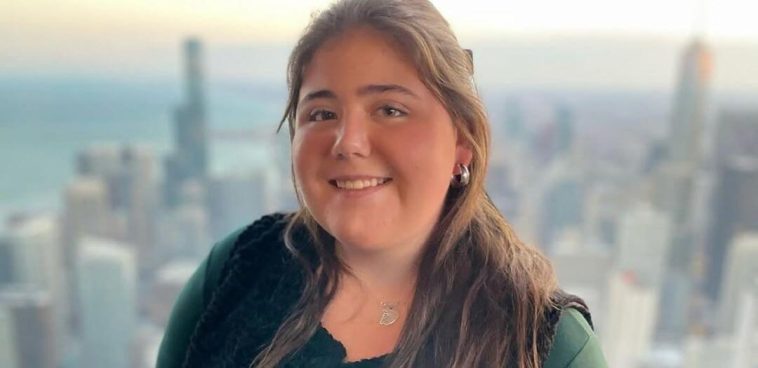
In a statement, they pushed back forcefully: “We appreciate that he has now, five days after our daughter Sheridan’s murder, finally spoken publicly about Sheridan. But Sheridan’s death cannot be reduced to a general ‘tragedy,’ nor can it be explained away by broad references to failures somewhere else.”
The case has drawn comparisons to other high-profile incidents that have shaped the national immigration debate. The 2015 killing of Kate Steinle in San Francisco and the 2024 murder of Laken Riley in Georgia are now being cited by critics as part of a broader pattern involving individuals released despite prior encounters with law enforcement.
Yet what has resonated most powerfully is not the policy debate, but the voice of Sheridan’s mother. Standing before a large crowd, she delivered a message that has since spread across social media and political circles alike: “Fight for justice.”
Those three words have become a rallying cry. Supporters say they represent a demand for accountability and reform. Critics of sanctuary policies argue they highlight the human cost of political decisions. Others caution against drawing sweeping conclusions from individual tragedies.
What is undeniable is that Sheridan Gorman’s story has moved beyond a single heartbreaking incident. It has become a symbol in a larger national conversation, one that continues to divide lawmakers, communities, and voters.
As that debate intensifies, two realities remain. A young life was lost. And a mother’s call for justice is now impossible for the political establishment to ignore.

