
>> Continued From the Previous Page <<
The controversy began with Louisiana’s 2022 congressional map. A federal district court found that it likely violated Section 2 because it packed Black voters, roughly a third of the state’s population, into a single majority-Black district out of six total.
In 2024, the state passed a revised plan adding a second majority-Black district. But white voters challenged the remedial map, claiming it was an unconstitutional racial gerrymander. A district court agreed, setting the stage for the Supreme Court review.

After initially hearing the case in March, the justices asked for new briefs on Section 2’s constitutionality. Louisiana later changed its position, now asking the Court to limit or eliminate race-conscious districting. Meanwhile, Black voters who first filed the challenge defended the remedial map, arguing it protects minority voting power from dilution.
Conservative justices appear cautious about striking down Section 2 entirely. The law, enacted in 1965 and strengthened in 1982, prevents practices that deny minorities an equal chance to vote.
Instead, the Court focused on a narrower argument presented by Principal Deputy Solicitor General Hashim Mooppan for the Trump administration. Mooppan referenced the 2019 Rucho v. Common Cause ruling, which barred federal courts from policing partisan gerrymandering, and argued that states could defend maps with legitimate partisan goals—even if those goals align with racial demographics.
This theory could allow Republicans to prioritize political advantages without violating Section 2, so long as race isn’t the sole factor.
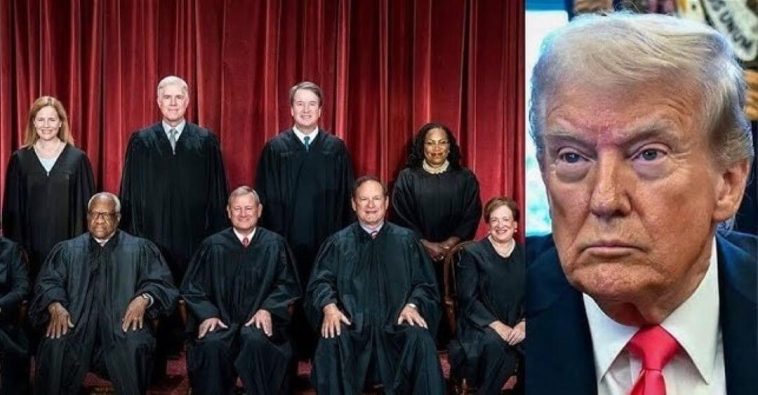
Chief Justice John Roberts, who authored the 2023 Allen v. Milligan decision requiring a second majority-Black district in Alabama, questioned whether this approach fits with existing precedent, including the Thornburg v. Gingles test. That test examines whether minority voters are large and compact enough to elect candidates of choice and whether bloc voting by the majority suppresses their influence. Roberts appeared intent on maintaining consistency while considering reform.
Justice Brett Kavanaugh, who joined Roberts and liberal justices in Allen, raised the possibility of a “sunset” clause for Section 2 remedies, hinting that race-based policies might need to be temporary. Justice Samuel Alito probed “congruence and proportionality” when race and party overlap, warning against judicial overreach in politically charged cases.
Democratic-aligned voting rights groups warn that weakening Section 2 would trigger a civil rights crisis. Fair Fight Action and the Black Voters Matter Fund shared a new analysis with POLITICO showing that if Section 2 protections are removed, Republicans could secure up to 19 congressional districts, almost guaranteeing control of the House.
Their research also identified 27 congressional seats nationwide that could be redrawn to benefit Republicans if current legal and political conditions persist. Nineteen of those changes directly relate to potential loss of Section 2 protections, highlighting the far-reaching impact of the Supreme Court’s decision.
As the Court prepares to rule, the nation watches closely. The outcome could reshape congressional representation, influence the 2026 midterms, and redefine the balance between race-conscious policies and partisan strategy in American elections.

