
>> Continued From the Previous Page <<
Despite an aggressive push by Senate leadership, including efforts from Majority Leader John Thune to maneuver the proposal forward, the amendment struggled to gain traction. Critics within the GOP had already warned that the measure lacked the votes needed to pass, and those concerns ultimately proved correct.
Senator John Kennedy attempted to salvage the effort by promoting his own version of the SAVE America Act. His proposal included sweeping reforms such as mandatory voter ID for federal elections, restricting voting to a single Election Day, and requiring ballots to be counted within 36 hours. It also outlined a $10 billion cap for implementation costs.

Kennedy openly acknowledged that his approach might conflict with Senate procedural rules, particularly the Byrd Rule, which governs reconciliation measures. Still, he pressed forward, signaling his willingness to challenge the system.
“I respect everybody in this body, everybody,” Kennedy said on the Senate floor. “If you vote against this bill, I’m not going to say a word. And I’m sure as hell not going to go on social media and call you an ignorant slut. That’s not the way I roll, unless I’m pushed too far.”
Had the amendment passed, responsibility for drafting the legislation would have fallen to the Senate Rules Committee, currently led by McConnell. However, the internal divide among Republicans ensured that scenario never materialized.
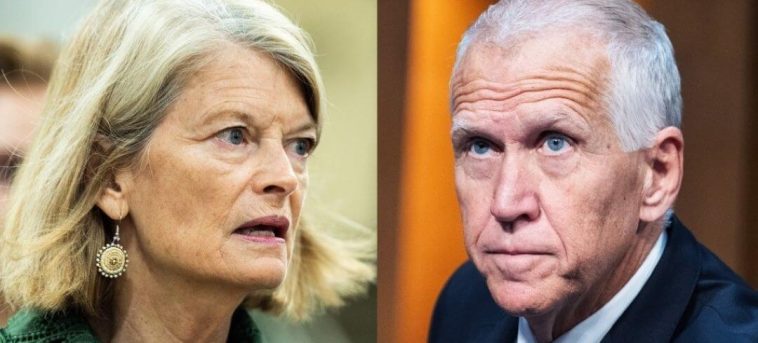
Senator Collins later clarified that while she supports the broader goals of election reform, she could not back this specific version of the proposal. Murkowski and Tillis echoed similar concerns, further underscoring the fractures within the party.
The setback comes at a time when Trump has been doubling down on his demand for election reform. The former president has previously vowed to withhold support for other legislation until the SAVE America Act is passed, insisting he would reject any watered-down compromise.
Meanwhile, the Senate’s attention has been pulled in multiple directions. Debates over budget reconciliation, surveillance authorities, and escalating tensions in the Middle East have taken center stage, pushing election legislation further down the priority list.
On foreign policy, Republican leaders including McConnell have rallied behind Trump’s hardline stance toward Iran. When asked about the president’s rhetoric, McConnell did not hesitate.
“They’ve been at war with us for 47 years,” McConnell said. “They’ve killed Americans. They’ve killed Israelis. They’ve killed throughout the Middle East. They’re bad guys.”
He added that while the outcome of the conflict remains uncertain, Iran’s capabilities have already been significantly weakened.
House Speaker Mike Johnson also weighed in, defending U.S. actions abroad using traditional just war doctrine, even as criticism mounted from global figures including Pope Leo XIV.
For now, the SAVE America Act appears stalled, caught between internal Republican divisions and shifting national priorities. But with Trump continuing to apply pressure and midterm elections approaching, the battle over election integrity is far from over.

