
>> Continued From the Previous Page <<
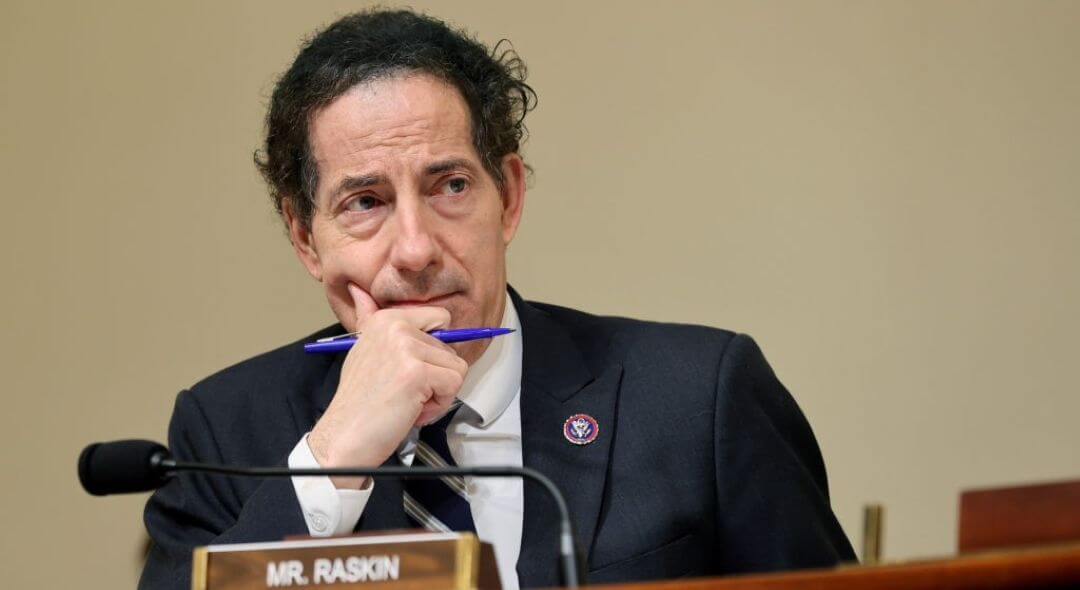
This is the same Jamie Raskin who has repeatedly portrayed Trump as a threat to the nation. This is the same lawmaker who accused Trump of taking a “chainsaw” to the Constitution. This is also the same Democrat who pushed for mental fitness tests for a sitting president while helping lead multiple impeachment efforts and endless investigations aimed at destroying Trump politically.
Yet on national television Sunday morning, Raskin suddenly claimed he could not think of any examples of dangerous rhetoric coming from his own party.

That is a remarkable position to take.
When asked further, Raskin said:
“I talk about the policies of this administration, the authoritarianism.”
That word choice matters.
When Democrats repeatedly use terms like “authoritarianism,” “dictator,” or “fascism,” they are doing more than criticizing policy. They are painting political opponents as enemies of democracy itself. They are telling supporters that normal elections and policy disagreements are no longer enough because the stakes are supposedly existential.
History shows that rhetoric like that can have consequences.
Authorities say the suspect traveled by train from Los Angeles to Washington, D.C., specifically for the White House Correspondents’ Dinner. Acting Attorney General Todd Blanche stated Sunday that the alleged gunman had refused to cooperate with investigators.
At this stage, federal officials have not publicly announced a complete motive.
Still, one fact is clear: someone made the decision to cross the country and target an event packed with political figures, journalists, and allies of the administration.
To his credit, Raskin gave a vivid description of the frightening scene inside the venue.
“Suddenly there’s loud booms, crashing sounds, plates, silverware, everything flying all over the place,” he said.
He also noted that Kerry Kennedy was standing beside him, and said the moment made him think of the assassinations of Robert F. Kennedy and President John F. Kennedy.
That was a genuine and human reflection during a tense moment.
But shortly afterward, Raskin returned to politics.
He said he hoped the investigation would be conducted “with complete openness and transparency.”
Many interpreted that as a swipe at Trump-appointed officials involved in the case, including Kash Patel and Todd Blanche.
Even after a violent incident shook one of Washington’s highest-profile gatherings, Raskin still found room to cast suspicion on those handling the investigation.
And that is part of a larger pattern Americans have seen before.
When Congresswoman Gabby Giffords was shot in 2011, Democrats demanded a national reckoning over rhetoric. When a Bernie Sanders supporter opened fire on Republican lawmakers during a congressional baseball practice in 2017—nearly killing Rep. Steve Scalise—the tone was very different.
Too often, standards appear to depend on who the victim is.
Now violence disrupts an event attended by major political figures, including RFK Jr., who was reportedly rushed out by security. Yet one of the leading Democrat voices in Washington says he cannot remember examples of inflammatory language directed at Trump.
President Trump, meanwhile, reportedly responded by praising unity and speaking positively about the press in the aftermath.
That contrast is hard to ignore.
For years, Democrats insisted Trump was a danger so severe that extraordinary measures were justified. They framed him not as a political rival, but as a national emergency.
Now, after a gunman allegedly traveled across America to confront a room filled with Trump allies, Raskin wants viewers to believe he has no idea what “heated rhetoric” means.
Americans are not that naive.
They know what has been said. They know who said it. And they know selective memory tends to appear when cameras start rolling.

