
>> Continued From the Previous Page <<
“He lied to Congress about funding gain-of-function research in Wuhan,” Paul continued. “Millions died. Trillions were spent.”
“And Fauci walked away with book deals and fawning media coverage instead of handcuffs,” he wrote.

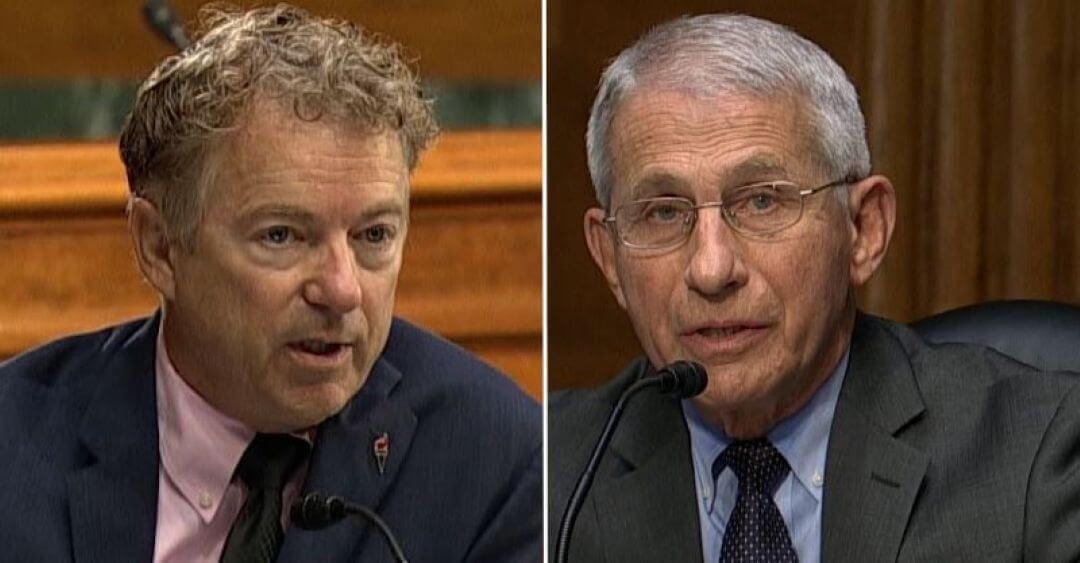
Paul’s remarks reflect a renewed effort by the senator to escalate scrutiny of Fauci’s actions during the COVID-19 pandemic response. According to Paul, the urgency is driven by what he believes is an approaching expiration of the statute of limitations that could prevent any future prosecution.
“I re-upped my criminal referral to the DOJ because the evidence is overwhelming,” Paul wrote. “Justice has been delayed long enough.”
At the core of Paul’s accusations are longstanding disputes over federal funding pathways, controversial virology research, and Fauci’s sworn testimony before Congress. The senator has repeatedly pointed to documents and communications he says raise serious questions about what senior public health officials knew—and when they knew it.
Last year, Paul’s office escalated its concerns by formally calling for Fauci to testify before the Senate Homeland Security and Governmental Affairs Committee. That request followed what Paul’s team described as newly uncovered communications that warranted deeper congressional oversight.
According to the senator’s office, investigators sought extensive records spanning 2018 through 2023, including emails, text messages, and call logs. These materials were said to be directly related to COVID-19’s origins, federal research funding connected to gain-of-function studies, and communications involving the Wuhan Institute of Virology.
Paul’s office has argued that the documents it reviewed appear to conflict with Fauci’s prior sworn statements made under oath before Congress, raising concerns about transparency and accuracy in official testimony.
Among the communications cited in the senator’s oversight request was a February 2020 email in which officials discussed how to “get ahead of the science and narrative” on COVID origins.
Another email highlighted by Paul’s office included Fauci instructing NIH Director Francis Collins, “Please delete this e-mail after you read it.”
A separate message from July 2020 reportedly showed Fauci criticizing Paul while again directing a staff member to delete the correspondence, according to the senator’s office review of the records.
Taken together, Paul’s office has argued that these communications warrant further investigation and could indicate attempts to manage or control sensitive discussions during the early stages of the pandemic.
In a formal statement summarizing his concerns, Paul did not hold back his assessment of Fauci’s actions.
“Dr. Fauci misled Congress and the American people,” Paul said in the statement. “The evidence is clear.”
The renewed push from Paul is likely to reignite a familiar partisan clash over the federal government’s handling of the pandemic, including questions about research oversight, internal communications, and the public messaging that shaped early COVID-19 policy.
While Fauci has long denied wrongdoing and defended his actions as consistent with the scientific knowledge available at the time, Paul continues to argue that the available records tell a different story—one he believes demands accountability at the highest levels.
With the statute-of-limitations deadline now at the center of Paul’s warning, the senator is pressing for what he describes as immediate action, setting the stage for another high-profile political and legal battle over the legacy of America’s COVID-19 response.

