
>> Continued From the Previous Page <<
For a press corps that spent over a year trying to decode and counter Leavitt’s approach, this presents an entirely new challenge. Reporters had studied her style, anticipated her responses, and crafted strategies to corner her—yet still found themselves outmaneuvered in many exchanges.
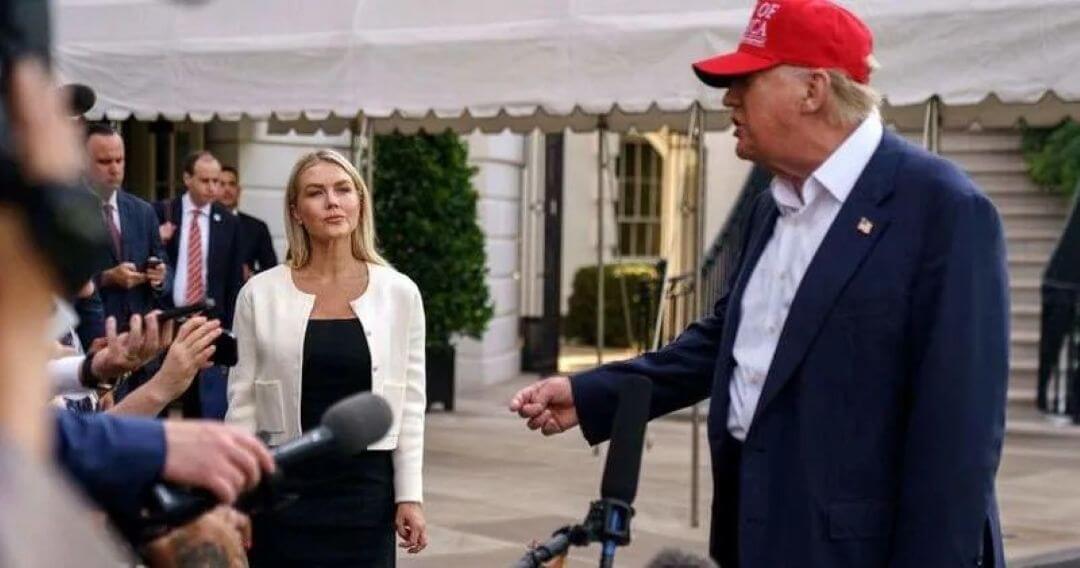
Now, they may walk into the briefing room only to find Trump standing there, unscripted and unfiltered.

That’s not a temporary stand-in.
That’s the head of the operation stepping in personally.
A Familiar—and Unwelcome—Scenario for the Press
This wouldn’t be the first time Trump has taken control of the briefing room dynamic. During the height of the COVID-19 crisis, he frequently addressed the media directly, sometimes for extended periods. Those briefings became a focal point of national attention, with Trump engaging reporters head-on and often bypassing traditional press secretary roles entirely.

Many journalists openly bristled at the approach, but it proved effective in dominating the news cycle.
Now, the possibility of a similar strategy returning—combined with a broader lineup of assertive voices—has likely caught the media off guard.
The Press Corps’ Playbook
For decades, reporters have relied on a familiar tactic during transitions or absences in the press office. When a strong spokesperson steps away, even temporarily, the strategy is to intensify pressure—raising tougher questions, probing for inconsistencies, and attempting to regain control of the narrative.
They employed this method during Sean Spicer’s tenure. They used it again when Sarah Huckabee Sanders reduced her public briefings.
The goal has always been straightforward: challenge the substitute, reassert authority, and set the tone before the primary spokesperson returns.
But this time, the White House isn’t sending in a substitute.
Enter JD Vance
Vice President JD Vance has already demonstrated a willingness to confront the media directly. Earlier this year, he took the podium and sharply criticized reporters over their coverage of the killing of Renée Good, accusing members of the press of misrepresenting key facts.
“Every single one of you,” he said.
That kind of directness signals a continuation—if not an escalation—of the tone Leavitt established.
It also suggests the press corps may not get the opening they expected.
More Than Just a Temporary Absence
Leavitt’s tenure wasn’t simply about delivering daily briefings. She fundamentally altered expectations for the role. On her first day in January 2025, she told reporters that public trust in the media had eroded—and challenged them to meet the same standards of accountability she claimed to uphold.
She also broadened access to the briefing room, inviting independent journalists, podcasters, and digital media figures, often giving them priority in questioning.
At times, her approach sparked controversy. In one notable exchange, she labeled a reporter from The Hill a “left-wing hack” during a heated question about an immigration-related incident.
Where past press secretaries often avoided becoming the story, Leavitt leaned into it—recognizing that direct confrontation resonated with a large segment of the public.
A Shift That Isn’t Going Away
That transformation in tone and strategy doesn’t disappear with her temporary departure. If anything, it may intensify.
Vance has shown he’s willing to match—and possibly exceed—Leavitt’s bluntness. Trump, known for his combative style, brings an even higher level of unpredictability.
For reporters who believed this moment offered a reset, the reality may be quite different. Instead of facing a less experienced spokesperson, they could find themselves up against some of the most assertive figures in American politics.
What Comes Next
As Karoline Leavitt prepares to welcome a baby girl, the White House briefing room is entering a new phase—one that may prove even more challenging for the media than what came before.
The expectation of a lull in intensity may quickly give way to something far more confrontational.
And if Trump does decide to take the podium again, the press corps could be in for a familiar scenario—one where the rules are rewritten in real time, and every exchange becomes a headline.

