
>> Continued From the Previous Page <<
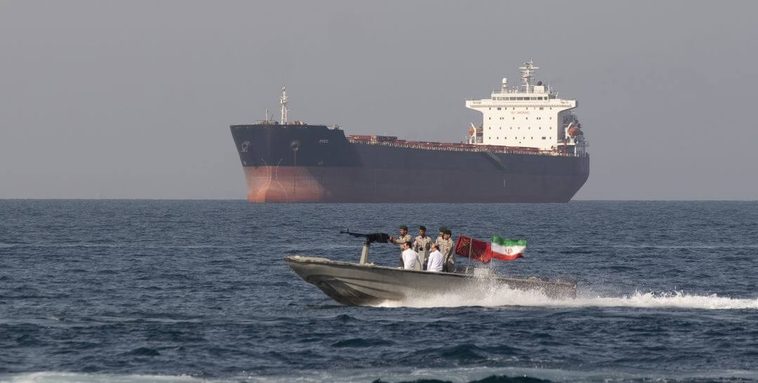
While Iran’s regular navy has reportedly suffered heavy losses and is considered severely degraded, the IRGC naval branch remains the regime’s most effective maritime tool. Rather than depending on destroyers or large warships, the Guard Corps specializes in swarms of fast attack boats, hit-and-run tactics, and harassment operations designed to intimidate commercial traffic.
Military analysts say these small craft are uniquely suited for operations in the narrow waters of the Strait of Hormuz. Many are difficult to detect on radar, move quickly, and can emerge from concealed coastal positions with little warning. By the time a merchant ship identifies the danger, the attack window may already be closed.

Reports cited by multiple outlets indicate that more than 60 percent of Iran’s IRGC fast-attack boat fleet may still be intact. Former Pentagon official David de Roches noted that these smaller vessels are much harder to track by satellite than traditional warships, making them a persistent challenge for U.S. and allied forces.
This distinction matters because some media reports have blurred the line between Iran’s formal navy and the Guard Corps’ irregular maritime forces. If U.S. strikes destroyed 155 Iranian vessels across both branches, that may sound substantial. But if the IRGC still retains hundreds—or even thousands—of small armed boats, Tehran’s ability to terrorize shipping lanes remains far from eliminated.
In practical terms, Iran’s classic naval power may be in ruins, but its capacity to threaten tankers and commercial traffic remains very real.
The Pentagon has acknowledged the danger. U.S. Central Command has deployed A-10 Thunderbolt II aircraft specifically to target fast attack boats, while AH-64 Apache helicopters have reportedly been used against one-way drone threats.
And drones remain another serious problem.
Defense Intelligence Agency Director Lt. Gen. James Adams reportedly told Congress that Iran still possesses thousands of missiles and attack drones capable of threatening U.S. and allied forces across the region. Even after suffering battlefield losses, Tehran continues to pose a “persistent threat” to freedom of navigation in the Persian Gulf, Strait of Hormuz, and Gulf of Oman.
Iran’s infamous Shahed-136 drone remains especially concerning. Cheap to produce and simple to deploy, the platform has repeatedly challenged modern air defense systems. Even when intercepted, the constant possibility of launch forces enemies to remain on alert and spend heavily on defense.
Meanwhile, questions remain over whether Iran has laid naval mines in the strait. Public statements from U.S. officials have been mixed, and no confirmed ship strikes from mines have been reported so far. Instead, most recent maritime attacks have reportedly involved missiles, drones, or direct gunfire.
That may reflect a calculated strategy by Tehran. Mines would block traffic indiscriminately, potentially harming vessels Iran wants to spare—including Chinese-linked shipping. Precision harassment using boats, missiles, and drones gives the regime more control over who passes and who does not.
The broader conclusion is sobering. Iran may have lost much of its conventional naval punch, but it still retains the tools needed to disrupt world commerce, spike oil prices, and provoke another regional crisis.
As the Biden-era Middle East instability gives way to a more forceful Trump response, the world is watching whether Tehran backs down—or pushes this dangerous showdown even further.

