
>> Continued From the Previous Page <<
To understand why this matters so much, many experts point back to one day that caught an entire nation off guard. On February 15, 2013, a small asteroid entered Earth’s atmosphere above Chelyabinsk, Russia, a city of more than a million people. It exploded mid-air, unleashing a shockwave that shattered glass, damaged thousands of buildings, and injured over 1,600 people.
The energy released was staggering—estimated at roughly 30 times the force of the Hiroshima atomic bomb. Yet what shocked scientists and security officials even more was the fact that nobody saw it coming. Not NASA. Not the Russian military. The object approached from the direction of the sun, hidden in glare, and slipped through detection systems until it was already breaking apart in the atmosphere.

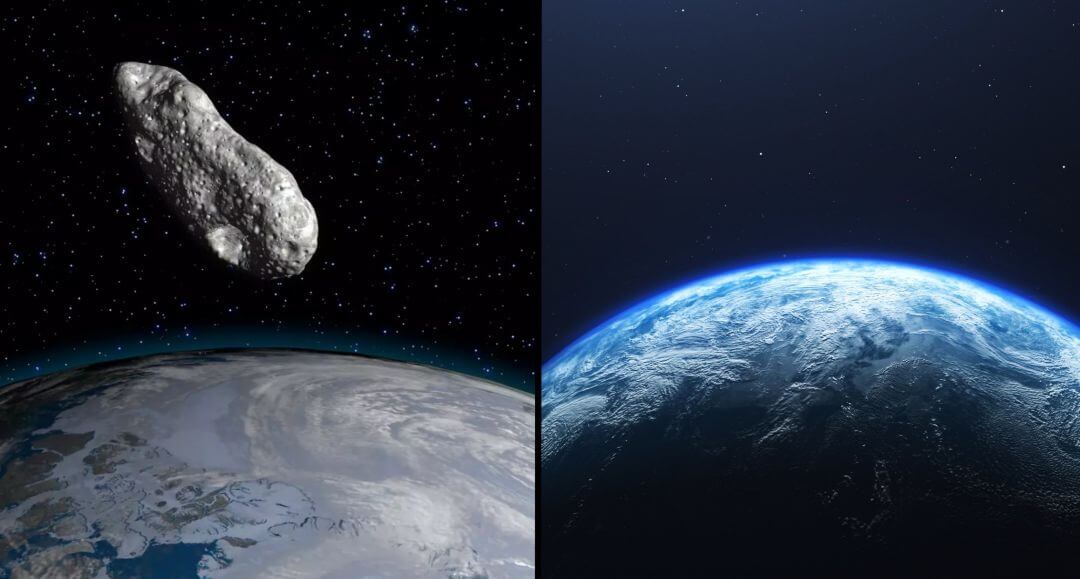
That asteroid was relatively small—about 60 feet wide. By comparison, Apophis is estimated at around 1,100 feet across. The difference in scale underscores why planetary defense experts are paying close attention to its 2029 flyby.
On that date, Apophis is expected to pass within roughly 20,000 miles of Earth’s surface, inside the orbital range of geostationary satellites that keep global communications networks running. NASA has confirmed repeatedly that it will not strike Earth, but the proximity alone makes it a once-in-7,500-year type of event.
“It has not happened once in recorded human history.”
At the center of the response effort is Jared Isaacman, the billionaire pilot and astronaut tapped to oversee NASA’s operations during a period of renewed focus on space priorities. Isaacman has been blunt about the state of planetary defense funding. He called the program “disproportionately underfunded relative to the likelihood and magnitude of the associated risks and consequences.”
That assessment has fueled renewed debate in Washington over how seriously the United States is investing in asteroid tracking and defense systems, especially as Apophis approaches.
NASA is not just observing the flyby—it is actively staging a rare multi-mission campaign to study it. The OSIRIS-APEX spacecraft, originally designed for the OSIRIS-REx mission that collected samples from asteroid Bennu, has been redirected toward Apophis. It is scheduled to arrive shortly after the asteroid’s Earth flyby, using gravitational mechanics to position itself for an extended study period.
Once in place, OSIRIS-APEX will observe Apophis for up to 18 months, mapping its surface, analyzing its structure, and documenting how Earth’s gravity may alter its shape, spin, and internal composition during the close approach.
The European Space Agency is also preparing its own mission, known as Ramses, which is expected to arrive ahead of the flyby and capture real-time data as Apophis passes through Earth’s gravitational field.
Public interest is expected to be immense. Scientists estimate that nearly two billion people across Africa, Europe, and parts of Asia will be able to see Apophis with the naked eye as it moves across the night sky, resembling a fast-moving star among the constellations.
But behind the global spectacle lies a political tension. At one point, the Trump administration’s 2026 budget proposal reportedly sought to cancel the OSIRIS-APEX mission entirely, even though the spacecraft was already in transit. Congress ultimately intervened, securing emergency funding to keep it operational.
Still, the mission’s future remains uncertain, with funding subject to future review cycles. That means one of the most important planetary defense opportunities in modern history could still be vulnerable to budget politics.
For scientists, the stakes are straightforward. What happens when a massive asteroid passes this close to Earth is not just a curiosity—it is critical data for future planetary defense. Understanding how gravity reshapes such an object could determine how humanity responds to a real impact threat down the line.
The people of Chelyabinsk had no warning in 2013. The hope among researchers is that Apophis in 2029 ensures the world is far better prepared the next time an object appears out of nowhere—and the sky gives no notice at all.

