
>> Continued From the Previous Page <<
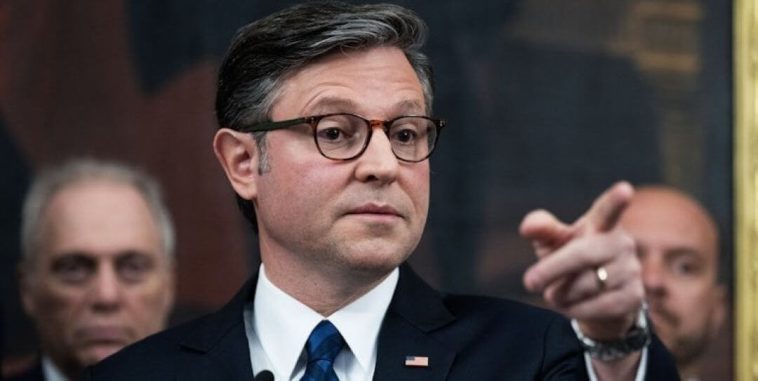
Johnson warned that certain judges have moved well beyond interpreting the law and are now actively shaping policy from the bench—something the Constitution never intended.
“I think some of these judges have gotten so far outside the bounds of where they’re supposed to operate. It would not be, in my view, a bad thing for Congress to lay down the law.”
When asked directly whether impeachment should apply to U.S. District Judge James Boasberg, Johnson didn’t hesitate.

“I’m for it,” he said. “Boasberg is one who’s been mentioned, and these are some egregious abuses.”
Johnson’s comments mark a stark reversal from his stance just months earlier. In May 2025, the Speaker acknowledged impeachment was theoretically possible but emphasized how difficult it would be to meet the constitutional threshold.
“Frankly, the bar is high crimes and misdemeanors,” Johnson said back then. “I mean, the last federal judge impeached, I think was caught…taking cash in an envelope. You know, it’s got to be a pretty brazen offense or a real open crime that everybody could agree to.”
So what caused the sudden shift?
Republicans say they uncovered something far more alarming than bad rulings.
According to documents released by Senator Chuck Grassley, Judge Boasberg quietly approved secret warrants allowing Special Counsel Jack Smith to obtain phone records from at least nine Republican senators—including Senator Ted Cruz—without notifying them for more than a year.
Those warrants were part of Smith’s so-called “Arctic Frost” investigation, which was publicly framed as a probe into Trump’s 2020 electors. In reality, Republicans say it morphed into a sweeping surveillance operation targeting conservative organizations and elected officials.
Smith reportedly issued 197 subpoenas covering over 430 Republican individuals and groups, including Turning Point USA and the Republican Attorneys General Association.
Boasberg signed off on the orders compelling telecom companies to hand over lawmakers’ records—while barring them from informing the senators involved.
The justification stunned legal experts.
The judge claimed there were “reasonable grounds to believe” that senators like Cruz might “destroy evidence” or “intimidate witnesses” if notified.
Cruz forcefully rejected that premise.
“If a judge signs an order reaching a factual conclusion for which there is zero evidence whatsoever, that judge is abusing his power.”
AT&T refused to comply with the subpoena involving Cruz, calling it unconstitutional. Verizon later confirmed it had been ordered to keep at least seven senators in the dark.
Cruz labeled the episode “Joe Biden’s Watergate”, calling Boasberg’s ruling an outright “abuse of power.”
This wasn’t Boasberg’s first clash with the Trump administration.
In March 2025, after Trump invoked the 1798 Alien Enemies Act to expedite the removal of suspected Venezuelan gang members, Boasberg issued an emergency order halting deportation flights—some already in the air.
When the flights continued to El Salvador, Boasberg accused administration officials of defying the court and initiated contempt proceedings.
Appeals courts later wiped away those actions in August, ruling that Boasberg had overstepped his authority and interfered with national security decisions.
Still, Boasberg pressed forward. In December, he ordered the administration to either return 137 Venezuelan migrants to the U.S. or conduct hearings abroad.
Attorney General Pam Bondi blasted the ruling as “failed judicial overreach at its worst.”
President Trump himself called for Boasberg’s impeachment earlier this year—prompting Chief Justice John Roberts to issue a rare public defense of judicial independence.
Texas Congressman Brandon Gill filed articles of impeachment against Boasberg in November. Until now, they appeared unlikely to advance.
Johnson’s endorsement changes that calculus.
Only 15 federal judges have ever been impeached. Eight were convicted and removed. While precedent cautions against punishing judges for rulings alone, Republicans argue this case is different.
They say authorizing secret surveillance of sitting senators violates the Constitution’s Speech and Debate Clause—an attack on the separation of powers itself.
Senator Cruz recently chaired a hearing titled “Impeachment: Holding Rogue Judges Accountable,” calling for the removal of both Boasberg and Judge Deborah Boardman.
With Johnson now backing impeachment openly, the effort has real momentum for the first time.
Whether House Republicans follow through—and whether the Senate would convict—remains the defining question ahead.

