
>> Continued From the Previous Page <<
On Tuesday, the New York Post reported that Mott had an extensive criminal record in Colorado, raising fresh questions about how someone with his background was repeatedly able to move through the justice system over the years.
According to the report, Mott had been arrested more than 20 times in Colorado dating back to 2002. His record reportedly included a wide range of offenses, and notably, one of the earlier charges involved attempted murder. The long history of arrests paints a picture of a man who had frequent and repeated contact with law enforcement over an extended period.

More recently, just weeks before the airport incident, Mott was again taken into custody. He had been arrested for felony trespassing, adding to what already appeared to be a pattern of ongoing legal trouble and instability.
The New York Post reported: “It wasn’t immediately clear why the Pueblo-native was walking free after he was nabbed on April 10 for first-degree trespassing and damaging property at a Colorado Springs dwelling, then resisting arrest when cops arrived.”
Reports also indicated that Mott was homeless at the time of the April arrest, further highlighting a situation marked by instability and repeated interaction with authorities without long-term resolution.
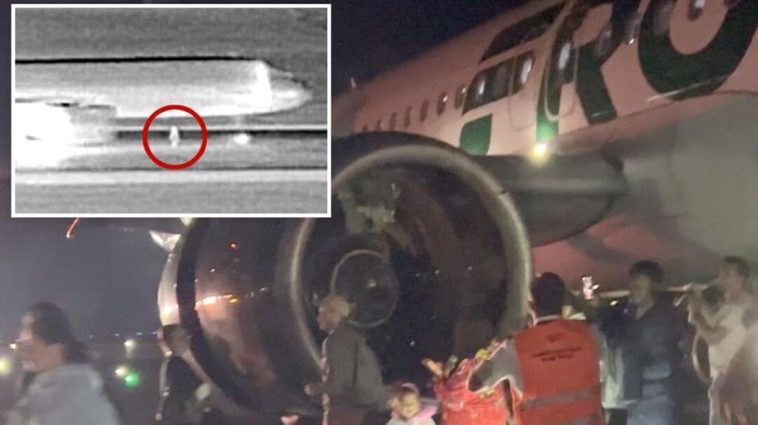
The question of how Mott was able to access a highly secure facility such as Denver International Airport has also become a central point of scrutiny. Early explanations suggest that unusual environmental circumstances may have played an unexpected role in the security gap that allowed the intrusion to occur.
Denver International Airport CEO Phil Washington addressed the incident and explained that the airport’s perimeter detection system had initially been triggered shortly before the breach was discovered.
“Last Friday night, the ground detection sensors set off an alarm at this location at 11:10,” Washington said, per KKTV. “DEN’s operator on duty reviewed the alarm and identified a herd of deer just outside of the perimeter fence, very near to where the incident occurred.
“They did not initially see the trespasser. The camera view was alternating between the wildlife and the individual. There are some ditches in the area, so the person was out of view for a bit as well.”
He further explained the short timeline between the initial alarm and the fatal outcome, adding, “And then just minutes later, we were alerted by the FAA of the person being hit.”
The explanation has raised further discussion about perimeter security challenges at major transportation hubs, particularly when natural environmental factors—such as wildlife movement—interfere with surveillance systems designed to detect human intrusion.
While officials continue to review the sequence of events, the incident has underscored a troubling combination of factors: a man with a lengthy criminal history, apparent homelessness, and a security system momentarily distracted by environmental noise that together culminated in a fatal breach at one of the busiest airports in the United States.
As the investigation continues, questions remain not only about how the incident unfolded in its final moments, but also about the broader systemic gaps that allowed a repeat offender with a long record of arrests to ultimately end up in a position where such a tragedy could occur on secure airport grounds.

