
>> Continued From the Previous Page <<
That history is exactly why many sports fans immediately connected with what Flair was saying.
To him, professional athletes used to pride themselves on showing up no matter what. Today, he sees something entirely different.

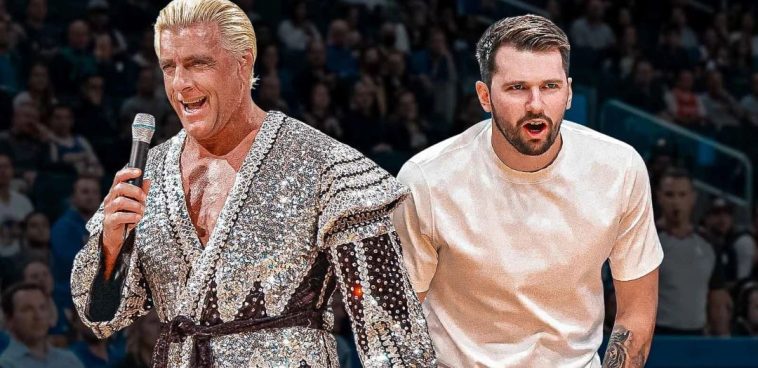
Flair had already been torching Dončić on social media throughout the series as the Lakers spiraled toward elimination.
After Game 1, Flair posted: “Luka, Please Get In The Game! Take A Shot Of Cortisone And Deal With The Pain! They Are Paying You 50 Million A Year, And You’re Not There! WTF!”
The wrestling legend doubled down again after Game 3, writing: “46 Million Dollars, And You Can’t Play. OMG, I Would Jump Off The Empire State Building With A Parachute For 46 Million Dollars A Year, And I Don’t Even Know How To Pull The Cord To Open It – But I Would Take My Chances.”
That frustration exploded across sports talk shows and social media as Lakers fans watched their team collapse without its franchise player available.
Meanwhile, the young and hungry Thunder looked unstoppable.
Oklahoma City closed out the series with a 115-110 victory Monday night, completing a dominant postseason run while the Lakers were left searching for answers.
Austin Reaves poured in 27 points in the elimination game, while LeBron James added 24 points and 12 rebounds in what many believe could be the final playoff appearance of his legendary career.
James nearly delivered one final heroic moment, but his late driving bank shot missed with just seconds remaining. Oklahoma City answered immediately on the other end, slamming the door shut on Los Angeles’ season.
For Flair, however, the bigger issue goes far beyond one playoff series.
He believes guaranteed contracts have fundamentally changed professional sports.
While discussing Dončić’s absence, Flair delivered four words that instantly caught fire online:
“They got guaranteed money.”
That simple statement captured the frustration many longtime fans feel watching modern athletes miss games while still receiving massive salaries.
Flair contrasted today’s NBA culture with the mentality that defined older generations of athletes.
He pointed to Michael Jordan and the famous “love of the game” clause in Jordan’s contract with the Chicago Bulls. Jordan reportedly insisted on language that would allow him to keep playing basketball anytime and anywhere without restrictions from the organization.
The mindset was simple: competitors competed.
Jordan chased championships relentlessly. Flair wrestled through agony because losing momentum could mean losing everything.
Modern sports, according to critics like Flair, operate differently. Players are investments now. Teams protect contracts, future earnings, and long-term health above all else.
Flair even acknowledged that reality.
“They’re protecting the future and I don’t blame them for that,” Flair said Monday. “They got guaranteed money.”
Still, many fans watching a superstar earn tens of millions while sitting on the bench during a playoff sweep could not help but feel disconnected from today’s version of professional sports.
To older generations raised on stories of athletes playing hurt, bleeding for championships, and refusing to sit out critical moments, the contrast feels impossible to ignore.
And when someone like Ric Flair, who survived a broken back, broken bones, and even a lightning strike, looks at a sidelined superstar making $46 million a season, his reaction resonates with millions of frustrated sports fans across America.
Because in their minds, superstar money used to come with superstar sacrifice.

