>> Continued From the Previous Page <<
Pakistan’s Information Minister Attaullah Tarar took to social media to defend the strike, calling it a “precision airstrike” aimed at “terrorism-sponsoring military installations.” He insisted there was no collateral damage.
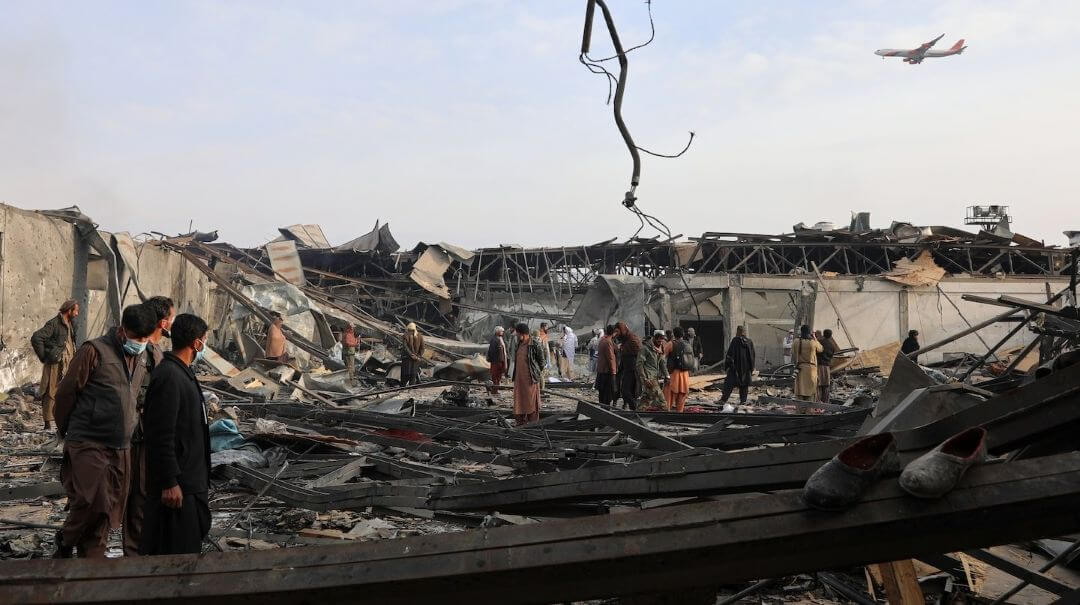
The underlying dispute is complex. Pakistan has legitimate security concerns, especially after a February 2026 suicide bombing in Islamabad that claimed 36 lives at a mosque. But, as tragic as it sounds, 400 people dead in a hospital cannot be dismissed as a mere GPS error.

Historically, flare-ups between Afghanistan and Pakistan were eventually tempered by outside mediators. Qatar brokered a ceasefire in October 2025 following some of the deadliest cross-border clashes in years. Turkey played a crucial role in negotiations, and Arab Gulf nations quietly helped push dialogue forward.
Those external pressures have vanished. Qatar, the UAE, and Saudi Arabia are now preoccupied with their own crisis: the ongoing U.S.- and Israeli-led military operations against Iran, a country sharing borders with both Afghanistan and Pakistan.
China’s special envoy has been shuttling between Kabul and Islamabad for the past week urging calm. Yet neither side appears willing to back down. South Asia expert Michael Kugelman of the Atlantic Council bluntly stated that usual mediators are “bogged down by their own war,” leaving a dangerous vacuum in the region.
This void is more than just a regional problem. Analysts warn that the Afghanistan-Pakistan conflict is fueling a growing arc of instability across the Middle East. From Iran in the west to Afghanistan in the east, a continuous band of conflict is emerging along Asia’s southern flank.
The Times of Central Asia calls it an “Arc of Instability” stretching from the Persian Gulf to the Hindu Kush – and it is no longer theoretical. The region is unraveling in real time.
Without international mediation, the carnage in Kabul may be just the beginning. As regional powers focus elsewhere, Afghanistan is left to fend for itself in a crisis that could ignite broader conflict across South Asia and the Middle East.