
>> Continued From the Previous Page <<
One letter bluntly stated that the bank can sometimes “determine that a client’s interests are no longer served by maintaining a relationship with J.P. Morgan Private Bank.”
No further explanation was provided in the correspondence.

Another filing, submitted by a former JPMorgan chief administrative officer, stated, “In February 2021, JPMorgan informed Plaintiffs that certain accounts maintained with JPMorgan’s CB [commercial bank] and PB [private bank] would be closed.”
The language is clinical. The implications are explosive.
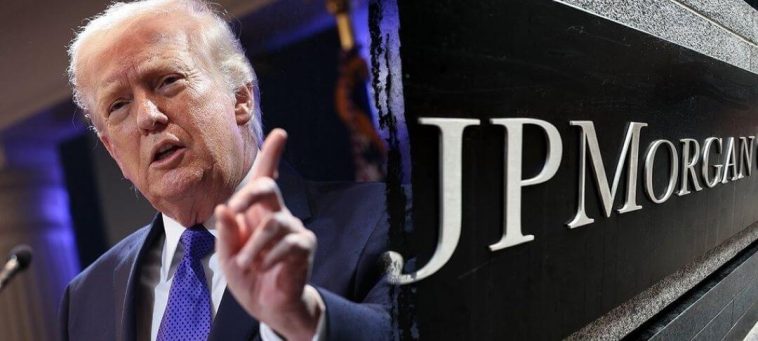
This marks the first time JPMorgan has directly acknowledged in written court records that Trump-linked accounts were in fact terminated. In previous public statements, the bank had avoided confirming specific cases, citing privacy rules and insisting it does not close accounts for political or religious reasons.
Now that position is facing intense scrutiny.
The lawsuit was filed last month in Miami-Dade County state court. Trump’s legal team argues that the closures amounted to politically motivated “debanking” in the wake of January 6, as corporations and institutions distanced themselves from the former president.
The complaint claims the bank violated its own internal policies and effectively placed Trump on a reputational blacklist that impacted his ability to conduct business with other financial institutions. It also alleges that the closures caused significant financial and reputational damage.
According to the filing, Trump personally contacted Jamie Dimon to address the situation and was told the matter would be reviewed. The suit claims no corrective action followed.
Trump’s attorneys did not mince words in their reaction to JPMorgan’s court admission, calling it “a devastating concession that proves President Trump’s entire claim,” and asserting that the bank has effectively admitted to unlawfully and intentionally debanking Trump, his family, and his businesses.
JPMorgan, for its part, has pushed back, arguing the lawsuit lacks merit. The bank is attempting to move the case out of Florida state court and into federal court in New York, contending that the dispute is more closely connected to New York, where the accounts were primarily held and where much of Trump’s business activity has been based.
But the controversy does not end there.
An August 2025 report from the New York Post alleged that banking regulators under the Biden Administration pressured major financial institutions to scrutinize or sever ties with political figures deemed to present “reputational risk.”
According to that report, officials from the Office of the Comptroller of the Currency, the FDIC, and the Federal Reserve warned banks that doing business with certain individuals could expose them to regulatory violations. Senior bank officials reportedly described the rule as vague and open to interpretation.
The Post reported that tens of millions of dollars in Trump’s holdings were removed from JPMorgan’s platform and that he later faced denial of access to Bank of America’s services as well.
Critics argue that a standard originally designed to prevent financial institutions from servicing drug kingpins and organized crime figures was stretched to target political opponents. Supporters of the regulatory actions maintain that banks must assess risk and protect their reputations.
The courts will ultimately decide whether JPMorgan’s actions were lawful business decisions or unconstitutional political retaliation.
What is no longer in dispute, however, is that the accounts were closed.
And now, with a $5 billion lawsuit on the table and written admissions entered into the record, the fight over financial “debanking” has entered a new and potentially historic phase.

