
>> Continued From the Previous Page <<
The goal was straightforward. If foreign nationals with violent records and final removal orders could not be immediately deported, they would remain confined in secure detention rather than be released into civilian life.
Among the first detainees were Ibrahim Ali Mohammed, Luis Gaston Sanchez, Ricardo Blanco Chomat, and Francisco Rodriguez Romero.

All four had served criminal sentences in the United States. All four had final removal orders. All four were awaiting deportation.
But deportation proved complicated.
Criminal Records at the Center of the Storm
Court records show Mohammed was convicted of sexual exploitation of a minor. He had previously been released into the United States before his conviction during the Biden administration.
Gaston Sanchez had convictions for homicide, assault, resisting an officer, concealing stolen property, and two robbery counts. His deportation order dates back to 2001.
Chomat’s record includes homicide, kidnapping, aggravated assault with a firearm, burglary, robbery, larceny, and selling cocaine. He received a deportation order in 2002.
Rodriguez Romero was convicted of homicide and a weapons offense. His removal order was issued in 1995.
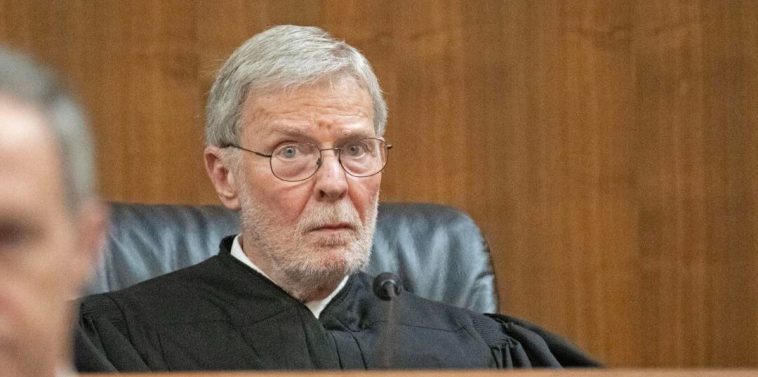
Despite the severity of those records, Judge deGravelles focused not on the crimes themselves but on the duration of their detention.
In his ruling, he wrote that each man “was convicted of a crime, and each served his sentence.”
He further stated that their criminal pasts were “not at issue” and that the government’s reliance on those convictions was “irrelevant to the analysis.”
DHS Fires Back
DHS Assistant Secretary Tricia McLaughlin sharply criticized the ruling.
“Judge John deGravelles, appointed by Barack Obama, released FOUR violent criminals back onto American communities, and unfortunately, the ramifications will only be the continued rape, murder, assault, and robbery of more American victims,” McLaughlin said.
“Releasing these monsters is inexcusably reckless.”
She added, “President Trump and Secretary Noem are now enforcing the law and arresting illegal aliens who have no right to be in our country.”
“We are applying the law as written. If an immigration judge finds an illegal alien has no right to be in this country, we are going to remove them. Period.”
The Supreme Court Precedent at the Core
The judge relied heavily on the 2001 Supreme Court decision in Zadvydas v. Davis.
That ruling established that immigration authorities generally cannot detain deportable aliens longer than six months unless removal is reasonably foreseeable. After that six month window, the government must demonstrate that deportation will happen in the near future or release the detainee under supervision.
In this case, Cuba has not agreed to accept the three Cuban nationals involved. Ethiopia has refused to take Mohammed, in part because he qualified for Convention Against Torture protections.
Judge deGravelles concluded that continued detention violated constitutional limits since deportation was not imminent.
He ordered supervised release.
The court also noted personal circumstances — including one Cuban national who is 72 years old and suffers from Parkinson’s and Alzheimer’s disease, and another who serves as the primary caregiver for a disabled sibling. The judge wrote that the men “have been detained with no opportunity to arrange for care for their dependents, pets, or homes.”
A Broader Immigration Clash
The ruling underscores the legal tug of war shaping Trump’s immigration enforcement agenda.
The administration expanded detention capacity precisely to prevent high risk offenders from being released while awaiting deportation negotiations. But diplomatic talks with countries that routinely refuse to accept criminal nationals often stretch well beyond six months.
Mexico reportedly will not accept elderly Cuban criminals. Ethiopia has declined to receive Mohammed.
The administration argues that releasing convicted violent offenders into American neighborhoods creates unacceptable risks.
The court argues constitutional limits apply regardless of the crimes committed.
For now, four men with serious criminal histories are no longer confined at Angola.
And the larger fight over immigration enforcement is shifting from detention facilities to federal courtrooms.
Trump can build the detention centers.
But federal judges can decide who walks out the door.

