
>> Continued From the Previous Page <<
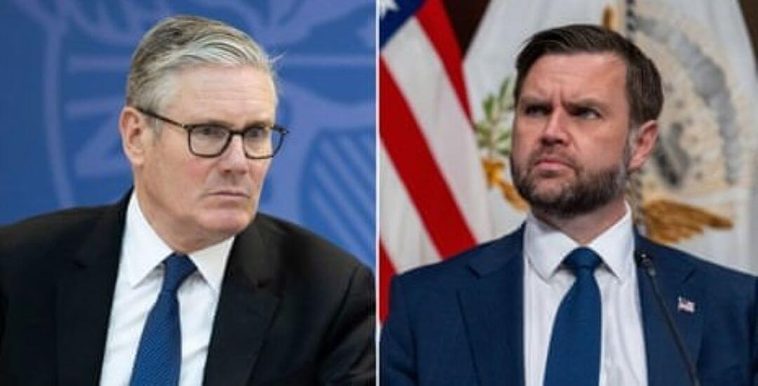
JD Vance did not hold back after the footage of Nowak’s final moments surfaced publicly. In a strongly worded statement, he said Nowak “died the same way a civilization dies: abandoned, handcuffed by authorities who neither trusted nor cared for him, and accused of hate crimes he did not commit.”
He further argued that the underlying problem was deeper than a single incident, pointing to what he described as systemic cultural and policy failures: “the politics of self-hatred and the mass invasion of migrants, many of whom despise the West and the people who love it.”

Vance also said that the only appropriate reaction to the situation was “only response.”
The U.S. State Department echoed similar concerns, describing the incident as a “glaring symptom of civilizational decline” rooted in “ideological conditioning and two-tiered policing.”
Those remarks were quickly backed by allies of the Trump administration, which has increasingly framed European internal security issues through the lens of migration and law enforcement bias.
British Prime Minister Keir Starmer responded forcefully through his office, accusing Washington of overstepping. His spokesman said the United States was attempting to “interfere in our democracy” and “stir up division on our streets.”
Deputy Prime Minister David Lammy told Sky News he did not recognize “this caricature of Britain having a two-tier criminal justice system.”
Meanwhile, Liberal Democrat leader Ed Davey escalated tensions further by calling for Starmer to summon the American ambassador over the remarks, signaling rare political unity in rejecting the U.S. criticism.
But critics argue the British government is deflecting from uncomfortable questions raised by the case itself.
The most explosive claim centers on how officers responded to Nowak as he lay dying. According to bodycam footage and reporting surrounding the incident, officers appeared to prioritize a false allegation made by the attacker over the victim’s repeated claims that he had been stabbed.
Nowak’s killer, Vickrum Digwa, was later convicted, confirming that the stabbing was real and fatal from the outset.
The U.S. State Department’s characterization of the case as evidence of broader institutional failure has intensified debate over whether Britain’s policing system is influenced by political and ideological pressures. Critics argue officers are increasingly hesitant, in high-stress situations, to challenge accusations framed through race or identity narratives—even when evidence suggests otherwise.
The controversy has also reopened older political wounds.
In 2020, then-Labour leader Keir Starmer famously took a knee in solidarity with the Black Lives Matter movement following the death of George Floyd in the United States. At the time, Starmer aligned himself publicly with the movement’s symbolism, a moment his critics now cite as evidence of ideological inconsistency in his current condemnation of foreign commentary.
A senior U.S. official, Under Secretary of State Sarah B. Rogers, also weighed in, drawing a distinction between current protests and the 2020 unrest, stating that present-day demonstrations around cases like Nowak’s have not “ignited infrastructure, murdered anyone, or otherwise cut an antisocial swathe of destruction”—a pointed contrast to the riots that erupted in parts of the United States during that period.
Adding further tension, reports surfaced that senior Labour figures, including members of Starmer’s circle, had previously traveled to the United States to engage in advisory work tied to the Kamala Harris campaign. That activity prompted allegations from Trump-aligned officials of “blatant foreign interference,” claims Labour has rejected.
The Nowak case is not occurring in isolation. It has revived longstanding criticisms tied to past UK scandals, including the Rotherham and Rochdale grooming gang cases, where authorities were accused of failing to act on widespread abuse due to fears of appearing racist. Starmer himself served as Director of Public Prosecutions during part of that period.
For critics, the pattern is consistent: institutions overly cautious about accusations of bias, leading to hesitation in confronting real crimes.
Supporters of the U.S. comments argue that Vice President Vance’s broader point is about sovereignty and enforcement capacity, with Vance insisting that countries retain the ability to control migration and security policy without ideological hesitation, concluding that “anything else is an excuse.”
As political leaders trade accusations of interference and misinformation, the central facts remain grim and uncontested: an 18-year-old student died in police custody after being stabbed, while his attacker was initially believed over him.
Whether this represents a tragic failure of individual officers or a deeper systemic breakdown is now at the heart of an increasingly heated transatlantic dispute.

